Entertainment
Ariana Grande’s Most Controversial Moments: Alleged Cheating and More on August 1, 2023 at 12:00 am Us Weekly

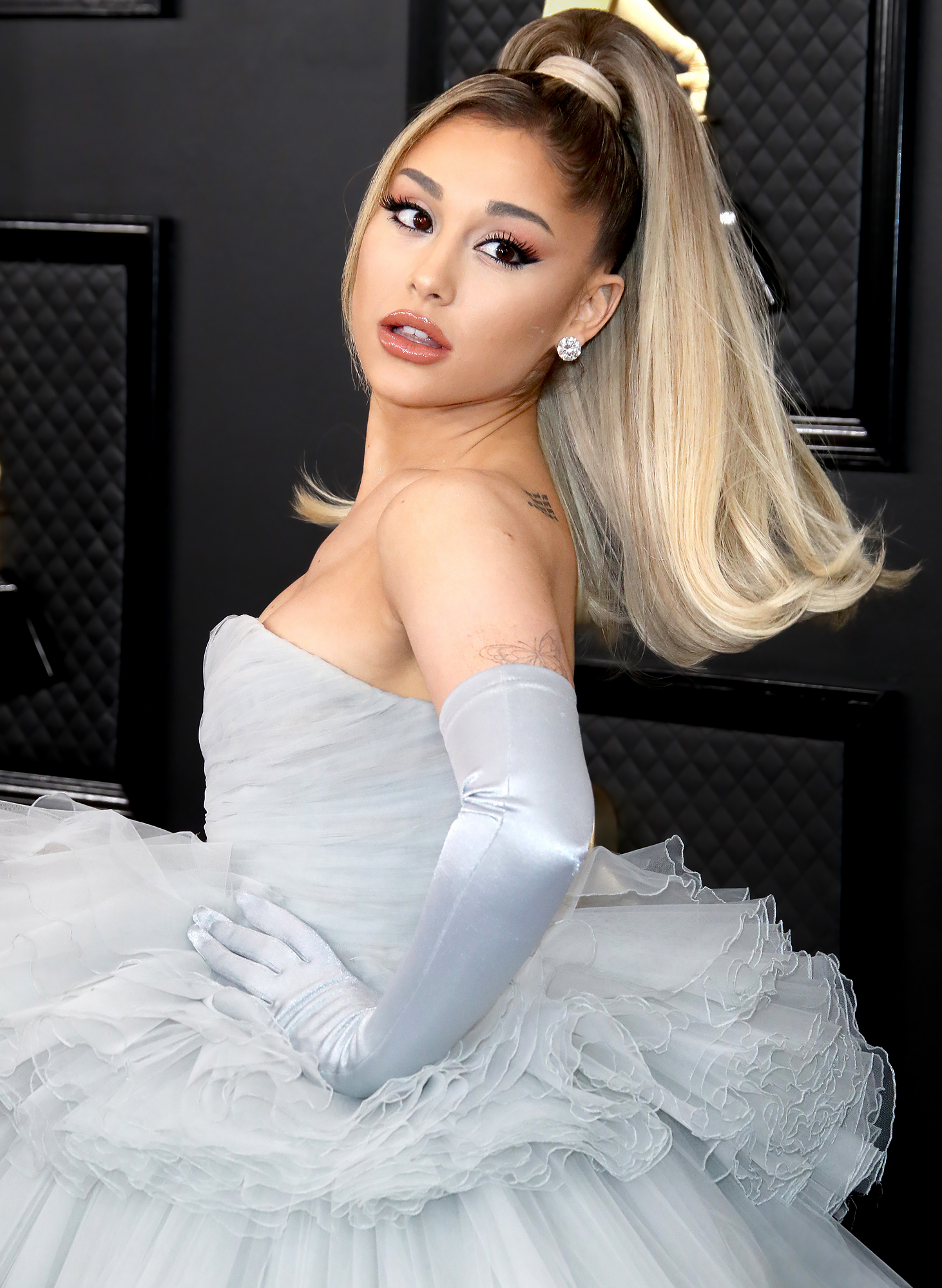
Ariana Grande Matt Baron/Shutterstock
Ariana Grande‘s on-set romance with Ethan Slater is far from her first brush with controversy.
Since her rise to the top of the charts, Grande’s career has been plagued by scandals. In July 2015, she sparked outrage online after a video of her licking donuts — and later calling them “disgusting” and saying she hates America — went viral. She issued several apologies about the incident, asserting in a statement to Us Weekly that she would “strive to be better” after the public took offense to her “poor choice of words.”
Along with allegedly feuding with former costars and being accused of plagiarism, Grande’s personal relationships have raised eyebrows over the years. Naya Rivera once claimed the pop star’s romance with Big Sean may have overlapped with her own — and some fans have allegedly found evidence that the pattern continued in more of Grande’s relationships.
Following her whirlwind engagement to Pete Davidson, Grande attempted to keep her love life on the down-low. She exchanged vows with Dalton Gomez in May 2021, but the couple called it quits after two years of marriage.
As news broke of Grande’s divorce, Us confirmed her relationship with Slater — and fans quickly tried to piece together their dating timeline. “Ariana’s determined to move forward,” a source exclusively told Us of the scandal in July 2023.
Keep scrolling for a breakdown of Grande’s biggest controversies through the years:
The ‘I Hate America’ Donut
Grande sparked backlash in July 2015 when footage went viral of her and then-boyfriend Ricky Alvarez at Wolfee Donuts in California. In the clip originally posted by TMZ, Grande licked pastries she didn’t appear to have purchased when an employee’s back was turned. When a tray of fresh donuts was brought out, she teased, “What the f—k is that? I hate Americans. I hate America! That’s disgusting.” (The incident took place on the 4th of July.)
The video was immediately met with outrage, and Grande issued a statement to Us apologizing for her behavior. “I am EXTREMELY proud to be an American and I’ve always made it clear that I love my country. … As an advocate for healthy eating, food is very important to me and I sometimes get upset by how freely we as Americans eat and consume things without giving any thought to the consequences that it has on our health and society as a whole,” she explained, acknowledging that she should have had “more discretion with my choice of words.”
During a Good Morning America appearance in September 2015, Grande apologized once again. “I think one of the biggest things I learned from that was what it feels like to disappoint so many people who love and believe in you. And that’s an excruciating feeling,” she said.
Todd Williamson/January Images/Shutterstock
Calling Out the Grammys
In February 2019, reports surfaced that Grande canceled her planned performance at the 61st annual Grammys due to production disagreements. Producer Ken Ehrlich later claimed to the Associated Press that Grande “felt it was too late for her to pull something together.”
Grande swiftly clapped back via Twitter, writing, “Mhmmm here it is! I’ve kept my mouth shut but now you’re lying about me. I can pull together a performance over night and you know that, Ken. It was when my creativity & self expression was stifled by you, that I decided not to attend. I hope the show is exactly what you want it to be and more.”
Grande was reportedly told she couldn’t perform “7 Rings” unless it was part of a medley. In her string of tweets, Grande claimed she offered suggestions for different songs. “It’s about collaboration. It’s about feeling supported. It’s about art and honesty. Not politics. Not doing favors or playing games,” she wrote. “It’s just a game y’all.. and I’m sorry but that’s not what music is to me.”
That year, Grande was nominated for Best Pop Vocal Performance and Best Pop Vocal Album, winning the latter. She returned to the Grammys stage in January 2020 to perform.
Jennette McCurdy Fallout
After her stint on Victorious, Grande teamed up with iCarly‘s Jennette McCurdy for a Nickelodeon spinoff titled Sam & Cat. In her 2022 memoir, I’m Glad My Mom Died, McCurdy claimed that she wasn’t allowed to pursue other opportunities while working on the show — but Grande was. She alleged that Nickelodeon offered her $300,000 to not discuss her experience at the network publicly.
“What finally undid me was when Ariana came whistle-toning in with excitement because she had spent the previous evening playing charades at Tom Hanks’ house,” she wrote. “That was the moment I broke.”
She added: “Ariana misses work in pursuit of her music career while I act with a box. I’m pissed about it. And I’m pissed at her. Jealous of her.”
Before the series was canceled in July 2014, it was put on a production hiatus amid reports that Grande was earning a much higher salary than her costar. Grande shut down the “absolutely ridiculous and false” speculation via Twitter.
“Jennette and I agreed upfront that we would be treated equally on this show in all regards (as we should be, considering we each work just as hard as the other on this show),” she wrote. “I don’t know who’s putting these idiotic quotes out there but I thought I’d straighten it out and try to end this nonsense.”
McCurdy fueled rumors of a feud between her and Grande with her web series What’s Next for Sarah? after Sam & Cat’s cancelation. The show featured a pop star named Gloriana who rocked a high ponytail — Grande’s signature style.
Broadimage/Shutterstock
Naya Rivera Caught Her With Big Sean
Grande dated Big Sean in 2014 after his split from former fiancée Rivera — but the Glee alum claimed there was some overlap in the two romances.
“On the one day that he was back in LA, [Sean] said he didn’t want to see me. But since she had a key, she let herself in to his house,” Rivera wrote in her 2016 memoir, Sorry Not Sorry. “I walk in, go downstairs, and guess what little girl is sitting cross-legged on the couch listening to music? … It rhymes with ‘Smariana Schmande.’”
Rivera remembered feeling blindsided by her and Sean’s breakup. “I learned that I was no longer getting married from the internet, and at the same time as the rest of the world,” she alleged. “Not only were we not getting married, we weren’t even together anymore.”
Grande never responded to Rivera’s claims. Rivera, meanwhile, died in a drowning accident in July 2020.
‘Wicked’ Romance With Ethan Slater
Us confirmed in July 2023 that Grande and Gomez were separated after two years of marriage. Shortly after the breakup made headlines, Us confirmed that Grande had already moved on with her Wicked costar. (Slater was married to Lilly Jay at the time, with whom he welcomed a son in 2022.)
According to a source, Slater informed Jay about his relationship with Grande “days before” it became public. (A source close to Grande denied the claims.) While Grande and Slater didn’t immediately comment on the scandal, Jay shared her side of the story with Page Six.
“[Ariana’s] the story really. Not a girl’s girl. My family is just collateral damage,” she claimed. “The story is her and Dalton.”
Slater filed for divorce from Jay in July 2023. An insider exclusively told Us that Gomez, meanwhile, wanted to give Grande “space” but hadn’t “given up hope that they can make things work.”
Annie Wermiel/NY Post; Xavier Collin/Image Press Agency/MEGA
Cultural Appropriation Accusations
Grande has been criticized for Blackfishing — or seemingly making her skin darker — and other instances of appropriation through the years. In 2019, she was accused of exploiting Asian culture by using Japanese characters in her visuals (and in a misspelled tattoo).
“I can’t read or write kanji obviously. What do you want me to do? It was done out of love and appreciation,” she wrote in a since-deleted tweet about her ink at the time. “What do you want me to say? U kno how many people make this mistake and DON’T care just cause they like how it looks? Bruh… I care sooooo much. What would u like me to do or say? Forreal.”
Grande was also selling merch with Japanese characters on it that was eventually taken down from her site. “People on this app really don’t know how to be forgiving or gentle when someone has made an innocent mistake. No one considers feelings other than their own,” she wrote amid the backlash.
Around the same time, Grande was accused of plagiarizing “7 Rings.” Princess Nokia claimed in a social media video that Grande’s hit sounded similar to “Mine” from her mixtape 1992. “Ain’t that the lil song I made about brown women and their hair? Hmmm… sounds about white,” she hinted.
In response, Grande posted — and subsequently deleted — via her Instagram Story: “White women talking about their weaves is how we’re gonna solve racism.” She later apologized for the “out of pocket” quip.
Alleged Diva Behavior
Since the beginning of her career, Grande has been accused of making outrageous demands and demonstrating unprofessional behavior. In 2014, rumors swirled that Grande’s team had a list of off-limits topics prepared for interviews and that Grande only wanted to be photographed on her left side. (She called the reports “nonsense” in a radio interview at the time.)
Grande opened up about being labeled a “diva” during a 2020 sit-down with Zane Lowe. “I stopped doing interviews for a really long time because I felt like whenever I would get into a position where somebody would try to say something for clickbait or twist my words or blah, blah, blah, I would defend myself. And then, people would be like, ‘Oh, she’s a diva,’” she said. “I was like, ‘This doesn’t make any sense.’”
While she felt like her “opinions” were often “manipulated” for a headline, Grande didn’t see the same thing happening to men in the public eye. “It’s like when men express their opinions or defend themselves or are directing something and making notes on something, they’re brilliant. And they’re genius at it. And yet, it’s just so not the same thing with women … It’s not always that way. But it does make you want to quiet down a little bit.”
Sign up for Us Weekly’s free, daily newsletter and never miss breaking news or exclusive stories about your favorite celebrities, TV shows and more!
Grande confessed that it hasn’t always been easy to approach negativity with a “f–k that” attitude.
Ariana Grande‘s on-set romance with Ethan Slater is far from her first brush with controversy. Since her rise to the top of the charts, Grande’s career has been plagued by scandals. In July 2015, she sparked outrage online after a video of her licking donuts — and later calling them “disgusting” and saying she hates
Us Weekly Read More


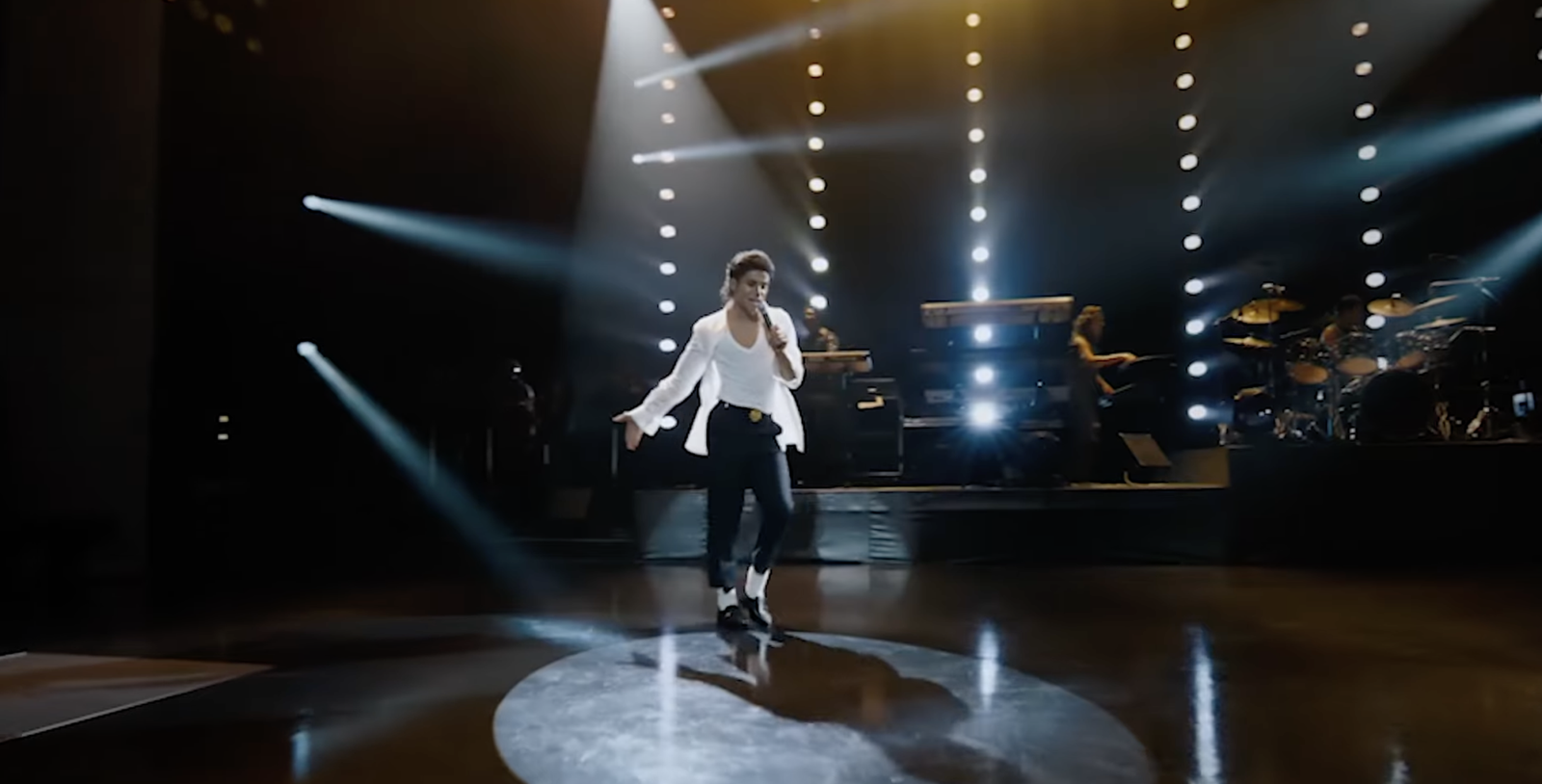
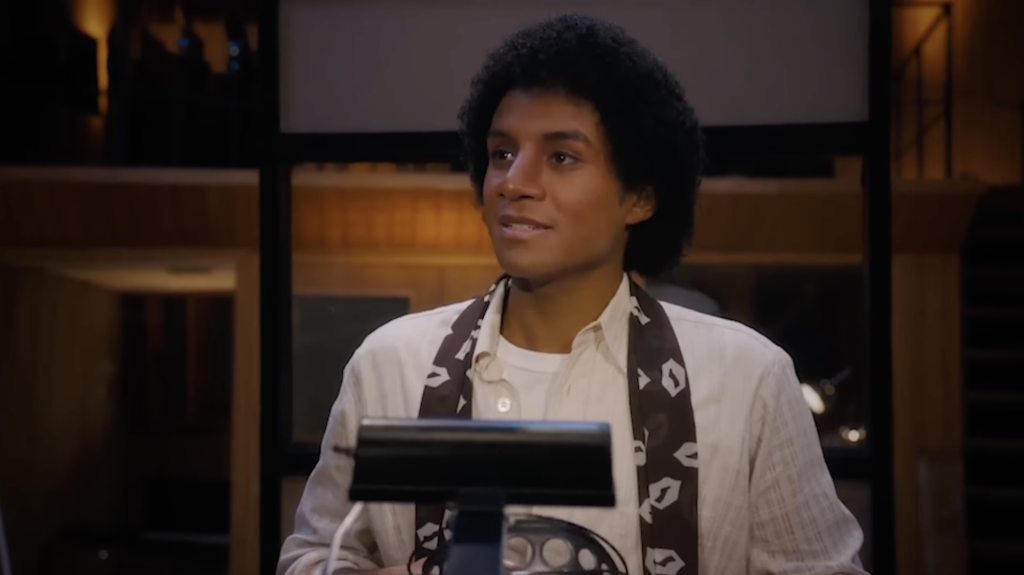
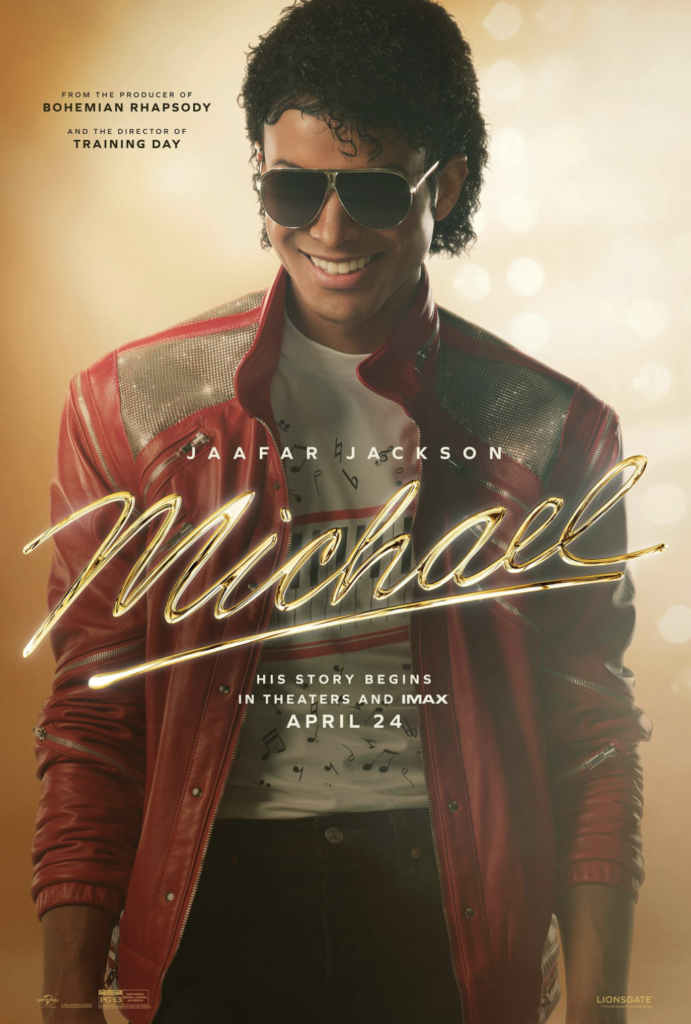
The Michael Jackson biopic Michael is more than celebrity drama; it is a real-time lesson in how legal decisions can quietly rewrite a story that millions of people will see. You do not need a $200M budget for the same forces—contracts, settlements, and rights issues—to shape or even erase key parts of your own work.
What Happened to Michael
The film Michael originally included a third act that addressed the 1993 child sexual abuse allegations and their impact on Jackson’s life and career. Trade reports say this version showed investigators at Neverland Ranch and dramatized the scandal as a turning point in the story. After cameras rolled, lawyers for the Jackson estate realized there was a clause in the settlement with accuser Jordan Chandler that barred any depiction or mention of him in a movie.
Because of that old agreement, the filmmakers had to remove all references to Chandler and rework the ending so the story stopped years earlier, in the late 1980s at Jackson’s commercial peak.
According to reporting, this meant roughly 22 days of reshoots, costing around 10–15 million dollars and pushing the total budget over 200 million.
Meanwhile, actress Kat Graham confirmed her portrayal of Diana Ross was cut for “legal considerations,” showing how likeness and approval issues can wipe out an entire character even after filming.
For audiences, the result is a movie that intentionally avoids one of the most controversial chapters of Jackson’s life, which some critics argue makes the portrait feel incomplete or selectively curated.
The Hidden Power of Contracts and Rights
The key detail in the Michael story is that a contract signed decades ago could dictate what present-day filmmakers are allowed to show. That settlement clause did not just affect the people who signed it; it effectively controlled the narrative of a big-budget film made years later. This is how legal documents become invisible co-authors: they quietly set boundaries around what your story can and cannot include.
Creators face similar invisible lines with:
- Life-rights and defamation: If you dramatize real people, especially in a negative light, they can claim defamation or invasion of privacy if your portrayal is inaccurate or harmful.
- Copyright and trademarks: Unlicensed music, clips, logos, or artwork can trigger copyright or trademark claims that block distribution or force expensive changes.
- Distribution contracts: Some deals give distributors the right to re-edit, retitle, or repackage your work without your approval unless you negotiate otherwise.
Legal commentary warns that fictionalizing real events and people carries heightened risk because audiences tend to connect your dramatization back to actual individuals. That risk does not disappear just because you are “small” or “indie”; impact, not audience size, usually determines exposure.
Why This Matters for Indie Filmmakers and Creators
Independent filmmakers often choose the indie route precisely to maintain creative control, but they can face more risk if they skip legal planning. Common problems include unclear ownership of the script, missing music licenses, handshake agreements with collaborators, and no written permission to use locations or people’s likenesses. These are the kinds of issues that can derail distribution, block a streaming deal, or force last-minute cuts that fundamentally change your story.
Legal guides for indie filmmakers consistently emphasize a few realities:
- You do not fully “own” your film unless you have clear contracts for writing, directing, producing, and underlying rights.
- Unregistered or unlicensed creative elements (like music and logos) can make your project uninsurable or unattractive to distributors.
- Fixing legal problems after the fact is almost always more expensive and limiting than planning for them at the beginning.
So when you watch Michael skip over certain events, you are seeing, in exaggerated form, the same forces that can shape an indie short, web series, documentary, or podcast episode.
Practical Legal Lessons You Can Apply Now
You do not need a law degree, but you do need a basic legal strategy for your creative work. Here are practical steps drawn from entertainment-law and indie-film resources:
- Clarify who owns the story
- Use written agreements with co-writers, directors, and producers that state who owns the script and finished film.
- If your work is based on a real person or memoir, secure life-rights or written permission where appropriate, especially if the portrayal is sensitive.
- Be intentional with real people and events
- When telling true or inspired-by-true stories, avoid making specific, negative claims about identifiable people unless they are well-documented and legally vetted.
- Change names, details, and circumstances enough that the person is not clearly identifiable if you do not have their cooperation.
- Lock down music and visuals
- Use original scores, licensed tracks, or reputable libraries; never assume you can keep a song just because it is in a rough cut.
- Clear artwork, logos, and recognizable brands, or replace them with generic or custom-designed alternatives.
- Protect yourself in contracts
- When signing any distribution or platform deal, read the clauses about editing, retitling, and marketing carefully; ask for limits or at least consultation rights.
- Include terms that let you reclaim rights if a partner fails to release the work, goes dark, or breaches key promises.
- Document everything
- Keep organized copies of releases, licenses, and contracts; these documents are part of your project’s value and proof of your rights.
- Register your work where applicable (for example, copyright), which strengthens your ability to enforce your rights if someone copies you.
Education-focused legal resources repeatedly stress that preventative steps—basic contracts, clear permissions, and simple registrations—are far cheaper than dealing with takedowns, lawsuits, or forced rewrites later.
The Big Takeaway: Story and Law Are Connected
The Michael biopic illustrates what happens when legal obligations and creative vision collide: whole characters disappear, endings are rewritten, and the public only sees a version of the story that fits within old contracts.
As an indie filmmaker, writer, or content creator, you may not have millions at stake, but you do have something just as valuable—your voice and your ability to tell the story you meant to tell.
Understanding the legal dimensions of your work is not a distraction from creativity; it is a way of protecting it. When you know where the legal boundaries are, you can design stories that are bold, truthful, and still safe enough to reach the audiences they deserve.
Entertainment
Mother’s Day AfroFun Praise Party: Gospel Dance, Fitness & Feel‑Good Stats in 60 Minutes

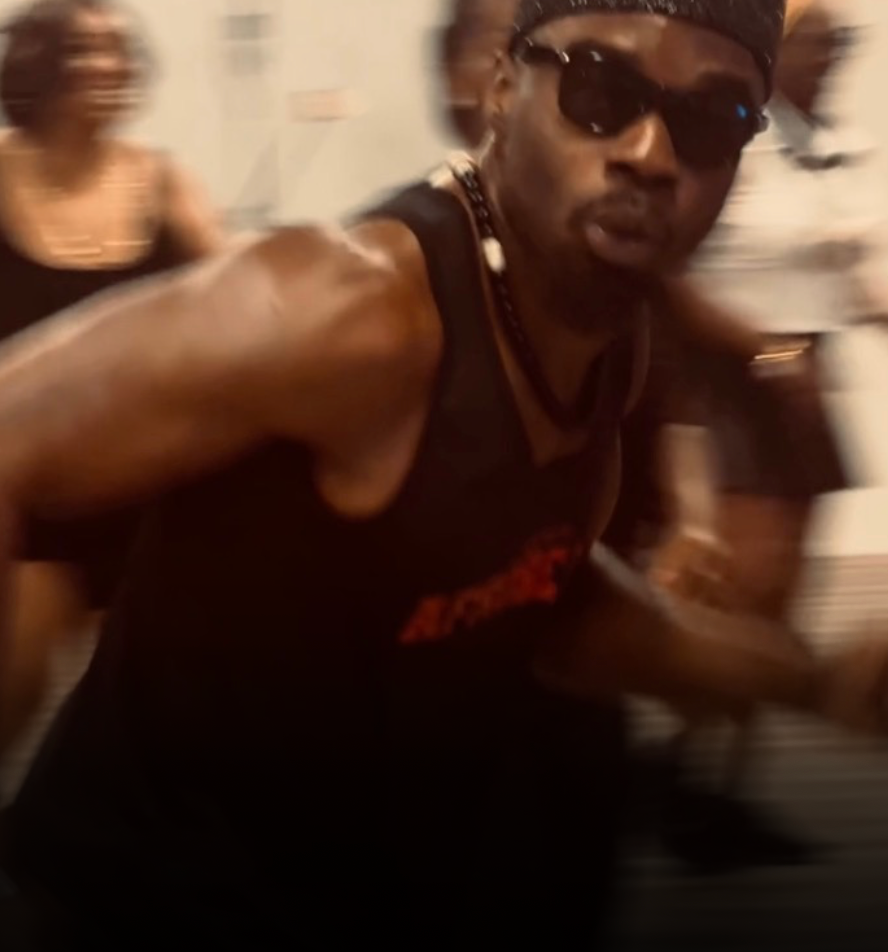
This Mother’s Day in Spring, Texas, you’re invited to do more than just sit at brunch—come dance, sweat, and celebrate at the Mother’s Day AfroFun Praise Party: Gospel Dance, Fitness & Feel‑Good Stats in 60 Minutes. This one‑hour Afrobeat gospel dance class is for men and women, bringing live worship, high‑energy choreography, and real fitness benefits together in one unforgettable experience.
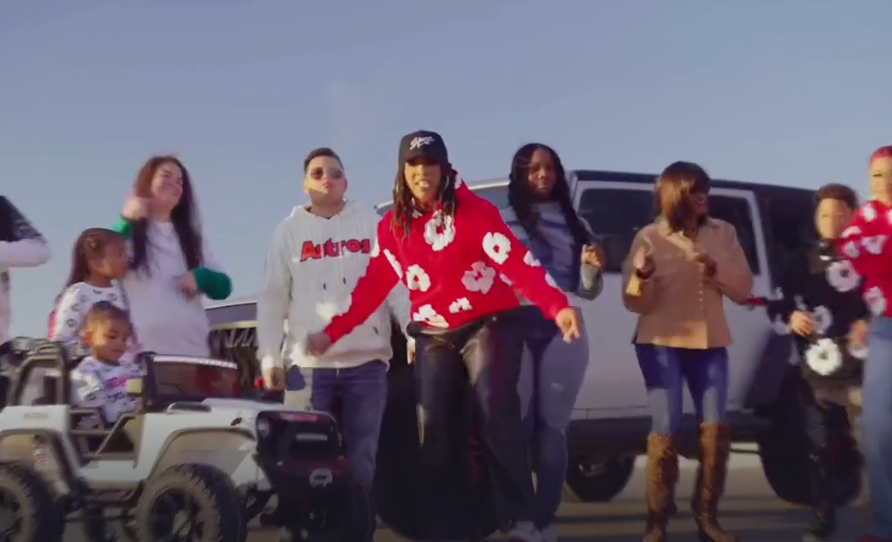
Live gospel + Afrobeat energy
On the mic is powerhouse gospel singer Shawna Pat, known for her heartfelt worship, energetic praise songs, and ministry that makes every room feel like church and concert at the same time. She’ll be leading live vocals all class long, turning each track into a moment to sing along, shout, or just soak in the presence while you move.
On the floor, Andrew from WoWo Boyz and the Kingdrewwskyy crew bring the Afrobeat power. Expect easy‑to‑follow, Afro‑inspired choreography that looks hype on video but still feels doable if you’re brand new to dance. Together, Shawna and Andrew create a “praise party meets fitness class” vibe you can’t get from a playlist or a regular gym session.
A co‑ed Mother’s Day celebration that counts
This event is built for men and women—moms, dads, sons, daughters, couples, and friends who want to honor the mothers in their lives while doing something healthy and fun. The format is simple: warm‑up, dance‑cardio, a short ministry moment focused on mothers and families, and a cool‑down to breathe and stretch it out.
All levels are welcome. If you can walk and two‑step, you can do this class. You choose your intensity: go all‑in with every jump or keep it low‑impact and still stay in the groove. The music is clean and faith‑filled, so you never have to worry about lyrics or the vibe if you’re inviting church friends or bringing teens.
The feel‑good fitness stats
Behind the fun, this one hour delivers real health wins. Health guidelines recommend at least 150 minutes of moderate‑intensity cardio per week, but less than half of adults hit that number. AfroFun helps close that gap—by making movement feel like a celebration instead of a chore.
In just 60 minutes, many people can:
- Hit 4,000–6,000+ steps, based on what similar dance‑fitness and Mother’s Day cardio sessions log in under an hour.
- Spend solid time in their heart‑healthy zone, where cardio actually strengthens the heart and builds endurance.
- Knock out a big chunk of their weekly 150‑minute cardio goal in one fun, faith‑filled session.
You walk out with more than photos and memories—you leave with better numbers for your heart, body, and mood.
Get your tickets
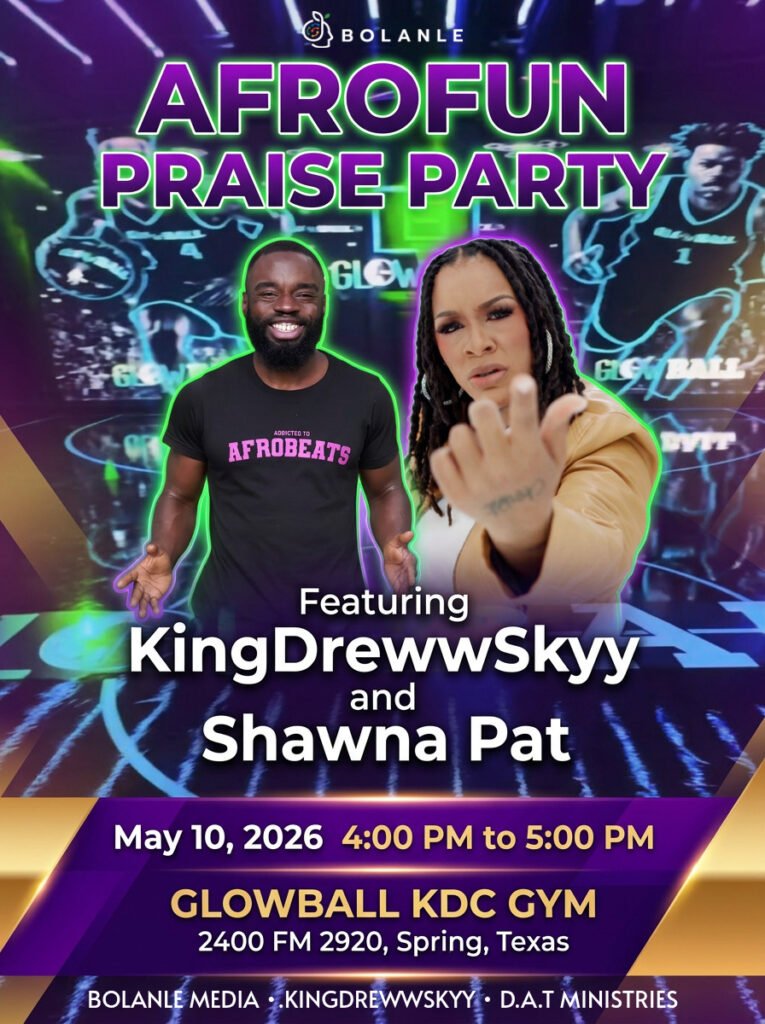
AfroFun Praise Party happens Sunday, May 10, 4–5 PM at 2400 FM 2920, Spring, TX 77388, with free parking and in‑person, high‑energy vibes. Tickets are limited, and early spots always move fastest once people see Shawna Pat and WoWo Boyz are in the building.
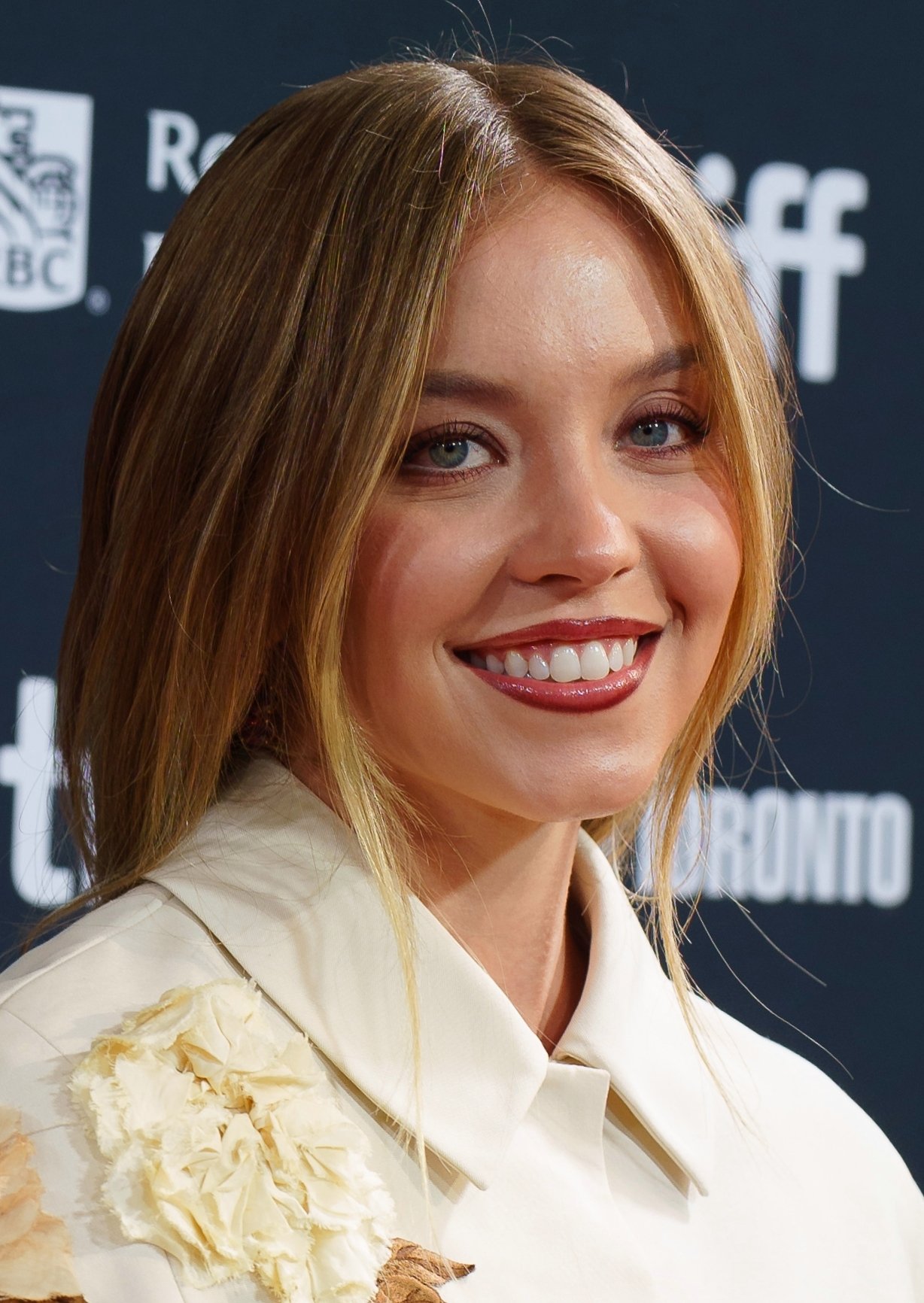
The question Sydney Sweeney’s career forces every serious artist to ask themselves.
Most people say they want to be an actor. But wanting the life and being willing to do what the life requires are two entirely different things. Sydney Sweeney’s performance as Cassie Howard in Euphoria is one of the clearest examples in recent television of what it actually looks like when an artist refuses to protect themselves from the story they are telling.
The Performance That Started a Conversation
Cassie Howard is not a comfortable character to watch. She is messy, desperate, and heartbreakingly human in ways that most scripts would have softened or simplified. Sydney Sweeney did not soften her. She played every scene at full exposure — the breakdowns, the humiliation, the moments where Cassie is both completely wrong and completely understandable at the same time.
What made the performance remarkable was not the difficulty of the scenes. It was the consistency of her commitment to them. Night after night on set, take after take, she showed up and gave the camera something real. That is not a small thing. That is the kind of discipline that separates working actors from generational ones.
What the Industry Does Not Tell You
The entertainment industry sells you a version of success built around talent, timing, and luck. And while all three matter, none of them are the real differentiator in a room full of equally talented people. The real differentiator is willingness — the willingness to be honest, to be vulnerable, and to let the work require something personal from you.
Most actors hit a wall at some point in their career where a role demands more than they have publicly shown before. The ones who say yes to that moment, who trust the material and the director enough to go somewhere uncomfortable, are the ones audiences remember long after the credits roll.
Sydney Sweeney said yes repeatedly. And the industry took notice.
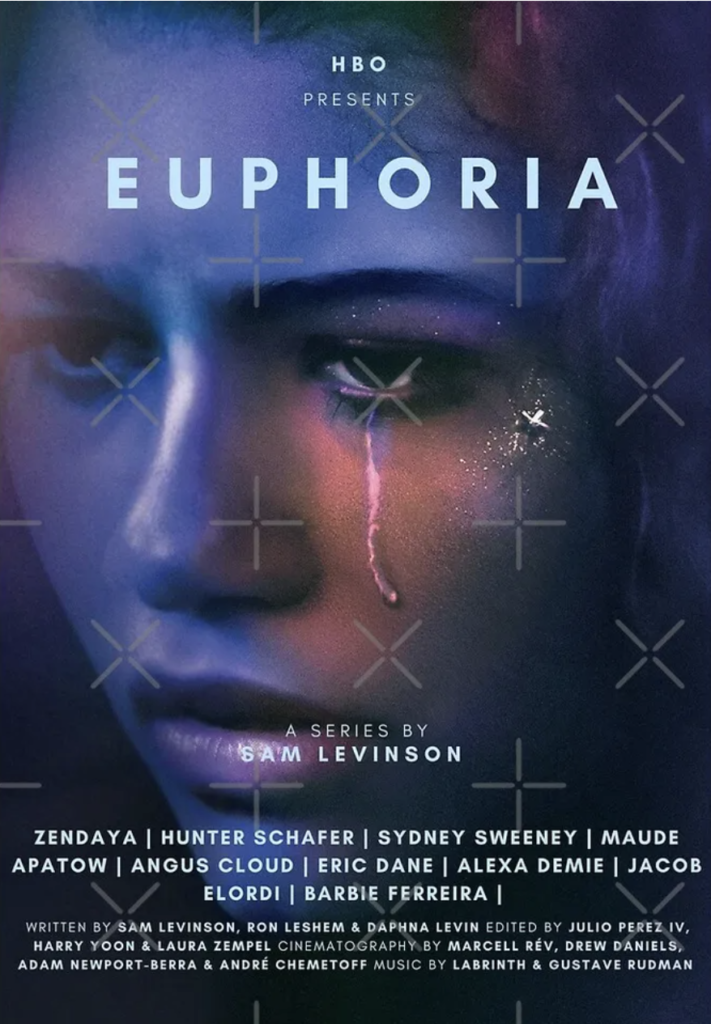
The Question Worth Asking Yourself
Before you answer, really think about it. There is a moment in every serious audition room where someone might ask you to go further than you are comfortable with — to access something real, to stop performing and start revealing. In that moment, you have to decide what your dream is actually worth to you and, more importantly, what parts of yourself you are not willing to trade for it.
That is the question Euphoria quietly raises for anyone watching with ambition in their chest. Not “could I do that,” but “should I ever feel pressured to.” There is a difference between an artist who chooses vulnerability as a creative tool and one who is pressured into exposure they never agreed to. Knowing that difference is not a weakness. It is the most important thing a young actor can understand before they walk into a room that will test it.
Because the only role that truly costs too much is the one that asks you to abandon who you are to play it.
What You Can Take From This
Whether you are an actor, a filmmaker, a content creator, or someone simply building something from scratch, the principle is the same. The work that connects with people is almost always the work that cost the creator something real. Audiences can feel the difference between performance and truth. They always could.
Sydney Sweeney did not become one of the most talked-about actresses of her generation because she got lucky. She got there because she was willing to be completely, uncomfortably human in front of a camera — and because she knew exactly who she was before she let the role take over.
That combination — full commitment and a clear sense of self — is rarer than talent. And it is the thing worth chasing.
Written for Bolanle Media | Entertainment. Culture. Conversation.

FIPRM Expands Into Sports, Partners With Bolanle Media to Launch New Media Platform

What the Michael Biopic Means for Every Indie Filmmaker

Mother’s Day AfroFun Praise Party: Gospel Dance, Fitness & Feel‑Good Stats in 60 Minutes


 News3 weeks ago
Why Your Indie Film Disappears Online
- News4 weeks ago
A Civilization Will Die Tonight — And We’re All Just Watching
- News4 weeks ago
The Franchise Is Over. Here’s Who’s Winning Now.
- Advice3 weeks ago
What Actors Can Learn From Zendaya
- News4 weeks ago
Why Most Indie Films Fail (And How to Avoid It)
- Entertainment3 weeks ago
Vertical Films Changed Everything. Are You Ready?
- Entertainment3 weeks ago
Bieber’s Coachella Set Has Everyone Arguing Again
- News2 weeks ago
She Was Supposed to Come Home: The Life, Death, and Dehumanization of Ashlee Jenae