

Health
AI Doctors and Nurses Coming to China

China has unveiled the world’s first artificial intelligence (AI) hospital named “Agent Hospital”, which is a virtual facility staffed by 14 AI doctors and 4 AI nurses. Here are the key details about this pioneering AI hospital:
Capabilities of AI Doctors
- The AI doctors at Agent Hospital can attend to up to 10,000 patients in just a few days, a task that would take human doctors at least two years to accomplish.
- Before inauguration, the AI doctors were tested on the US Medical License Exam questions and achieved an impressive accuracy rate of 93.06%.
- They can handle the entire process of patient care, including consultation, examination, diagnosis, and treatment recommendations, even for complex scenarios like major respiratory diseases.
How it Works
- Agent Hospital is a virtual facility, so patients interact with the AI doctors through computers or smartphones rather than visiting a physical building.
- The AI doctors are powered by advanced artificial intelligence systems and large language models trained on the personal experiences of a large group of human doctors.
- They can autonomously understand symptoms, diagnose illnesses, and suggest treatments without human intervention.
Benefits and Future Plans
- The AI hospital aims to make healthcare more accessible, efficient, and responsive by streamlining procedures and enabling quicker consultations.
- It will initially be integrated into medical universities to aid in training real-life doctors by simulating various medical scenarios, including potential pandemic outbreaks.
- Eventually, the virtual AI doctors will be rolled out to patients at hospitals across China, expanding the reach and impact of AI in healthcare.
In summary, China’s Agent Hospital represents a significant milestone in integrating AI into healthcare, with the potential to revolutionize patient care, medical training, and preparedness for future health crises.











By Bolanle Media | The Roselyn Omaka Show
You have probably said it before. “Pay attention.” “Just try harder.” “Why don’t you remember anything I taught you?”
And your child — or maybe the child you once were — looked back at you with that blank stare. Not defiant. Not lazy. Just… gone.
What if that was never a focus problem? What if it was never about ability at all?
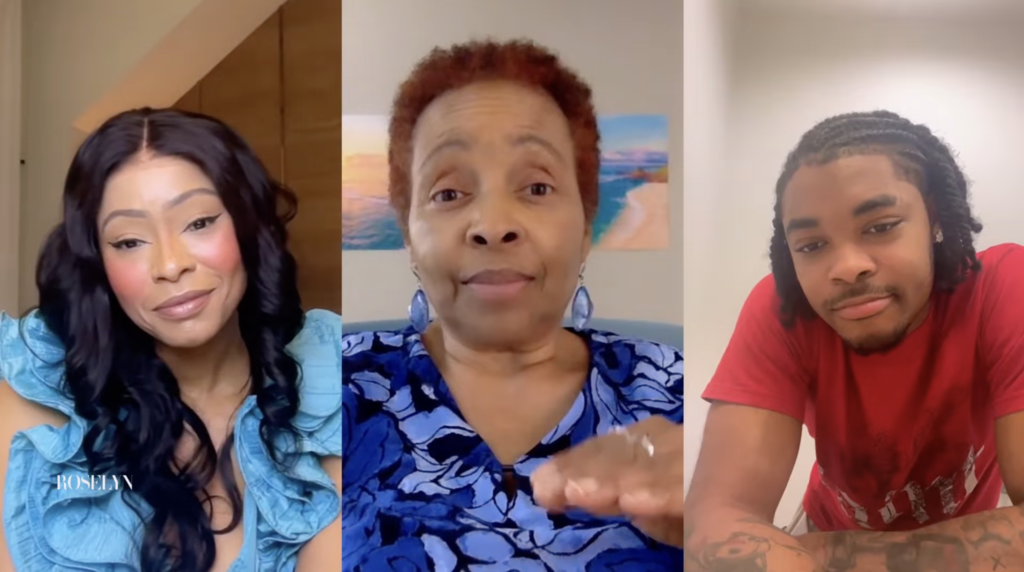
Educator and emotional intelligence strategist Selina Joy Jackson has spent her career answering that exact question. In a candid, wide-ranging conversation on The Roselyn Omaka Show, Jackson sat down with host and Bolanle Media CEO Roselyn Omaka and co-host Chris Gone Crazy — the Houston-based content creator with over 5 million followers across TikTok, Instagram, and YouTube — to break down what is really happening inside the minds of kids who struggle, and what parents, teachers, and communities can actually do about it. What she shared changes everything about the way we think about learning, behavior, and the kids we keep calling problems.
Memory Is Mood Related — And Nobody Told You That
Here is the science that should be taught in every teacher training program but isn’t.
Your brain stores memories attached to the emotional state you were in when you learned them. That means if a child sits in a classroom feeling anxious, overwhelmed, or emotionally unsafe — they can learn the material in that moment, but to recall it later, their brain has to return to that same emotional state.
Who wants to go back there?
This is why your child remembers nothing from the class they dreaded. This is why you can recall every detail of a vacation but blank on what you studied the night before a test you were terrified of. It is not intelligence. It is neuroscience.
The fix, according to Jackson, is simple and radical at the same time: feel good first. Not after the lesson. Not as a reward for good behavior. First. Before anything else is introduced.

The Hidden Block Nobody Is Talking About
Jackson calls it the “hidden block” — and once you see it, you cannot unsee it.
When a child is stressed, scared, or emotionally dysregulated, their brain shifts into survival mode. The prefrontal cortex — the part responsible for focus, reasoning, and learning — essentially goes offline. The brain is too busy managing perceived threat to take in new information.
From the outside, this looks like:
- Refusing to try
- Zoning out in class
- Acting out or shutting down
- “Not caring” about school
But none of that is attitude. It is biology.
Jackson developed a four-step framework to address it directly:
Recognize — identify that a hidden block is present
Regulate — help the child (or adult) return to a calm state
Repattern — build new emotional habits and responses
Return to Learning — now the brain is actually ready
This framework is the backbone of her book Break the Hidden Block and her EMOMASTERS® program, which gives kids and parents practical tools to move through each step.
The Need to Control Is a Survival Response — Not a Personality Trait
One of the most powerful moments in Jackson’s conversation on The Roselyn Omaka Show came when she broke down what the psychological need for control actually is.
Micromanagement. Overthinking. Anxiety when outcomes are uncertain. Needing to know every detail before you can relax.
Most people think that is just who they are. Jackson says it is what their nervous system learned.
When the subconscious mind treats control as a need — something without which it cannot survive — it triggers the same stress response as a physical threat. The anxiety is not about the situation. It is about a deeply held belief that says: without control, I am not safe.
The shift is not about letting go of your ability to direct outcomes. It is about releasing the desperation. Drop the need. Keep the power. Those are two very different operating modes.
What the School System Is Still Getting Wrong
Jackson does not mince words on this one.
Schools are designed to deliver information. They are not designed — at least not yet — to first ensure that the people receiving that information are in a state where they can actually absorb it. A child who walks into a classroom carrying last night’s argument, this morning’s hunger, or a month of feeling invisible is not a learning-ready brain. They are a survival-mode brain in a chair.
Telling that child to focus is like telling someone with a broken leg to run.
The research backs this up. Studies consistently show that emotional dysregulation is one of the strongest predictors of academic struggle — stronger, in many cases, than cognitive ability. Kids who cannot regulate their emotions cannot access their own intelligence.
Jackson’s tools are designed to bridge that gap — for classrooms, for homes, and for the kids who have been written off as problems when they were really just overwhelmed. You can explore her full programs and workshops here.
Tools You Can Use Right Now
Jackson has built an entire resource library around this work. Here is where to start:
Break the Hidden Block — her foundational book on the science of emotional blocks and how to dismantle them. Start here.
EMOMASTERS® Unstoppable Me Program — a practical toolkit for parents and educators to use with kids, helping them recognize and regulate their emotions before those emotions take over.
Brain-Ready Classroom Library — built specifically for educators who want to create learning environments where kids can actually receive what is being taught.
Math Magic Library — Jackson’s work connecting emotional readiness to academic subjects, including math, which is one of the highest-anxiety subjects for struggling students.
Feel Good First Course — the starting point for anyone new to her work. Brain-based, practical, and accessible for parents, teachers, and students alike.
Connect With Selina Joy Jackson
Follow her work and stay connected across her platforms:
- Website: selinajoyjackson.com
- Instagram: @selina_joy_jackson
- YouTube: Selina Joy Jackson
- LinkedIn: Selina Joy Jackson, MA
- Book a call or speaking inquiry: Contact Selina
The Line That Stays With You
Toward the end of her conversation on The Roselyn Omaka Show, Jackson said something that quieted the room.
“You’re not alone and you’re not broken.”
It comes from her own story. From the foster care homes. From the classrooms where she sat feeling invisible. From a kid who the system had plenty of explanations for but no real solutions.
She became the solution.
And now she is handing those tools to every parent, teacher, and child who needs them — which, if we are being honest, is most of us.
Watch the full episode of The Roselyn Omaka Show with Selina Joy Jackson on the Bolanle Media YouTube channel. Link in bio.
Follow Bolanle Media for conversations that make you see the world differently.

The film industry is entering a new body era, and this time, the co-star is a syringe.
GLP-1 drugs like Ozempic, Wegovy, and Mounjaro have moved from diabetes clinics into casting conversations, red carpets, and agency strategy. In the United States, roughly 1 in 8 adults report having used a GLP-1 drug, with about 6 to 12 percent actively using one today. Globally, usage has surged from approximately 4 million people in 2020 to around 30 million by 2026.
This is no longer a niche health trend. It is a structural shift—one that is reshaping how bodies are constructed, perceived, and rewarded on screen.

At a clinical level, the appeal is clear. In major obesity trials, semaglutide has produced average weight loss of 15 to 17 percent of total body weight over 68 to 104 weeks, with some regimens approaching 19 to 21 percent for sustained users. In an industry built on transformation, those numbers carry real influence.
But rapid transformation leaves a visible trace. The phenomenon often called “Ozempic face”—hollowed cheeks, looser skin, a subtly aged appearance—reflects how quickly fat loss can outpace the skin’s ability to adjust.
For filmmakers, this is not just aesthetic—it is cinematic. Performance lives in the face. Micro-expressions, softness, and facial volume shape how emotion reads on camera. A performer may reach an “ideal” body while losing something less measurable but equally important on screen.
Beneath this cultural shift lies an origin story that feels almost written for film.
In the 1990s, researchers studying the Gila monster isolated a peptide in its venom called exendin-4, which mimicked a human hormone involved in blood sugar regulation but lasted significantly longer in the body. That discovery led to early GLP-1 drugs such as exenatide, used by millions of patients worldwide, and eventually to semaglutide.
By mid-2025, semaglutide-based drugs (including Ozempic and Wegovy) generated approximately $16 to $17 billion in just six months, making it one of the highest-grossing drug classes globally. Analysts project the broader incretin market could reach $200 billion annually by 2030.

Inside those numbers is a more complex human story.
The benefits are well documented: improved blood sugar control, significant weight loss, and reduced cardiovascular risk. But as use expands, so does scrutiny. Researchers and regulators are tracking side effects ranging from severe gastrointestinal issues and gastroparesis to gallbladder disease and pancreatitis, as well as rarer concerns such as vision complications and potential neurological signals.
At the same time, adoption continues to accelerate. J.P. Morgan projects roughly 10 million Americans on GLP-1 drugs by 2025, rising toward 25 to 30 million by 2030. At that scale, usage becomes ambient—part of everyday life across industries, including film and television.
And yet the marketing tells a different story. Pharmaceutical campaigns rely on cinematic language—aspirational visuals, controlled lighting, emotional transformation arcs—while legally required risk disclosures recede into fine print.
For independent filmmakers, this moment opens several narrative lanes.
There is the body: performers navigating an industry where a once-niche diabetes drug has become a quiet career tool.
There is the machine: a pharmaceutical ecosystem where a single drug category generates tens of billions annually, rivaling major entertainment sectors.
And there is the myth: a culture increasingly turning to a hormone-based intervention—derived from venom biology—rather than addressing systemic issues like food access, stress, and inequality.
Technology intensifies all of it. Ultra-high-resolution cameras and HDR workflows capture every detail—skin texture, volume shifts, micro-expressions. As more on-screen talent uses the same class of drugs, a new visual baseline begins to form, often without audiences realizing why.
There is also a clear economic divide. GLP-1 drugs can cost $800 to $1,000 or more per month without insurance in the United States, and coverage remains inconsistent. Rising demand has led to shortages and a parallel market of compounded or unregulated alternatives.

The gap between who can access consistent, medically supervised treatment and who cannot is becoming part of the story itself.
For cinema, the imagery is already there: the Sonoran desert, a Gila monster, laboratory research, pharmaceutical earnings calls, red carpets, and transformation narratives.
A compound derived from venom becomes a global product that reshapes not only bodies, but expectations.
Perhaps the most uncomfortable layer is the industry’s own role. Casting preferences, transformation culture, and unspoken aesthetic standards reinforce a pharmacological look without ever naming it.
No one explicitly instructs performers to take these drugs. The system simply rewards the results.
This is not a distant trend. It is a present-tense shift.
The numbers are rising. The images are changing. The influence is expanding.
The question is whether independent cinema will define this moment while it is still unfolding—or whether the story will once again be shaped by the industries profiting most from it.
Entertainment
Mother’s Day AfroFun Praise Party: Gospel Dance, Fitness & Feel‑Good Stats in 60 Minutes

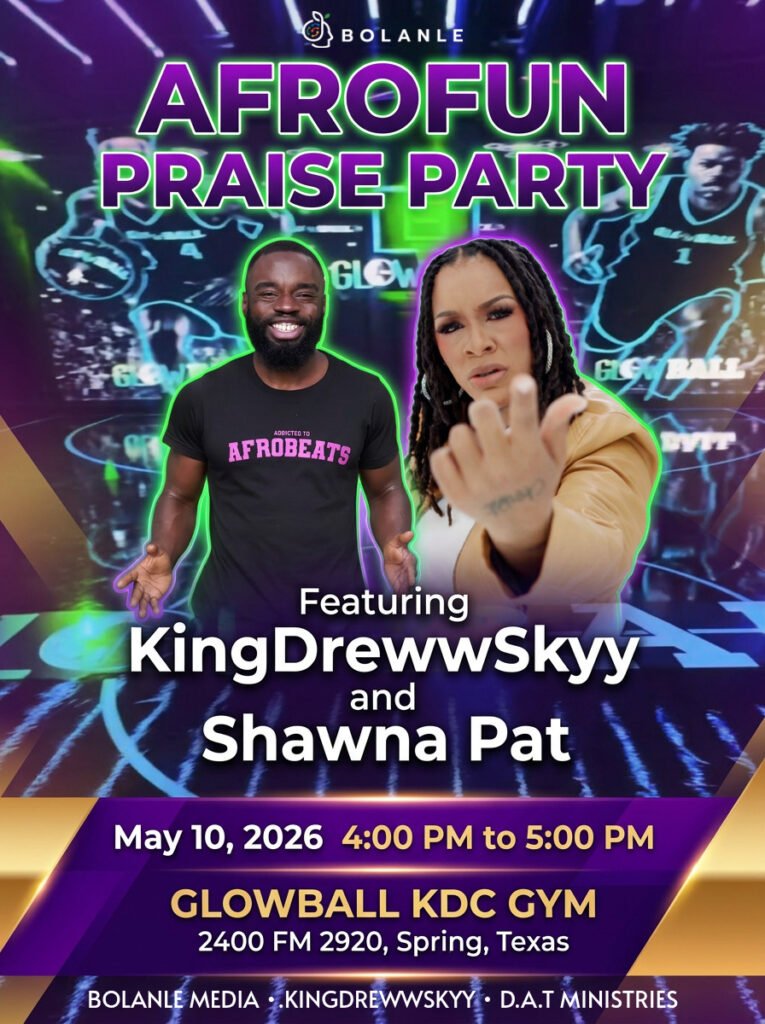
This Mother’s Day in Spring, Texas, you’re invited to do more than just sit at brunch—come dance, sweat, and celebrate at the Mother’s Day AfroFun Praise Party: Gospel Dance, Fitness & Feel‑Good Stats in 60 Minutes. This one‑hour Afrobeat gospel dance class is for men and women, bringing live worship, high‑energy choreography, and real fitness benefits together in one unforgettable experience.

Live gospel + Afrobeat energy
On the mic is powerhouse gospel singer Shawna Pat, known for her heartfelt worship, energetic praise songs, and ministry that makes every room feel like church and concert at the same time. She’ll be leading live vocals all class long, turning each track into a moment to sing along, shout, or just soak in the presence while you move.
On the floor, Andrew from WoWo Boyz and the Kingdrewwskyy crew bring the Afrobeat power. Expect easy‑to‑follow, Afro‑inspired choreography that looks hype on video but still feels doable if you’re brand new to dance. Together, Shawna and Andrew create a “praise party meets fitness class” vibe you can’t get from a playlist or a regular gym session.
A co‑ed Mother’s Day celebration that counts
This event is built for men and women—moms, dads, sons, daughters, couples, and friends who want to honor the mothers in their lives while doing something healthy and fun. The format is simple: warm‑up, dance‑cardio, a short ministry moment focused on mothers and families, and a cool‑down to breathe and stretch it out.
All levels are welcome. If you can walk and two‑step, you can do this class. You choose your intensity: go all‑in with every jump or keep it low‑impact and still stay in the groove. The music is clean and faith‑filled, so you never have to worry about lyrics or the vibe if you’re inviting church friends or bringing teens.
The feel‑good fitness stats
Behind the fun, this one hour delivers real health wins. Health guidelines recommend at least 150 minutes of moderate‑intensity cardio per week, but less than half of adults hit that number. AfroFun helps close that gap—by making movement feel like a celebration instead of a chore.
In just 60 minutes, many people can:
- Hit 4,000–6,000+ steps, based on what similar dance‑fitness and Mother’s Day cardio sessions log in under an hour.
- Spend solid time in their heart‑healthy zone, where cardio actually strengthens the heart and builds endurance.
- Knock out a big chunk of their weekly 150‑minute cardio goal in one fun, faith‑filled session.
You walk out with more than photos and memories—you leave with better numbers for your heart, body, and mood.
Get your tickets
AfroFun Praise Party happens Sunday, May 10, 4–5 PM at 2400 FM 2920, Spring, TX 77388, with free parking and in‑person, high‑energy vibes. Tickets are limited, and early spots always move fastest once people see Shawna Pat and WoWo Boyz are in the building.

Why Some Songs End Up in Movies—While Others Never Do

They Told Him a Black Man Can’t Learn. He Sued Them and Won.


