


World News
The hidden weapon in Putin’s war on Ukraine: Refugee fatigue on August 20, 2023 at 10:00 am


KRAKOW, Poland — If the early weeks and months of Russia’s full-scale invasion felt like a sprint, aid workers are now adjusting to running a marathon.
They understand the war could continue for years, and Russia’s attacks that most impact civilians in Ukraine — from the destruction of a major dam to the bombing of energy, agricultural and civilian infrastructure — are a key part of Russian President Vladimir Putin’s strategy.
“We’re still living the war and even scared about what’s next,” said Olena Mykhailovska, 30, a Ukrainian woman who helped open a makeshift hostel and restaurant in Krakow solely staffed by refugees.
“You don’t want to feel you should start to live again in a new place — you still believe that you are going back.”
Humanitarian workers here are on the front line of providing practical and emotional support for traumatized Ukrainians, who are physically and mentally wounded from the war — and living in a state of limbo. There’s little motivation to take on the burden of learning a new language; find a stable job; secure permanent housing or commit their kids to local schools.
“With things so uncertain in Ukraine, fatigue can set in,” said Kevin Allen, the representative in Poland for the United Nations High Commissioner for Refugees (UNHCR).
“People have to really redouble their fortitude and focus to continue engaging, often under pretty challenging and stressful circumstances. And then, most importantly, it’s just increasingly difficult for people who have been forced out of their homes, forced to flee.”
There are nearly 6 million Ukrainian refugees in Europe, with nearly 1 million of those in Poland.
Soon after the war began, Mykhailovska put her knowledge of Ukrainian, Polish and English to use at Poland’s border to help refugees navigate the emergency.
She connected with Mateusz Zguda, 38, a Krakow-based tech worker, who was putting mattresses on the floor of his office building, empty because of the COVID-19 pandemic.
Ukrainian refugees fleeing Russia’s invasion arrive at temporary housing set up by the NGO Zero Camps, which took advantage of an empty office building in Krakow, Poland, to provide shelter for refugees.
Office space turned housing
With donations largely from the U.S., they started the grassroots group Zero Camps to provide temporary housing, renting out whole backpacker hostels that were also empty because of the pandemic.
They began filling the beds in March, and more than a year and a half later, nearly all their 126 spots are filled.
The group renovated the spaces but then had to replace kitchen appliances that were strained under the constant cooking by women for their families.
The homemade Ukrainian meals spurred the idea to open a restaurant in 2022, called Ciepło, which translates to “warmth” or “comfort” in Polish.
They’ve tried to make the space a gathering place where people can learn about Ukrainian culture, its people and the hardships of the war.
“If we wanted to do something that made money for the foundation, it’s not the smartest thing, but this is what we’re doing,” Zguda said in an interview over a bowl of the restaurant’s borscht, a recipe that took two weeks to perfect, blending the home-cooking of a few Ukrainian women staying at the hostel.
“From my point of view, it’s good and there are touching moments here. I think it’s a special thing on the map.”
But Zguda is tired and despondent.
“I’m always saying, we don’t know what the next three months are going to look like; I’m always trying to communicate it this way: ‘I don’t know, maybe it’s going to be afloat or not,’” he says, making an attempt at self-preservation.
“But I’m lying obviously, I’m just trying not to put this weight on my shoulders that I have to make it happen because we don’t have all the ability to control what’s going to happen. But to be honest, it would break my heart if it [failed].”
Back in Ukraine, the optimism heading into Kyiv’s summer offensive is waning.
Ukrainian forces are struggling to rout Russia from its dug-in positions in the east and south, while Putin has kept hammering Ukrainian cities. The tactic is aimed at bleeding dry Ukraine’s economy and breaking the will of the international community that has so far provided crucial financial support.
That strain is growing in the United States, where President Biden’s request for more than $13 billion in extra funding for Ukraine faces a stiff battle on Capitol Hill. Republicans are intent on reining in government spending, and many in the party’s far-right wing increasingly reject any further funding for Kyiv’s war effort.
American voters are also increasingly negative toward financing Ukraine’s fight against Russia, with a majority saying in a recent CNN poll that Congress should not approve more aid.
The U.S. is Ukraine’s biggest financial backer, but similar dynamics are taking place in Poland, which has shouldered a lot of Ukraine’s refugee crisis.
Diving into a new life
While many refugees in Poland are biding their time, others are moving on with their lives and resettling, which also plays into Putin’s hands.
Marta Luchko-Heysheva, 38, was a lawyer in her home city of Lviv. The western city is considered relatively safe even as it’s at risk of air bombardment.
But Luchko-Heysheva said even that was too much and fled to Poland with her son, mother and niece.
“Lviv is kind of safe, but for me, it wasn’t,” she said in an interview in Rzeszow, a small city close to the border with Ukraine that was one of the first stops for millions of people fleeing Russia’s full-scale invasion in February 2022.
Luchko-Heysheva had hoped she’d return to Lviv within two weeks, a month at most, after crossing into Poland, but quickly realized that things would never be the same.
She dived into her new life, learning Polish and volunteering in different initiatives related to helping other refugees. She packed food and hygiene products to hand out and then started volunteering with an organization providing psychosocial care for both Ukrainian and Polish children.
She was hired full-time by the center, called PSAR Tutu and, feeling committed to making her life work in Poland, is resigned that she may never return to Ukraine.
“I miss my profession, I miss my family, thanks god my husband now has opportunity to cross the border so we can meet during a short period of time,” she said. “But the priority for me is safety of my son, so these things which I miss, it is nothing if I compare with safety.”
But her employment is not guaranteed. PSAR Tutu relies largely on private donors for its programs. Funding from one of its largest donors runs out Oct. 31, and it’ll face tough decisions on which staff and programs to keep.
Its supporters include UNHCR, which receives much of its funding from the United States. Allen, UNHCR’s representative in Poland, called the U.S. an “unparalleled partner” when it comes to donor support.
“I hope that is rooted in part, in bipartisan support for refugees,” he said. “Of course, these issues can often be politicized and become political, but I think that the support that the U.S. people and government has provided in this particular crisis, and many crises globally, is really exemplary.”
Looking ahead to 2024, Allen said a big priority for his mission with UNHCR is to try to mobilize resources for Polish and Ukrainian nongovernmental organizations and grassroots organizations whose work is looking to be necessary five to 10 years down the road.
And new refugees continue to arrive, fleeing the fighting as Ukraine’s military pushes to liberate territory from Russian occupation and Russian forces push back.
“While it is true we don’t see major influxes of refugees, people are still arriving and they’re still registering for protective status,” Allen said, adding that 18,000 Ukrainians registered for assistance in Poland in July.
“We’re still seeing quite substantial numbers of people cross the border.”
UNHCR and its other organizations, like the children’s fund UNICEF, will refer refugees in need of housing assistance to groups like the Krakow-based Zero Camps.
One of the first hostels Zero Camps found empty was in complete disarray, with no kitchen, electrical wiring ripped out of the walls and rooms without doors.
It carried out a speedy renovation, and while many refugees have cycled in and out, some residents have stayed for more than a year.
Mykhailovska leads me up two flights of slanted and creaky stairs to the first hostel, worn down from years of backpackers and tourists taking cheap accommodation in the center of the city’s most iconic and historic square, Rynek Główny.
The hostel is quiet on the day I visit. More than a dozen of the children — ages ranging between 9 and 16 — are on a rare summer field trip to the Wieliczka Salt Mine that Zero Camps worked hard to organize.
The trip gave a break to their mothers, who make up the majority of residents at the hostel. They went to work without the stress of having to find child care or cleaned their living spaces terrorized by energetic kids on summer break with nothing to do.
A few grandmothers have stayed behind to watch toddlers too young for the trip, while their daughters go off to day jobs in the city.
The windows of the rooms open up to an awesome view of 13th-century Gothic towers in Krakow’s main square, but the noise from tourists and packed restaurants grates on the nerves of the residents.
Still, it’s a safe haven from the air raid sirens and missile attacks launched on the cities from which they fled — in Ukraine’s east and south, the cities of Kharkiv, Dnipro and Zaporizhia.
The women appear in good spirits. Feuds and disagreements are inevitable, but in general, they have bonded together like a family, Mykhailovska explains, translating for some of the residents.
But the Zero Camps team in Krakow is exhausted. Still, they can’t stop working. There’s too much to do, and if they don’t do it, who will?
“I understand that everyone is tired and we want to change the channel,” Mykhailovska said about the dwindling support, attention and empathy for Ukraine in the world.
“But it’s hard to see, for me, for Ukrainians, whose lives will never be the same before the war started.”
KRAKOW, Poland — If the early weeks and months of Russia’s full-scale invasion felt like a sprint, aid workers are now adjusting to running a marathon. They understand the war could continue for years, and Russia’s attacks that most impact civilians in Ukraine — from the destruction of a major dam to the bombing of energy, agricultural…


Business
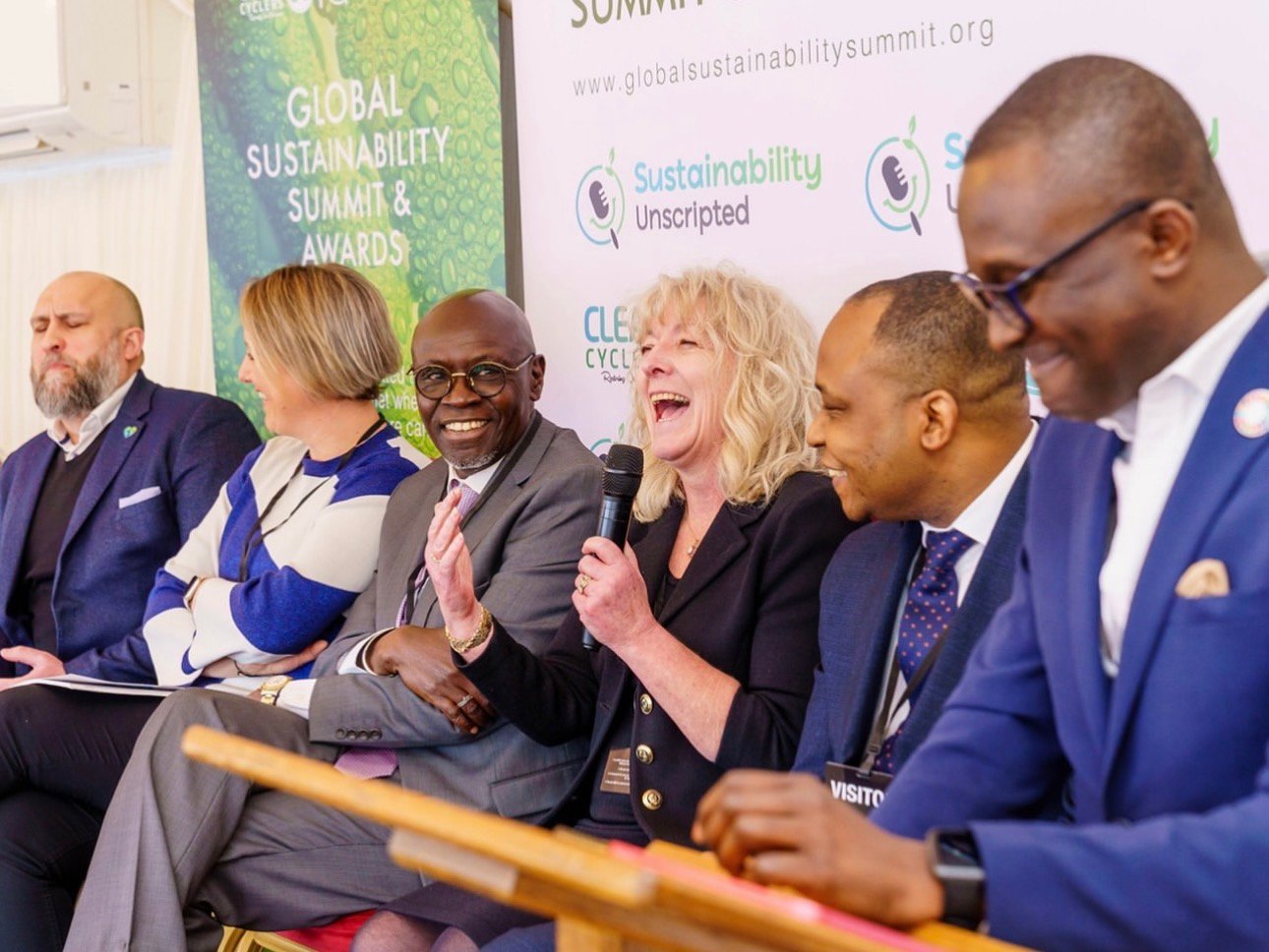
GLOBAL SUSTAINABILITY SUMMIT RETURNS FOR ITS 5TH EDITION AT THE BRITISH PARLIAMENT – HOUSE OF LORDS, PALACE OF WESTMINSTER

FOR IMMEDIATE RELEASE
Theme: “People, Planet, and Profit in the Age of AI and Innovation”
London, United Kingdom — The Global Sustainability Summit (GSS) is officially back for its landmark 5th Edition, continuing its legacy as one of the leading international platforms driving sustainable development, climate action, ethical investment, innovation, and global collaboration.

Convened annually at the prestigious British Parliament, House of Lords, Palace of Westminster, by Ambassador Canon Chinenem Otto, the Summit has, over the last four years, successfully fostered international dialogue and partnerships that have contributed to the advancement of global sustainability goals, the establishment of sustainability-focused ministries, departments and policy structures across national and subnational governments, and the attraction of major investors into sustainable development projects, corporations and emerging economies.
This year’s summit, themed “People, Planet, and Profit in the Age of AI and Innovation,” will explore how emerging technologies, responsible leadership, sustainable finance, innovation, and global partnerships can shape a more inclusive, resilient and environmentally conscious future.
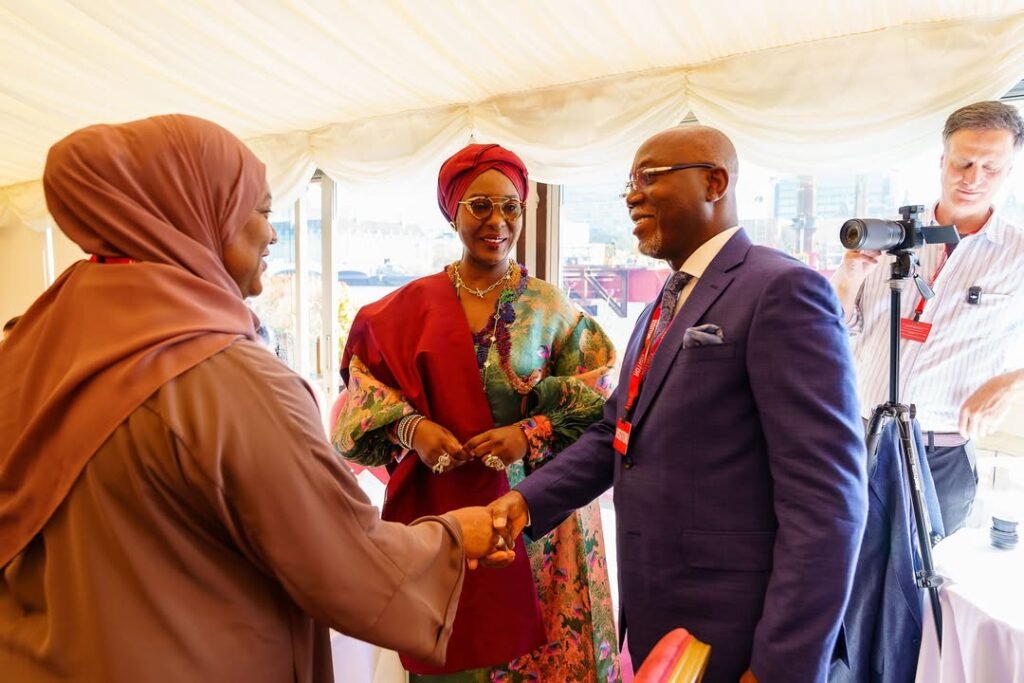
The 5th Edition promises to be the most impactful yet, bringing together world leaders, policymakers, diplomats, investors, academics, innovators, climate experts and youth leaders from across the globe to discuss actionable solutions toward achieving a sustainable and equitable future.
Among the distinguished speakers, delegates and honorees already lined up for the Summit are:
• His Excellency Mallam AbdulRahman AbdulRazaq — Executive Governor of Kwara State, Nigeria and Chairman of the Nigeria Governors’ Forum
• His Excellency Senator Prince Bassey Otu — Executive Governor of Cross River State, Nigeria
• Ambassador Patricia Espinosa Cantellano — Former Executive Secretary of UN Climate Change (UNFCCC) and Former Foreign Minister of Mexico

• Lord Marvin Rees, Baron Rees of Easton OBE — Member of the House of Lords, United Kingdom
• Hon. Neema K. Lugangira — Secretary-General of Women Political Leaders (WPL), Brussels and Former Member of Parliament
• Her Excellency Dr. Netumbo Nandi-Ndaitwah — President of the Republic of Namibia
• His Excellency Nangolo Mbumba — Former President of Namibia
• Former President of Tanzania
• Her Excellency Ambassador Professor Olufolake AbdulRazaq — First Lady of Kwara State, Nigeria and Chairperson of Nigeria Governors’ Spouses Forum
• Your Excellency Dr. Dikko Umar Radda, PhD, CON — Executive Governor of Katsina State and Chairman of the Northwest Governors Forum, Nigeria
• Hon. Sam Shafiishuna Nujoma — Governor of Khomas Region, Namibia

• H.E. Mr. Veiccoh Nghiwete — High Commissioner of the Republic of Namibia to the United Kingdom
• Her Excellency Ms. Macenje “Che Che” Mazoka — High Commissioner of Zambia to the United Kingdom
• Ms. Danielle Newman — Partner Lead, ICT, World Economic Forum
• Leanne Elliott Young — Co-founder, Institute of Digital Fashion & CommuneEast
• Ms. Chloe Russell — Producer & Presenter, Art, Science and Nature
• Professor Marie-Claire Cordonier Segger — University of Cambridge & University of Waterloo
• Dr. Alexandra R. Harrington — IUCN World Commission on Environmental Law (WCEL)
• Professor Payam Akhavan — Massey College, University of Toronto
• Mr. Mallai C. E. Sathya — President, Dravida Vetri Kazhagam and International Movement for Tamil Culture Asia

The Summit will feature high-level panel discussions, strategic investment conversations, sustainability awards, policy dialogues, innovation showcases, youth engagement sessions and international networking opportunities focused on climate resilience, ethical financing, food-water-energy sustainability, circular economy, artificial intelligence, diplomacy and sustainable development.
Speaking ahead of the Summit, Convener Ambassador Canon Chinenem Otto noted:
“As the world rapidly evolves through artificial intelligence and technological innovation, we must ensure that sustainability remains people-centered, environmentally responsible and economically inclusive. The Global Sustainability Summit continues to serve as a bridge connecting governments, institutions, innovators and investors to accelerate practical sustainability solutions globally. Our fifth edition is not only a celebration of progress made over the years, but also a renewed call for global collaboration and actionable impact toward achieving the Sustainable Development Goals and Net Zero ambitions.”
The Global Sustainability Summit continues to position itself as a catalyst for transformative partnerships and sustainable global progress, reinforcing the urgent need for collective action toward a more resilient and sustainable future.
More announcements regarding additional speakers, partners and summit activities will be unveiled in the coming weeks.

President Donald Trump says the United States might one day get rid of federal income tax because of money the government collects from tariffs on imported goods. Tariffs are extra taxes the U.S. puts on products that come from other countries.

What Trump Is Saying
Trump has said that tariff money could become so large that it might allow the government to cut income taxes “almost completely.” He has also talked about possibly phasing out income tax over the next few years if tariff money keeps going up.
How Taxes Work Now
Right now, the federal government gets much more money from income taxes than from tariffs. Income taxes bring in trillions of dollars each year, while tariffs bring in only a small part of that total. Because of this gap, experts say tariffs would need to grow by many times to replace income tax money.

Questions From Experts
Many economists and tax experts doubt that tariffs alone could pay for the whole federal budget. They warn that very high tariffs could make many imported goods more expensive for shoppers in the United States. This could hit lower- and middle‑income families hardest, because they spend a big share of their money on everyday items.
What Congress Must Do
The president can change some tariffs, but only Congress can change or end the federal income tax. That means any real plan to remove income tax would need new laws passed by both the House of Representatives and the Senate. So far, there is no detailed law or full budget plan on this idea.

What It Means Right Now
For now, Trump’s comments are a proposal, not a change in the law. People and businesses still have to pay federal income tax under the current rules. The debate over using tariffs instead of income taxes is likely to continue among lawmakers, experts, and voters.
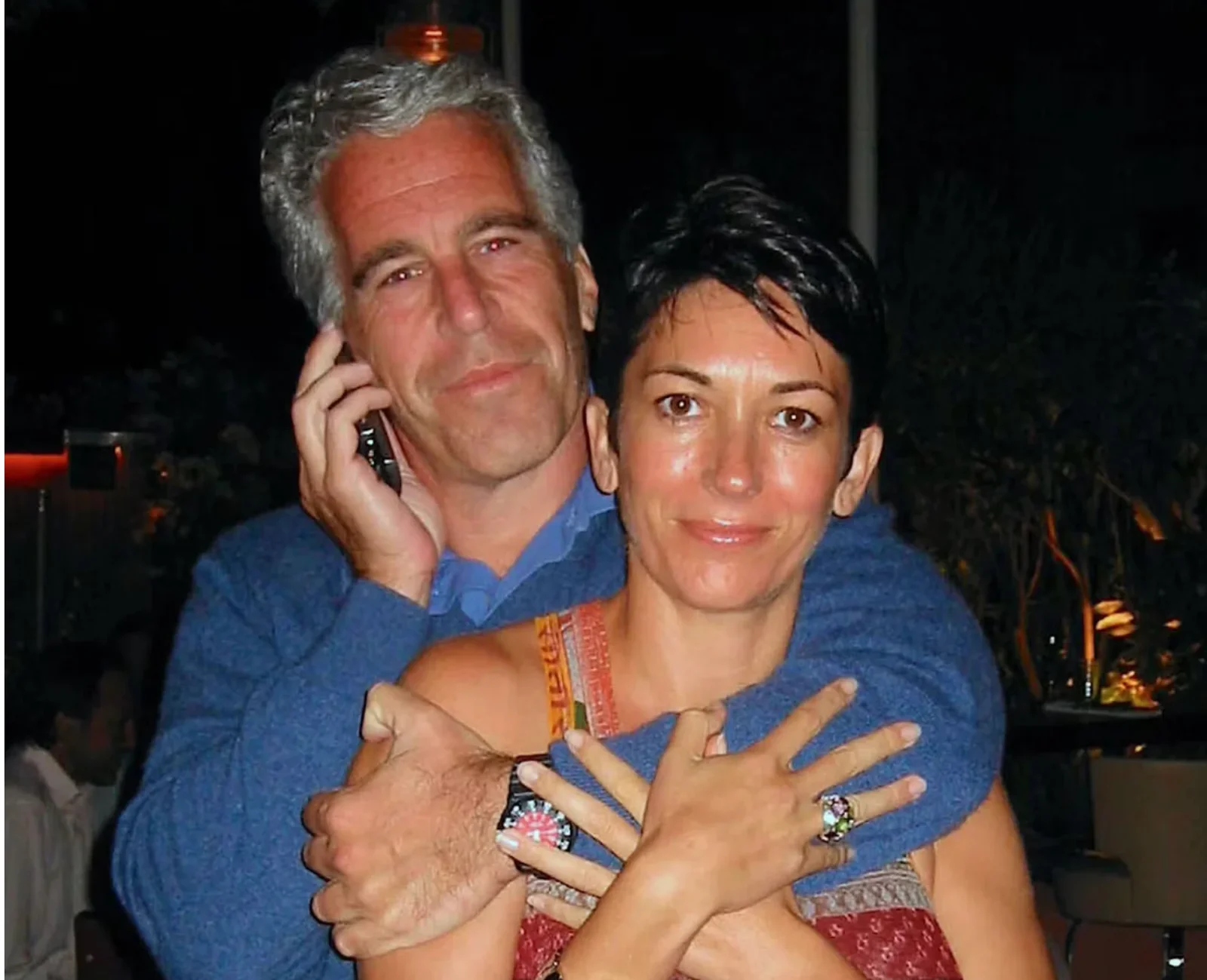
Former President Donald Trump has signed an executive order directing federal agencies to declassify all government files related to Jeffrey Epstein, the disgraced financier whose death in 2019 continues to fuel controversy and speculation.
The order, signed Wednesday at Trump’s Mar-a-Lago estate, instructs the FBI, Department of Justice, and intelligence agencies to release documents detailing Epstein’s network, finances, and alleged connections to high-profile figures. Trump described the move as “a step toward transparency and public trust,” promising that no names would be shielded from scrutiny.
“This information belongs to the American people,” Trump said in a televised statement. “For too long, powerful interests have tried to bury the truth. That ends now.”
U.S. intelligence officials confirmed that preparations for the release are already underway. According to sources familiar with the process, the first batch of documents is expected to be made public within the next 30 days, with additional releases scheduled over several months.

Reactions poured in across the political spectrum. Supporters praised the decision as a bold act of accountability, while critics alleged it was politically motivated, timed to draw attention during a volatile election season. Civil rights advocates, meanwhile, emphasized caution, warning that some records could expose private victims or ongoing legal matters.
The Epstein case, which implicated figures in politics, business, and entertainment, remains one of the most talked-about scandals of the past decade. Epstein’s connections to influential individuals—including politicians, royals, and executives—have long sparked speculation about the extent of his operations and who may have been involved.

Former federal prosecutor Lauren Fields said the release could mark a turning point in public discourse surrounding government transparency. “Regardless of political stance, this declassification has the potential to reshape how Americans view power and accountability,” Fields noted.
Officials say redactions may still occur to protect sensitive intelligence or personal information, but the intent is a near-complete disclosure. For years, critics of the government’s handling of Epstein’s case have accused agencies of concealing evidence or shielding elites from exposure. Trump’s order promises to change that narrative.
As anticipation builds, journalists, legal analysts, and online commentators are preparing for what could be one of the most consequential information releases in recent history.

Why Some Songs End Up in Movies—While Others Never Do

They Told Him a Black Man Can’t Learn. He Sued Them and Won.


