


World News
Ukraine stalemate shifts war in Putin’s favor on December 9, 2023 at 11:00 am

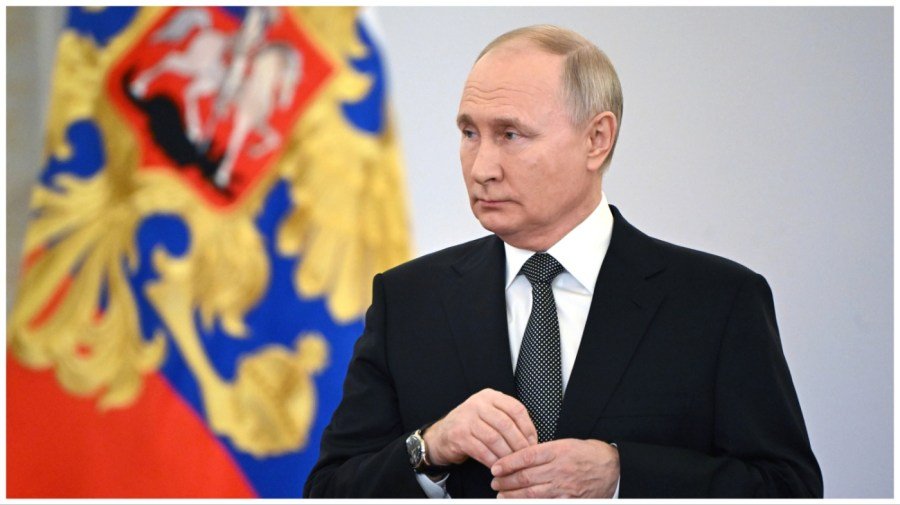
The war in Ukraine has reached a stalemate, with even Ukrainian officials admitting the highly anticipated counteroffensive is unlikely to reach a breakthrough, putting Kyiv on what could be its toughest path yet in the war.
Ukraine is fighting two battles: convincing a growing, skeptical West to continue arming Ukrainian troops despite an obvious stalemate across the 600-mile eastern front, and progressing through a battlefield against entrenched Russian forces.
After nearly two years of war, Ukraine is confronting enormous challenges while Russian President Vladimir Putin’s strategy to hold as much territory as possible and wait for Western allies to crack appears to be working.
“I have no doubt that we will certainly achieve all the goals we have set for ourselves,” a confident Putin told Russian soldiers Friday at an event where he also announced his candidacy for the 2024 elections.
After Ukraine’s summer counteroffensive slowed down in the past couple months, the war has shifted to a two-pronged Russian attack in the northeastern Luhansk region and the eastern Donetsk.
Russia is suffering heavy losses trying to seize the rest of Luhansk. And the town of Avdiivka in the Donetsk is mired in a bloody strategic stalemate.
Moscow is seeking to continuously apply pressure on Ukraine to exhaust its resources, said Federico Borsari, a defense fellow at the Center for European Policy Analysis (CEPA). But he cautioned against giving Russia too much credit.
“I don’t think Russia is winning,” Borsari said. “It hasn’t achieved any kind of strategic results so far. But at the same time [Russia] has somewhat resisted the shockwave of the failures we have seen in the past two years.”
Borsari said that “represents a huge problem” because Russia “can resort now to more subtle energies, strategies and tactics,” like weakening Western support.
Russia is moving to lock Ukraine into a long war. Putin, who already oversees a much larger army than Ukraine, recently moved to increase the size by 170,000 to about 2.2 million.
He’s also signed into law a measure to increase the Russian military budget by 25 percent for the next three years.
Michael Allen, the managing director at Beacon Global Strategy, a U.S. national security advisory firm, said Putin is in a “good position right now.”
“He has a lot of territory [and] is basically still sitting on what he had at the beginning of the counter-offensive,” Allen said. “He’s looking at us and we seem as divided as ever.”
The next few months are unlikely to produce any surprising results, but Ukraine could hold its defensive positions, acquire new weapons and try another counteroffensive in the spring. That would depend largely on a new tranche of U.S. support, which is currently mired in Senate border talks.
Kathleen McInnis, a senior fellow at the Center for Strategic and International Studies, said it will be critical for Ukraine to receive more long-range artillery and demining equipment ahead of the next operation, but noted it would be difficult for any Western army to pierce through the thick lines of an army as large as Russia’s.
“It takes some dedicated effort to figuring out how to get through some of those friction points,” she said. “This is not an uncommon problem in coalition warfare. It’s just that the timeframes were so compressed” before the summer counteroffensive.
McInnis also said it was important for Ukraine to reassess its strategy because the summer counteroffensive saw Ukrainian troops struggle to fight along three points of Russian lines — near the destroyed city of Bakhmut, the southern Zaporizhzhia region and southern Donetsk.
“It would be absolutely prudent to reassess the strategy and figure out where there might be different vulnerabilities in the Russian lines that could be exploited and taken advantage of,” she added.
The summer counteroffensive had sparked hopes of a major breakthrough, with Western allies betting Ukrainian forces could reach the Sea of Azov and cut off a major Russian land bridge connecting the mainland to the Crimean Peninsula.
That goal failed to materialize, and Russia has actually gained more ground this year than Ukraine, though both sides are just trading small tracts of land across the front.
Ukrainian President Volodymyr Zelensky told The Associated Press his military did not achieve the “desired results” of the counteroffensive but argued troops did not get all the weapons they needed for the operation.
Zelensky said he was still “satisfied” with his military in its fight against one of the largest armies in the world.
“We are not backing down,” he added. “We are confident in our actions.”
Analysts say the counteroffensive failed because of a few factors: a massive Russian army that had time to entrench itself, a lack of Ukrainian air superiority, and a slow delivery of needed weapons from abroad.
Ukraine also struggled with more complicated war tactics, like combined arms maneuver training, which involves integrating infantry and armor, analysts say — an issue that could be improved in a new offensive. Other challenges include interoperability with a range of equipment from several different countries.
Ukraine is still hoping for major upgrades in its weaponry. Ukrainian pilots are training on F-16s, a long-sought fighter jet, which could be ready for a spring offensive. Bolstering air power was a major missing component in the last counteroffensive, and Ukraine also wants helicopters and other aircraft, according to Reuters.
Kyiv scored a major win this week when leaders signed a cooperation agreement with the U.S. on the co-production of critical weapons and the exchanging of data, which will help boost the construction of Ukrainian defense production facilities, laying the groundwork for Ukraine to meet its defense needs.
The Biden administration still maintains public confidence in Ukraine’s ability to resist Russia, though it has reportedly raised the prospect of a negotiated end to the war, and is seeking another $61 billion in emergency aid to keep the nation in the fight.
Pentagon deputy press secretary Sabrina Singh declined to say whether the war is in a stalemate but said the U.S. is giving Ukraine everything it needs to win.
“There is incremental progress. That’s important to remember,” she said. “But I would let the Ukrainian people speak to their own operations and characterize what they see as success on the battlefield.”
President Biden’s supplemental request for Ukraine faces significant hurdles in Congress.
Skeptical Republicans in the House have blocked Ukraine aid from advancing in recent months, despite rising pressure from Biden and Democrats. Russian state television has applauded their efforts and praised GOP Ukraine skeptics, along with conservative news host Tucker Carlson.
Senate talks on Ukraine funding collapsed this week after lawmakers failed to reach an agreement on the border.
Biden said Republicans are delivering Putin “the greatest gift he could hope for,” which he said is abandoning “our global leadership not just to Ukraine, but beyond that. “
“We can’t let Putin win. I’ll say it again: We can’t let Putin win,” Biden told reporters this week. “It’s in our overwhelming national interest and international interest of all our friends.”
Ukraine relies heavily on the U.S. and will face a significant shortfall if Congress fails to act soon, with Europe unable to backfill the amount that Washington provides, analysts say. Europe is also showing cracks in support, with Poland and Slovakia ending arms deliveries to Ukraine this year.
Allen from Beacon Global Strategy said Putin is keeping an eye on the American political system heading into 2024. But he was hopeful the U.S. would ultimately back more Ukraine aid.
“I think we can help them a lot,” Allen said. “We’re exhausted, but for us to give up, or trying to [force] peace talks, is just leaving this problem for our children and grandchildren.”
Republicans and other war skeptics are asking if the U.S. is funding a forever war or even a losing war. They also want to know what the endgame is for the conflict.
Michael O’Hanlon, director of foreign policy at the Brookings Institution, wrote in an analysis that the U.S. should fund Ukraine’s efforts through early 2025 — and then consider an alternative if the Ukrainians cannot break through Russian lines.
“If the war still remains largely stalemated at that point, the United States should seriously consider a plan B,” O’Hanlon wrote. He said a strategy of providing mainly defensive weapons still “gives Ukraine a fair chance to take back what has been stolen from it, without committing to a new forever war.”
Steven Horrell, a nonresident senior fellow with CEPA, said a “Ukrainian victory is still dependent on continued Western assistance.”
“Putin does feel that time is on his side, that a long war plays into his favor. Because he has always calculated that the West doesn’t have the appetite to take losses or to bear costs that he feels Russia does,” he said.
“Time will tell if we in the West continue to stay strong.”
The war in Ukraine has reached a stalemate, with even Ukrainian officials admitting the highly anticipated counteroffensive is unlikely to reach a breakthrough, putting Kyiv on what could be its toughest path yet in the war. Ukraine is fighting two battles: convincing a growing, skeptical West to continue arming Ukrainian troops despite an obvious stalemate…


Business
GLOBAL SUSTAINABILITY SUMMIT RETURNS FOR ITS 5TH EDITION AT THE BRITISH PARLIAMENT – HOUSE OF LORDS, PALACE OF WESTMINSTER


FOR IMMEDIATE RELEASE
Theme: “People, Planet, and Profit in the Age of AI and Innovation”
London, United Kingdom — The Global Sustainability Summit (GSS) is officially back for its landmark 5th Edition, continuing its legacy as one of the leading international platforms driving sustainable development, climate action, ethical investment, innovation, and global collaboration.

Convened annually at the prestigious British Parliament, House of Lords, Palace of Westminster, by Ambassador Canon Chinenem Otto, the Summit has, over the last four years, successfully fostered international dialogue and partnerships that have contributed to the advancement of global sustainability goals, the establishment of sustainability-focused ministries, departments and policy structures across national and subnational governments, and the attraction of major investors into sustainable development projects, corporations and emerging economies.
This year’s summit, themed “People, Planet, and Profit in the Age of AI and Innovation,” will explore how emerging technologies, responsible leadership, sustainable finance, innovation, and global partnerships can shape a more inclusive, resilient and environmentally conscious future.
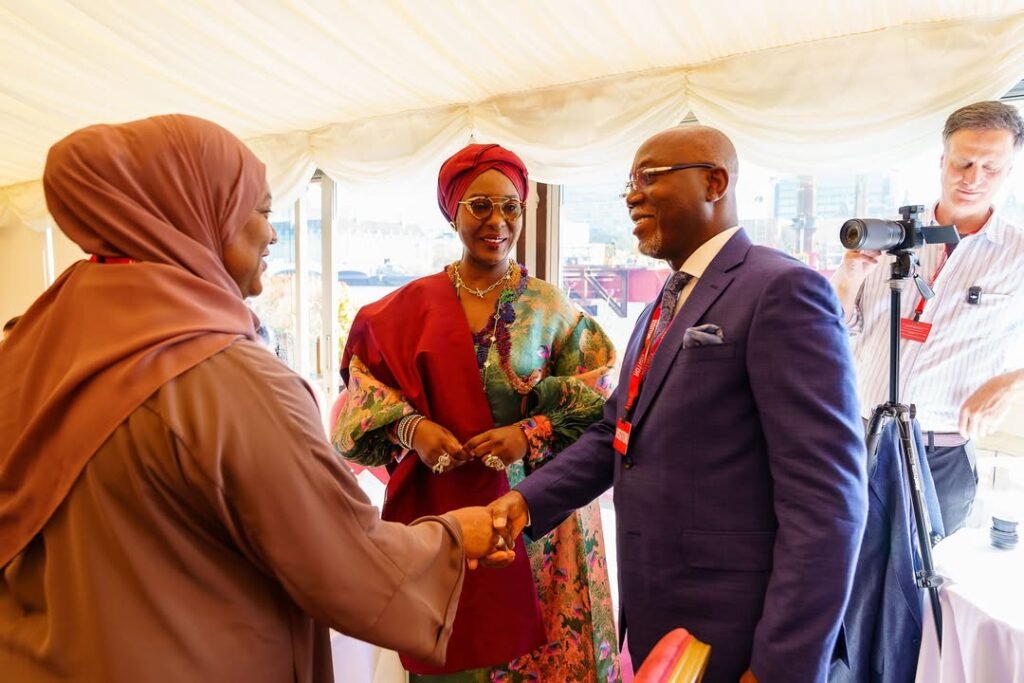
The 5th Edition promises to be the most impactful yet, bringing together world leaders, policymakers, diplomats, investors, academics, innovators, climate experts and youth leaders from across the globe to discuss actionable solutions toward achieving a sustainable and equitable future.
Among the distinguished speakers, delegates and honorees already lined up for the Summit are:
• His Excellency Mallam AbdulRahman AbdulRazaq — Executive Governor of Kwara State, Nigeria and Chairman of the Nigeria Governors’ Forum
• His Excellency Senator Prince Bassey Otu — Executive Governor of Cross River State, Nigeria
• Ambassador Patricia Espinosa Cantellano — Former Executive Secretary of UN Climate Change (UNFCCC) and Former Foreign Minister of Mexico

• Lord Marvin Rees, Baron Rees of Easton OBE — Member of the House of Lords, United Kingdom
• Hon. Neema K. Lugangira — Secretary-General of Women Political Leaders (WPL), Brussels and Former Member of Parliament
• Her Excellency Dr. Netumbo Nandi-Ndaitwah — President of the Republic of Namibia
• His Excellency Nangolo Mbumba — Former President of Namibia
• Former President of Tanzania
• Her Excellency Ambassador Professor Olufolake AbdulRazaq — First Lady of Kwara State, Nigeria and Chairperson of Nigeria Governors’ Spouses Forum
• Your Excellency Dr. Dikko Umar Radda, PhD, CON — Executive Governor of Katsina State and Chairman of the Northwest Governors Forum, Nigeria
• Hon. Sam Shafiishuna Nujoma — Governor of Khomas Region, Namibia

• H.E. Mr. Veiccoh Nghiwete — High Commissioner of the Republic of Namibia to the United Kingdom
• Her Excellency Ms. Macenje “Che Che” Mazoka — High Commissioner of Zambia to the United Kingdom
• Ms. Danielle Newman — Partner Lead, ICT, World Economic Forum
• Leanne Elliott Young — Co-founder, Institute of Digital Fashion & CommuneEast
• Ms. Chloe Russell — Producer & Presenter, Art, Science and Nature
• Professor Marie-Claire Cordonier Segger — University of Cambridge & University of Waterloo
• Dr. Alexandra R. Harrington — IUCN World Commission on Environmental Law (WCEL)
• Professor Payam Akhavan — Massey College, University of Toronto
• Mr. Mallai C. E. Sathya — President, Dravida Vetri Kazhagam and International Movement for Tamil Culture Asia

The Summit will feature high-level panel discussions, strategic investment conversations, sustainability awards, policy dialogues, innovation showcases, youth engagement sessions and international networking opportunities focused on climate resilience, ethical financing, food-water-energy sustainability, circular economy, artificial intelligence, diplomacy and sustainable development.
Speaking ahead of the Summit, Convener Ambassador Canon Chinenem Otto noted:
“As the world rapidly evolves through artificial intelligence and technological innovation, we must ensure that sustainability remains people-centered, environmentally responsible and economically inclusive. The Global Sustainability Summit continues to serve as a bridge connecting governments, institutions, innovators and investors to accelerate practical sustainability solutions globally. Our fifth edition is not only a celebration of progress made over the years, but also a renewed call for global collaboration and actionable impact toward achieving the Sustainable Development Goals and Net Zero ambitions.”
The Global Sustainability Summit continues to position itself as a catalyst for transformative partnerships and sustainable global progress, reinforcing the urgent need for collective action toward a more resilient and sustainable future.
More announcements regarding additional speakers, partners and summit activities will be unveiled in the coming weeks.

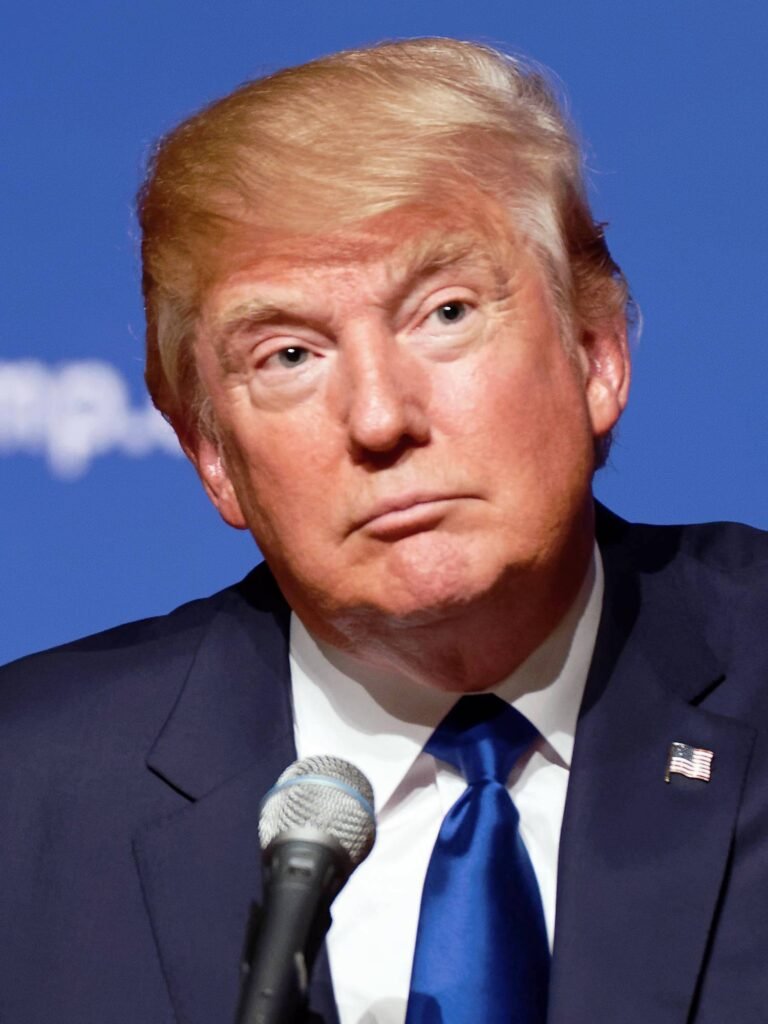
President Donald Trump says the United States might one day get rid of federal income tax because of money the government collects from tariffs on imported goods. Tariffs are extra taxes the U.S. puts on products that come from other countries.
What Trump Is Saying
Trump has said that tariff money could become so large that it might allow the government to cut income taxes “almost completely.” He has also talked about possibly phasing out income tax over the next few years if tariff money keeps going up.
How Taxes Work Now
Right now, the federal government gets much more money from income taxes than from tariffs. Income taxes bring in trillions of dollars each year, while tariffs bring in only a small part of that total. Because of this gap, experts say tariffs would need to grow by many times to replace income tax money.

Questions From Experts
Many economists and tax experts doubt that tariffs alone could pay for the whole federal budget. They warn that very high tariffs could make many imported goods more expensive for shoppers in the United States. This could hit lower- and middle‑income families hardest, because they spend a big share of their money on everyday items.
What Congress Must Do
The president can change some tariffs, but only Congress can change or end the federal income tax. That means any real plan to remove income tax would need new laws passed by both the House of Representatives and the Senate. So far, there is no detailed law or full budget plan on this idea.
What It Means Right Now
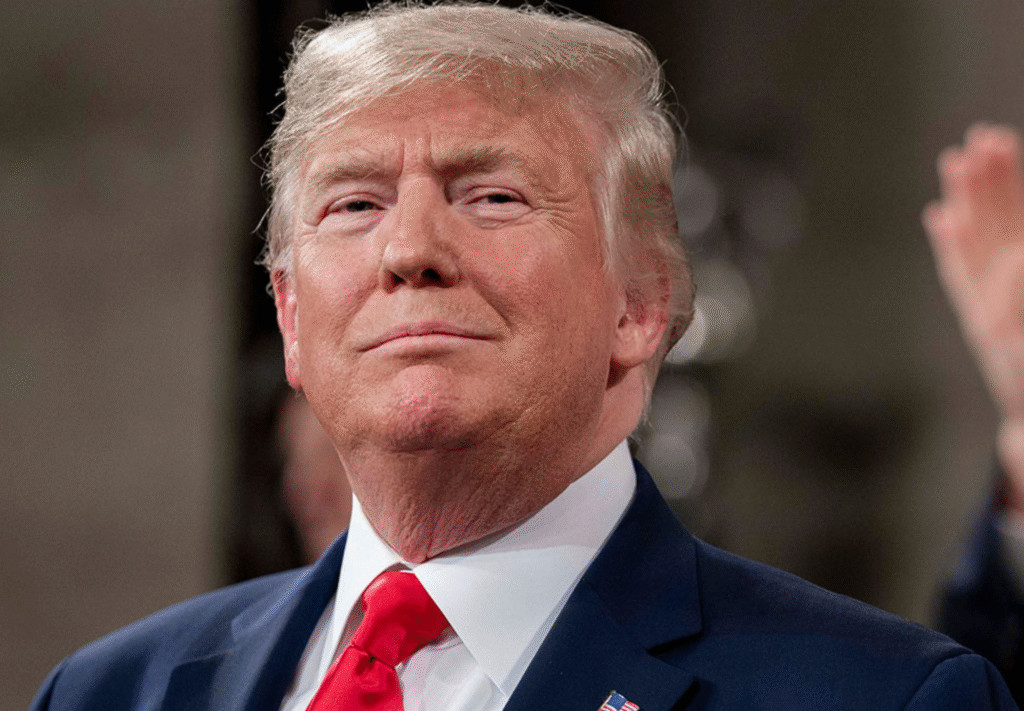
For now, Trump’s comments are a proposal, not a change in the law. People and businesses still have to pay federal income tax under the current rules. The debate over using tariffs instead of income taxes is likely to continue among lawmakers, experts, and voters.
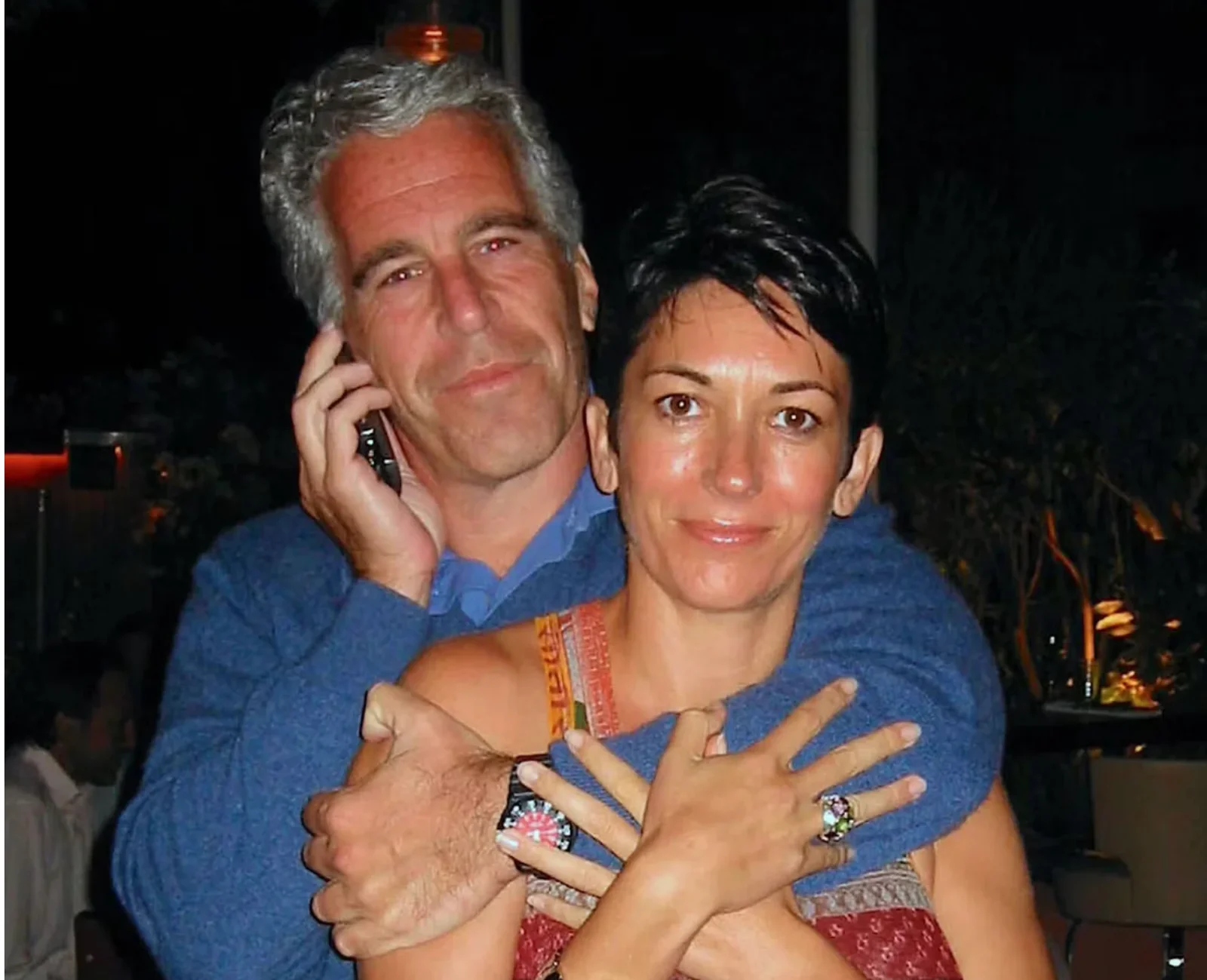
Former President Donald Trump has signed an executive order directing federal agencies to declassify all government files related to Jeffrey Epstein, the disgraced financier whose death in 2019 continues to fuel controversy and speculation.
The order, signed Wednesday at Trump’s Mar-a-Lago estate, instructs the FBI, Department of Justice, and intelligence agencies to release documents detailing Epstein’s network, finances, and alleged connections to high-profile figures. Trump described the move as “a step toward transparency and public trust,” promising that no names would be shielded from scrutiny.
“This information belongs to the American people,” Trump said in a televised statement. “For too long, powerful interests have tried to bury the truth. That ends now.”
U.S. intelligence officials confirmed that preparations for the release are already underway. According to sources familiar with the process, the first batch of documents is expected to be made public within the next 30 days, with additional releases scheduled over several months.

Reactions poured in across the political spectrum. Supporters praised the decision as a bold act of accountability, while critics alleged it was politically motivated, timed to draw attention during a volatile election season. Civil rights advocates, meanwhile, emphasized caution, warning that some records could expose private victims or ongoing legal matters.
The Epstein case, which implicated figures in politics, business, and entertainment, remains one of the most talked-about scandals of the past decade. Epstein’s connections to influential individuals—including politicians, royals, and executives—have long sparked speculation about the extent of his operations and who may have been involved.

Former federal prosecutor Lauren Fields said the release could mark a turning point in public discourse surrounding government transparency. “Regardless of political stance, this declassification has the potential to reshape how Americans view power and accountability,” Fields noted.
Officials say redactions may still occur to protect sensitive intelligence or personal information, but the intent is a near-complete disclosure. For years, critics of the government’s handling of Epstein’s case have accused agencies of concealing evidence or shielding elites from exposure. Trump’s order promises to change that narrative.
As anticipation builds, journalists, legal analysts, and online commentators are preparing for what could be one of the most consequential information releases in recent history.

Why Some Songs End Up in Movies—While Others Never Do

They Told Him a Black Man Can’t Learn. He Sued Them and Won.


