Health
Nation Split as Luigi Mangione Fights Death Penalty in CEO Murder Case

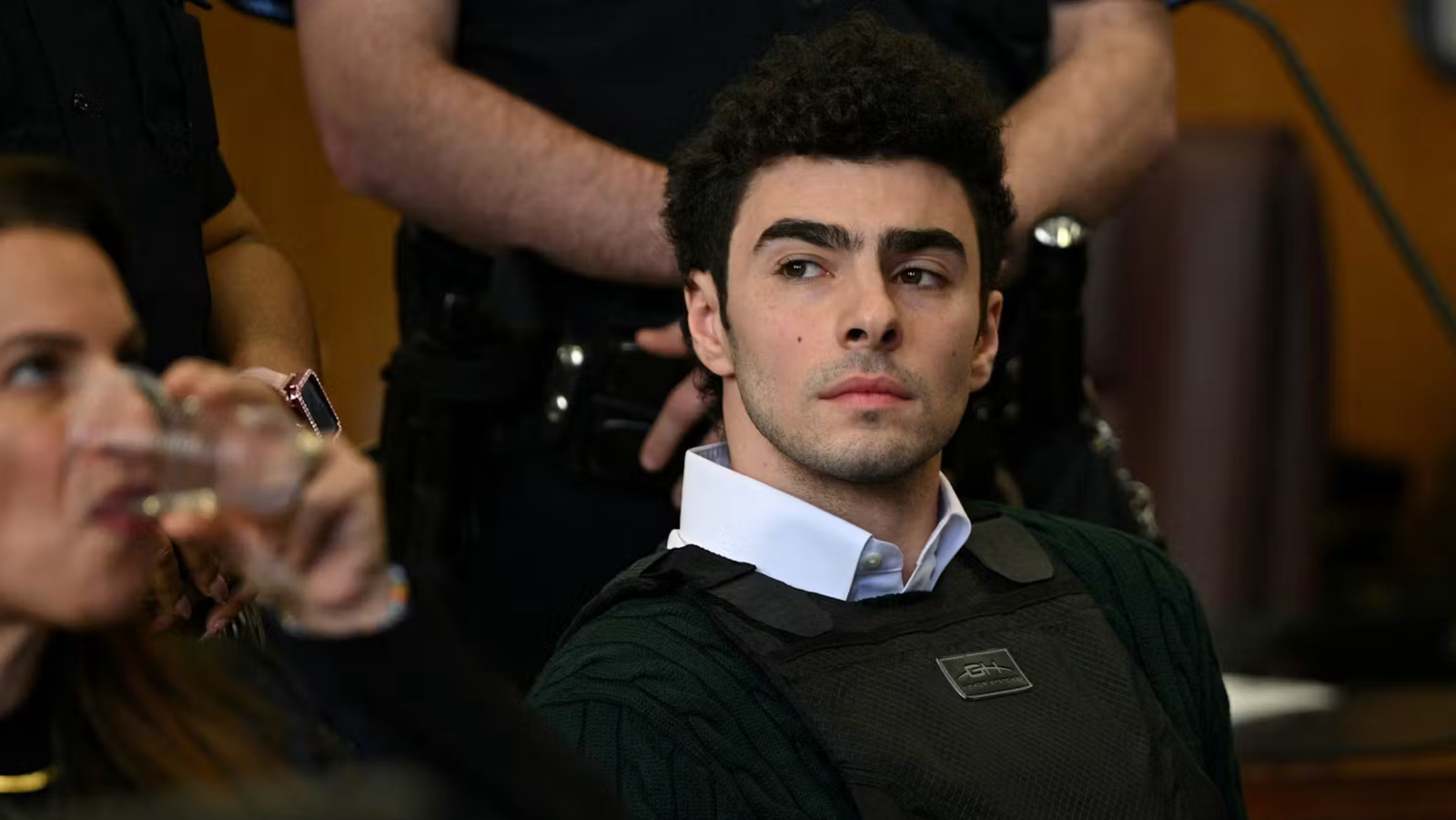
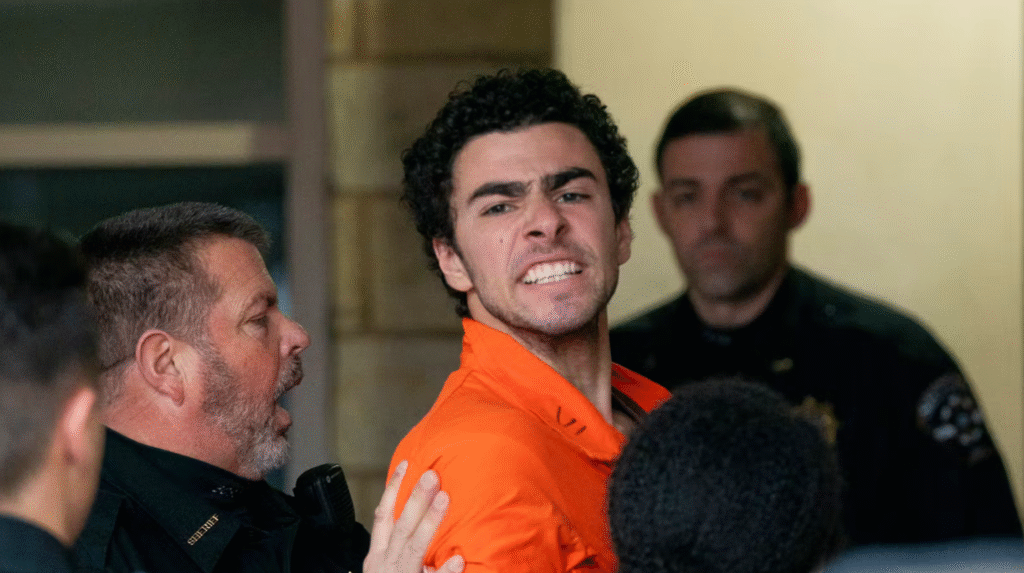
The case of Luigi Mangione, the 27‑year‑old accused of killing UnitedHealthcare CEO Brian Thompson, has ignited national debate, pitting supporters who see him as a whistleblower against critics who view his actions as an act of cold‑blooded violence. What began as a shocking corporate tragedy in December 2024 has evolved into one of the most polarizing death‑penalty battles in recent U.S. history.

The Killing That Shocked Corporate America
Brian Thompson, a respected CEO and father of two, was gunned down outside the New York Hilton Midtown on December 4, 2024. Surveillance footage reportedly showed a masked gunman lying in wait before firing a 3D‑printed pistol fitted with a silencer. Authorities later identified the suspect as Luigi Mangione, an Ivy League‑educated software engineer from Maryland who had grown increasingly vocal about his resentment toward the health‑insurance industry.
The killing triggered a multi‑state manhunt that ended when Mangione was captured at a McDonald’s in Altoona, Pennsylvania, five days later. Police said they recovered a 3D‑printed weapon and a handwritten letter denouncing “corporate greed” and calling the healthcare system “parasitic” from his backpack.
A Divided Public
Public opinion around Mangione’s motives has since fractured the nation. His supporters—many of whom have donated to his legal defense fund, which has surpassed $900,000—view his actions as symbolic resistance to perceived corporate corruption. Conversely, victims’ rights groups and law‑enforcement advocates argue that painting him as a “folk hero” disrespects the life of an innocent man and glorifies domestic terrorism.
The Legal Fight
Mangione faces federal charges including murder, use of a firearm in a crime of violence, and two counts of stalking. Because of the weapon’s use and the nature of the alleged planning, he could face the federal death penalty. However, his attorneys have filed motions to dismiss the capital charge, arguing that prosecutors violated his constitutional rights by questioning him without reading his Miranda rights and by searching his belongings without a warrant.
Their argument echoes a previous legal victory: in state court, a New York judge dismissed charges that attempted to classify the murder as an act of terrorism. The current federal motion seeks to suppress key evidence—including the weapon—on grounds of unlawful search and interrogation.

Possible Political Overtones
Defense filings have also accused federal prosecutors of turning Mangione into a “pawn” of the Trump administration to demonstrate toughness on violent crime. Attorney General Pam Bondi has publicly stated that seeking the death penalty aligns with President Trump’s directive to “make America safe again,” further intensifying political scrutiny of the case.
What’s Next
The federal court has until October 31 to rule on whether the death‑penalty charge will stand. If the motion fails, Mangione could face trial with the possibility of execution; if successful, the most severe penalty left would be life imprisonment with the chance of parole.
As his case unfolds, the moral and legal tensions surrounding Luigi Mangione reflect deeper American divisions over justice, corporate accountability, and who society chooses to blame—or defend—when outrage turns violent.














If you’re reading this at 2 AM, scrolling through industry news instead of writing your script, you already know something’s wrong.
You’re not lazy. You’re not untalented. You’re burnt out—and you’re far from alone.

The Numbers Don’t Lie
87% of film and TV workers are facing mental health challenges right now. 62% of creators report burnout, with 65% constantly obsessing over content performance. Even more alarming: 1 in 10 creators experience suicidal thoughts—nearly twice the rate of the general population.
But here’s what the statistics don’t capture: the paralysis. The endless scrolling. The “should I make a feature or pivot to vertical shorts?” loop that keeps you stuck for months. The guilt of watching tutorials instead of shooting. The way political chaos and industry upheaval make creating feel pointless.
The Trap You’re In
You’re waiting. Waiting for the algorithm to make sense. Waiting for the industry to be “fair” again. Waiting for the perfect format, the right budget, the ideal moment when your head is finally clear enough to make something worthy.
That moment isn’t coming.
The filmmakers you admire didn’t wait for perfect conditions. They made their breakthrough films during recessions, pandemics, personal crises, and industry chaos. The only difference between them and you right now? They gave themselves permission to create imperfectly.
Why Now Is Actually the Perfect Time
The industry’s chaos is real, but it’s also created an opening. Streaming platforms are hungry for authentic stories. Independent films are driving growth in the global film market. In 2026, filmmakers with deep trust in a niche have more power than studios chasing mass appeal.
But none of that matters if you’re too exhausted to pick up a camera.
The 3-Day Reset
Here’s what actually helps when you’re stuck:
Day 1: News blackout during creative hours. Not forever. Just when you’re supposed to be creating. The world will still be chaotic tomorrow—but you’ll have protected the only hours that matter for your art.
Day 2: Pick one format. Just one. Feature, shorts, or vertical content—it doesn’t matter which. What matters is ending the analysis paralysis. Your first project won’t be your breakthrough anyway. It’ll be your fifth. So start.

Day 3: Make something imperfect this week. Not good. Not portfolio-worthy. Just made. A 60-second test. A rough scene. Anything that reminds you why you started doing this in the first place.
The Real Problem Isn’t Your Idea
You don’t have a creativity problem. You have an input-overload problem. Your brain is processing election cycles, algorithm changes, industry layoffs, and the constant pressure to “choose the right path” before you’re “allowed” to create.
But creativity doesn’t work on permission slips.
72% of film and TV professionals say the industry is not a mentally healthy place to work. 59% struggle to maintain any work-life balance. 50% face relentless, unrealistic timelines. The system is designed to burn you out.
Your response can’t be to wait for the system to fix itself. It has to be to protect your creative energy like it’s the most valuable resource you have—because it is.
What Happens If You Don’t Reset
The filmmakers who “wait for the right time” never make their films. They become the people who talk about the script they’re “working on” for five years. They’re the ones who know every piece of gear, every distribution strategy, every festival deadline—but have nothing to submit.
Don’t let information replace creation. Don’t let the news cycle steal your narrative.

Start Monday
Not when things calm down. Not when you figure out the perfect format. Not when the industry is “fair” again.
Monday. Imperfectly. With whatever you have.
Your story—messy, unpolished, and made anyway—is what the world needs right now. Not your perfectly researched plan. Not your anxiety about choosing wrong.
Your work.
The filmmakers who win in 2026 won’t be the ones who waited for permission. They’ll be the ones who created despite the noise, shipped despite the doubt, and remembered that done beats perfect every single time.
So take the weekend. Unplug from the chaos. Rest without guilt.
Then Monday morning, make something imperfect.
The industry doesn’t need you to wait until you’re ready. It needs you to start before you feel ready—and figure it out as you go.
That’s not reckless. That’s how every film you’ve ever loved actually got made.
If this hit home, you’re not alone. Thousands of independent filmmakers are choosing to create despite the overwhelm. Start your 3-day reset Monday. Your future self will thank you.

Once viewed as one of the “safer” forms of sexual activity, oral sex is now under intense scientific scrutiny for fueling a surge in throat cancers caused by the human papillomavirus (HPV). In Texas, where vaccination rates lag behind national averages, the impact is particularly alarming.
Texas at the Center of a Growing Epidemic
According to the Texas Department of State Health Services, nearly 20,000 HPV-associated cancers were diagnosed in the state between 2018 and 2022, with oropharyngeal cancer emerging as the most common among men. The disease affects the tonsils, tongue base, and throat—and it’s overwhelmingly linked to oral transmission of HPV-16, a high-risk viral strain also responsible for cervical cancers.
Specialists in Austin report that HPV-driven throat cancer has risen by more than 225% in recent years, outpacing national growth and surpassing cervical cancer as the dominant HPV-related malignancy in men. These cancers are increasingly affecting younger, non-smoking men—a demographic once considered low-risk.
The Texas Vaccination Gap
While prevention is possible, Texas remains one of the lowest-ranking states in HPV vaccination completion. Data published in JAMA Network Open found that Texas ranks 48th nationwide in completing the HPV vaccine series, with only 16–17% of adolescents fully protected as of 2022. Counties in North Texas report the highest cancer rates alongside the lowest vaccination uptake, a combination experts attribute partly to misinformation and anti-vaccine sentiment.

Changing Faces of Throat Cancer
Unlike traditional throat cancers linked to tobacco and alcohol, HPV-related oropharyngeal tumor cases often appear in otherwise healthy middle-aged adults. Dr. Baran Sumer of UT Southwestern Medical Center explains that these patients often have “no smoking or drinking history” — the virus itself is the culprit.
HPV types 16 and 18 remain the most aggressive, capable of lingering in the throat tissue for years before mutating normal cells into tumors. Men in particular face higher risk: the immunological clearance rate for HPV is slower, allowing infections to persist and increase cancer odds.
Preventing a Preventable Cancer
The HPV vaccine can prevent over 90% of HPV-related cancers, including throat, anal, and cervical cancers. Yet public health leaders warn that adult vaccination rates remain far below the threshold needed to halt transmission. Physicians are calling for stronger awareness campaigns aimed at parents of preteens—especially in underserved Texas regions where education and access remain limited.
The Bottom Line
Oral sex may be common, but the misconceptions around its safety are costing lives. The data from Texas paints a clear picture: as vaccination lags, cancer cases rise. Experts agree that turning the tide will require confronting stigma, expanding education, and recognizing that protecting against HPV is not about morality—it’s about survival.

More than half of Americans are now spending their paid time off (PTO) resting at home, with a full third choosing to do absolutely nothing for days on end—a trend that’s being dubbed “bedrotting.” According to a revealing Marleep survey, 57% of respondents admit to taking time off specifically to lay in bed, while 33% say they’ve set aside multiple days in the past year just for complete rest. This emerging pattern speaks volumes about growing burnout and the changing face of workplace culture across generations.

For many, PTO once meant planning adventures or memorable getaways. Now, it more often means using that precious time off for deep recovery. The Marleep study found that most Americans are not traveling the world or exploring new hobbies on their days off—they’re simply unplugging, retreating to their beds, and, frequently, scrolling endlessly on their phones.

One telling detail from the survey is the emotional toll: 53% of people feel guilty for using their PTO to rest instead of engaging in more traditional, active pursuits. Workplace expert Joyelle Crawford explains that this sense of guilt itself is a red flag, rooted in a “business over balance” culture that often leaves people too exhausted to even plan a vacation.
“Gen Z isn’t lazy—they’re literate in self-preservation. They’re rejecting hustle culture and taking bedrotting days because traditional models of work and rest aren’t working for them.” — Joyelle Crawford
Crawford encourages viewing PTO as “permission to optimize.” She suggests using these days to reset, reflect, and rethink personal boundaries—sometimes the most restorative vacation is about stepping back from overcommitting, not from leaving town.

This approach is especially pronounced among Gen Z, who are most likely to cancel plans due to anxiety or low motivation. Experts say this isn’t laziness but a sign that younger generations are prioritizing mental health and healthy boundaries. Still, it’s important to combine this newfound rest ethic with intention—rest without purpose can slide into avoidance and isolation.
57% of Americans now use PTO just to rest in bed—while 1 in 3 take multiple days off just for doing nothing.
As more Americans choose bed over beaches on their days off, they’re sending a clear message: sometimes, genuine recovery means doing absolutely nothing, and that’s perfectly okay.

Stop Waiting for Permission — The Film Industry Just Rewrote the Rules

How ‘Sinners’ Won The Oscars: Filmmaker Notes

This scene almost broke him. And changed his career.


 Advice1 week ago
How to Find Your Voice as a Filmmaker
- News4 weeks ago
Harlem’s Hottest Ticket: Ladawn Mechelle Taylor Live
- News1 week ago
How Misinformation Overload Breaks Creative Focus
- Entertainment4 weeks ago
When “Professional” Means Silent
- News3 weeks ago
From Seen to Secured: How Filmmakers Are Owning Their Value
- Film Industry4 weeks ago
Dr. Ric Mathis Turns a Film Screening Into a Lifesaving Movement With Heartbeat
- Entertainment4 weeks ago
These Movies Aren’t “True Crime for Fun”
- News4 weeks ago
THE MACHINE VS. THE ARTIST