News
How to Leverage Film Festival Screenings to Promote Your Film

Leveraging film festival screenings to promote your film can be a powerful marketing strategy. Here are some ways to maximize the promotional potential of your film festival screenings:
1. Networking: Attend screenings, panels, and networking events to connect with industry professionals, potential collaborators, and audience members.
2. Social media: Utilize social media platforms to share updates, photos, and videos from the festival, engage with attendees, and promote your film.
3. Press kits: Create a press kit with relevant information about your film, including synopses, cast and crew bios, and high-quality images.
4. Promotional materials: Prepare promotional materials such as flyers, posters, and visuals to generate buzz and attract attendees.
5. Q&A sessions: Participate in Q&A sessions after screenings to engage with the audience and provide insights into your filmmaking process.
6. Awards and recognition: If your film wins awards or receives notable mentions at the festival, use that information in your promotional materials to showcase the audience and critical appreciation.
7. Collaborations and partnerships: Establish partnerships with other filmmakers, industry professionals, and sponsors to expand your reach and increase the visibility of your film.
8. Virtual events and livestreams: Host virtual events like Q&A sessions or virtual screenings to reach a wider audience and maintain engagement with your film.
By leveraging film festival screenings, you can effectively promote your film, build a strong online presence, and create lasting connections within the film industry.
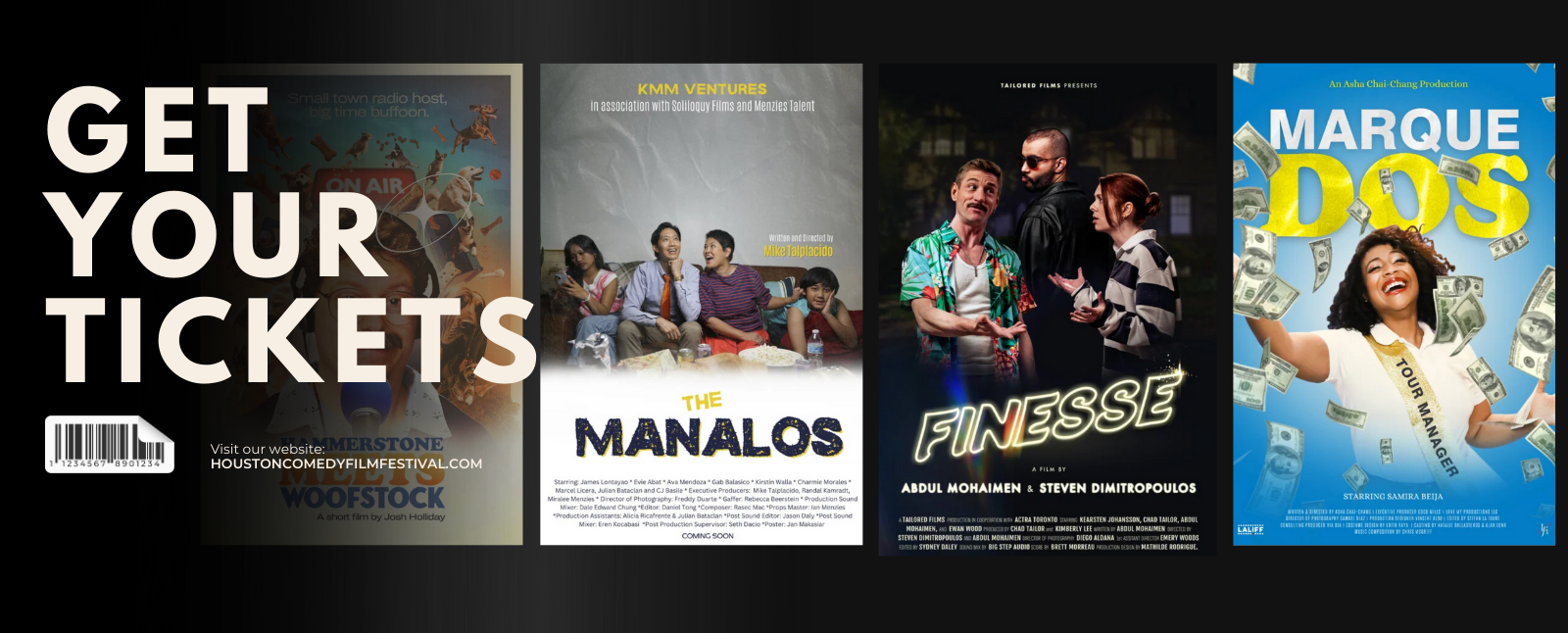
Check out our film festival here in Houston.
If you’ve enjoyed this article and found it helpful, please consider supporting us by shopping through our links. Your support helps us keep creating valuable content. And if you’re interested in collaborating with Bolanle Media, don’t be shy! Contact us, and let’s explore exciting opportunities together. We’re always eager to connect with fellow creators and enthusiasts. Keep the creativity flowing!
From the Film Festival Circuit Founder, Mikal Fair:
‘Explore the ‘Film Festival Submitter’s Handbook 2024,’ your ultimate guide to conquering the film festival circuit. Whether you’re a filmmaker or screenwriter, this essential resource provides practical strategies to navigate the competitive landscape of film festivals successfully. From crafting compelling titles, taglines, and synopses to creating impactful directors and writer’s statements, this handbook equips you with the tools to shine in the festival circuit. Learn to develop effective marketing materials, including posters and trailers, and discover the importance of communication and presenting a professional package. With insights tailored to the evolving role of social media and marketing in the film industry, this handbook is your key to festival triumph. Get your copy now and embark on your journey to festival success!







By Bolanle Media
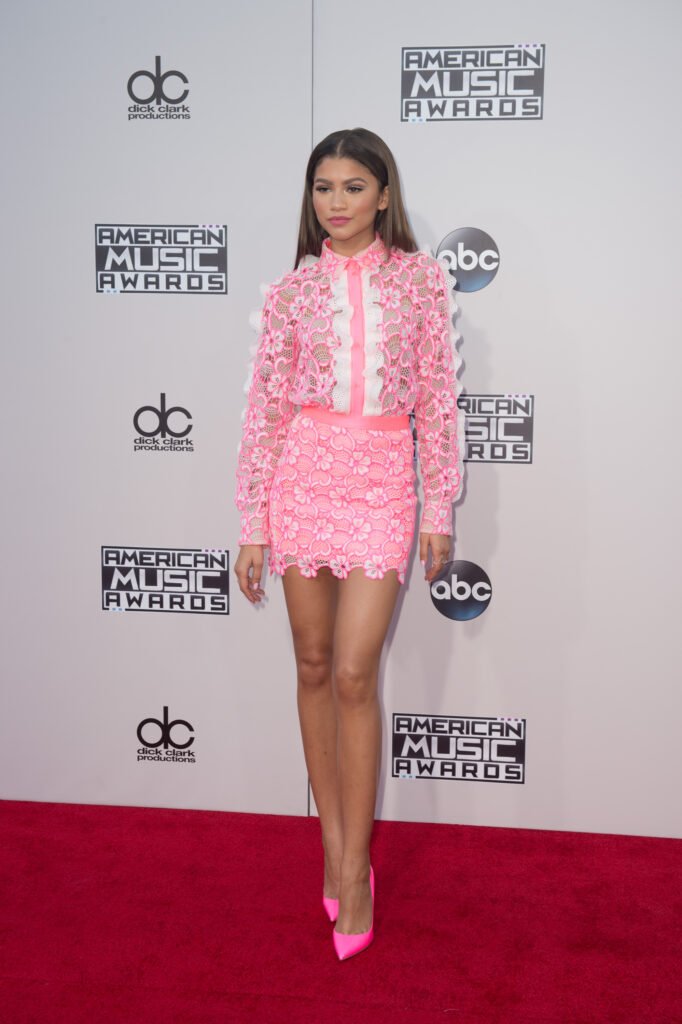
She didn’t wait to be discovered. She didn’t follow the rules. And she didn’t let anyone else write her story.
Zendaya went from a Disney Channel kid to the youngest-ever two-time Emmy winner for lead actress in a drama — and she did it on her own terms. If you’re an actor trying to figure out how to build a career that actually lasts, her playbook is one of the most honest and practical ones in Hollywood right now.
Here’s what she does differently — and what you can take directly into your own career.
1. She Chose Roles. They Didn’t Choose Her.
Most actors take what they’re given. Zendaya negotiated.
At 17, when Disney offered her KC Undercover, she didn’t just say yes. She demanded to be a producer so she could shape the character herself. She specifically said she didn’t want her character to sing, dance, or follow any of the typical Disney girl tropes — because she wanted to show that girls could be defined by something other than performance.
That’s not diva behavior. That’s self-awareness.
“I wanted to make sure that she wasn’t good at singing or acting or dancing. There are other things that a girl can be.” — Zendaya
The lesson: Know what you stand for before you walk into the room. Agents, casting directors, and producers can feel the difference between someone who needs the job and someone who has a vision.
2. She Stayed Quiet While Everyone Else Got Loud
In a world where most celebrities flood the internet to stay relevant, Zendaya does the opposite.
She chooses restraint over noise. Intention over impulse. Longevity over virality. While other actors are chasing every trending moment, she allows space between wins — which does something powerful to how people perceive her. It turns success into a pattern, not a spike.
“Spikes feel lucky. Patterns feel earned. And earned success commands respect rather than temporary excitement.”
The lesson: You don’t have to be everywhere to be known. Strategic silence can build more authority than constant posting ever will.
3. She Was Fearless Enough to Fail
When Zendaya stepped into Euphoria, she wasn’t sure she could do it. The emotional weight of playing Rue was unlike anything she had done before.
But she’s said it clearly — greatness requires two things: being fearless and being willing to try.
“You can’t be afraid to look stupid, you can’t be afraid to mess up, you can’t be afraid of anything. The only way to get great is to be fearless and try.” — Zendaya
The lesson: The roles that scare you the most are usually the ones that will define you. Stop waiting until you feel ready. That feeling never comes.

4. She Prepared Like No One Was Watching
Talent alone didn’t get Zendaya to where she is. Preparation did.
For The Greatest Showman, she spent months training on the trapeze to perform her own stunts — not because she had to, but because she wanted to fully commit to the role. That extra preparation is a constant in everything she does, whether it’s acting, fashion, or advocacy.
“I have standards I don’t plan on lowering for anybody… including myself.” — Zendaya
The lesson: The work you put in before the audition, before the set, and before the camera rolls is what separates good actors from unforgettable ones.
5. She Stayed Grounded Without Shrinking
Fame didn’t change Zendaya because she never let it define her.
She’s spoken openly about staying grounded, keeping family close, and not applying unnecessary pressure to herself. She didn’t rush. She didn’t compare. She just kept building, step by step.
“I’ve just been living without applying any pressure, just going step by step.” — Zendaya
The lesson: Your career is a marathon. The actors who last are the ones who protect their peace as fiercely as they protect their craft.
Final Thought
Zendaya’s career isn’t a mystery — it’s a method. Intentional choices, fearless execution, and an unshakeable sense of self.
You don’t need her budget, her team, or her platform.
You need her mindset.
“I want to show that you don’t have to be older to live your dreams — you can do it at any age.” — Zendaya
Start there.
Independent films aren’t just competing with Hollywood anymore—they’re competing with everything. TikToks, YouTube essays, Netflix drops, sports clips, memes, and every other piece of content fighting for the same 2 seconds of attention you are.
That’s the real problem: your film isn’t just up against other movies. It’s up against the entire internet.
“Your indie film doesn’t fail online because it isn’t ‘good enough’—it fails because it’s invisible.”
After 25+ years around filmmakers, distributors, and audiences, I’ve seen the same thing happen over and over: a film people would love never reaches the people who would love it. Not because the art is bad, but because the strategy is missing.
Let’s break down why your indie film disappears online—and what to do differently.
1. You drop a film, not a story
Most filmmakers post: “My film is out! Link in bio.”
That’s an announcement, not a narrative.
Audiences don’t connect to files; they connect to stories, identities, and emotions. If all they see is a poster and a link, there’s no emotional doorway for them to walk through.
Ask yourself:
- What is the emotional wound or question at the heart of this film?
- Who exactly feels that wound in real life?
- How can I talk to them, not to “everyone”?“If your marketing doesn’t feel like a story, it will always feel like spam.”
Start posting the story around the film:
- The real-life moment that inspired it
- The doubt you had making it
- The one scene that almost broke you
- The uncomfortable truth the film is actually about
Now your film becomes a journey people want to follow, not just a link they scroll past.
2. You talk like a filmmaker, not like a human
Most posts sound like this:
“An exploration of grief and identity featuring award-winning performances and atmospheric cinematography.”
That’s festival-copy, not internet language.
Online, people skim. They need to feel something in one line.
Translate “filmmaker-speak” into human-speak:
- Instead of: “A meditation on loneliness”
Try: “This is for anyone who’s ever felt alone in a crowded room.” - Instead of: “A gritty drama about addiction”
Try: “I made this for the version of me that didn’t think they’d make it to 30.”“If your copy sounds like a grant application, don’t be surprised when nobody clicks.”
Write like you’re texting one friend who needs this film today. That’s the energy that cuts through.
3. You ignore the psychology of hooks
Online, you have 1–3 seconds. Hooks aren’t just marketing tricks; they’re psychological pattern-breakers.
The brain pays attention when:
- A belief is challenged
- A problem is named clearly
- A secret, shortcut, or mistake is promised
Weak hook:
“New indie film I’ve been working on for 3 years.”
Strong hook:
“Most indie films never find an audience—here’s how I tried not to be one of them.”
Weak hook:
“Trailer for my new short film.”
Strong hook:
“This is the film I almost deleted halfway through.”
“The job of the hook is not to explain your film—it’s to earn the next 5 seconds of attention.”
Before you post anything, ask:
“If I didn’t know me at all, would I stop scrolling for this first line?”
If the answer is no, rewrite the hook.
4. You only show the product, not the process
Psychologically, people bond with process, not just outcomes. They want to feel like they were in the trenches with you, not just invited to the premiere.
When you only show the poster and trailer, you cut them out of the journey. And if they weren’t there for the journey, they don’t feel invested in the destination.
Start sharing:
- The casting decision that changed everything
- The day everything went wrong on set
- The scene you shot 9 times and still weren’t sure about
- The email that said “no” that still motivates you“When people feel like they helped ‘build’ your film emotionally, they’re far more likely to share it.”
The more your audience feels like co-conspirators, the less likely your film is to vanish in their feed.
5. You made a film, but not an ecosystem
A single post doesn’t build an audience. A single film rarely does either.
What works is an ecosystem: themes, ideas, and conversations that your film plugs into.
Think in terms of:
- A recurring topic you own (e.g., “the reality of micro-budget filmmaking,” “African diaspora sci-fi,” “stories about fatherhood”)
- A repeatable content format (e.g., “60-second breakdowns of scenes,” “brutally honest production diaries,” “lessons from my failed shoots”)
- A clear promise to your audience (“If you follow me, you’ll get X consistently.”)“Your film is a flagship product. Your content is the neighborhood people live in.”
When your page becomes the place for a specific emotional or cultural conversation, your film stops being random content and starts being required viewing.
6. No clear path from attention to viewing
Even when filmmakers manage to grab attention, they often lose viewers in the next step.
Common problems:
- The link is hard to find
- The call to action is vague (“Check it out if you want”)
- There’s no urgency or reason to act now
Make it absurdly simple:
- One clear link: pinned, in bio, and in every caption
- One clear CTA: “Watch the full film free at the link in my bio—then comment your honest rating out of 10.”
- One clear reason: “It’s only online for 7 days” or “I’m reading every comment and using it for my next film.”“Attention without direction is just a moment. Attention with a clear path becomes momentum.”
You don’t just want views; you want behavior—clicks, watches, shares, comments. Design for that.
Final thought: You’re not too small. You’re just too quiet.
Most indie filmmakers secretly believe the problem is budget or connections.
Often, the problem is clarity, consistency, and courage.
Clarity in who the film is for.
Consistency in how you show up online.
Courage to be specific, direct, and occasionally uncomfortable.
“Your film doesn’t need everyone. It needs the right 1,000 people who feel like you made it for them.”
If you stop treating online as an afterthought and start treating it as the second half of your filmmaking, your work won’t just exist—it will be experienced.

On Tuesday, April 7, 2026, the President of the United States set an 8 p.m. deadline for a foreign nation to comply — or face the destruction of its entire civilian infrastructure. He said it out loud. On camera. And most of us kept scrolling.
This is not a movie. This is not a think piece about geopolitics. This is the moment we are actually living in.
What was actually said
At a press conference on Monday, President Donald Trump told reporters: “We have a plan, because of the power of our military, where every bridge in Iran will be decimated by 12 o’clock tomorrow night, where every power plant in Iran will be out of business — burning, exploding and never to be used again. Complete demolition. In four hours, if we want to.”
Then, on Tuesday morning, hours before his own deadline, he posted on Truth Social: “A whole civilization will die tonight, never to be brought back again. I don’t want that to happen, but it probably will.”
Read that again. The sitting President of the United States said a civilization will die. And then added, almost casually, that he probably couldn’t stop it.

Why this is not normal
What Trump described — deliberately targeting power plants, bridges, and civilian infrastructure — is not a military strategy. It is, by definition, a war crime.theguardian+1
Amnesty International was direct: “Deliberate attacks on civilian infrastructure like power plants are generally forbidden. Given that these power facilities are vital for the basic needs and livelihoods of millions of civilians, targeting them would be excessive and thus illegal under international humanitarian law, potentially constituting a war crime.” –theguardian
Over 100 international law experts from Harvard, Yale, Stanford, and the University of California have signed a joint statement raising “serious concerns” about U.S. actions and statements violating international humanitarian law. The International Committee of the Red Cross issued a rare public statement: “Waging war on essential infrastructure equates to waging war on civilians.” –theguardian

For context: the ICC issued arrest warrants for Russian military leaders for doing exactly what Trump is threatening to do — targeting a civilian power grid in Ukraine. The world called that a war crime then. The silence now is deafening.
The people inside the civilization
Iran is home to 88 million people. It is one of the world’s oldest civilizations — the successor to ancient Persia, with a history stretching back thousands of years. When Trump says “a civilization will die tonight,” he is not talking about a government. He is talking about hospitals losing power. Water treatment plants shutting down. Families in the dark. Children.
Human Rights Watch warned: “The crippling of Iran’s power facilities would be devastating to the Iranian populace, depriving hospitals, water supplies, and other essential civilian needs of electricity.” This isn’t a side effect of war. Trump’s own words suggest it is the strategy.
A world that can’t find its footing
Global leaders are watching in open alarm. Diplomats from over 40 nations held an emergency video conference — and ended it with no real solutions. New Zealand’s Prime Minister called Trump’s threats “unhelpful.” Saudi Arabia intercepted seven ballistic missiles near its own energy facilities the same week. Oil prices are spiking globally because one-fifth of the world’s oil and gas passes through the Strait of Hormuz — the chokepoint at the center of all of this.
The New York Times described the situation plainly: “In one moment, President Trump proclaims the conflict is nearing its conclusion. Moments later, he asserts it will persist for several weeks. Tension grips the globe.”–nytimes

Even Trump’s own former officials are sounding the alarm. One told Politico: “In no circumstance can Trump just walk away. He’ll be humiliated if he leaves, and we’ll be in a quagmire if he stays.” The U.S. military, meanwhile, is reportedly running out of viable military targets — meaning the pressure to shift toward civilian infrastructure is not just rhetoric.-politico
The numbness is the problem
On Easter Sunday, Pope Leo — in his first Easter mass as head of the Catholic Church — said something that should have stopped every news cycle cold: “We are growing accustomed to violence, resigning ourselves to it, and becoming indifferent.”
He was right. And that indifference is what makes moments like this possible.
We have been trained by years of outrage cycles, breaking news alerts, and doomscrolling to process the unthinkable as content. A president threatens to wipe out a civilization’s power grid in four hours — and the algorithm serves it between a meme and a music video. We watch. We maybe share it. We keep moving.

That is not a political observation. That is a human one.
The world is not watching Iran from a safe distance. Oil prices are already rising — you will feel it at the gas pump. If power plants go dark, global supply chains shiver. If the Strait of Hormuz stays closed, the economic ripple reaches every country that depends on energy. This is not a foreign story. It never was.
What watching means right now
We write about film, culture, and entertainment at Bolanle Media because we believe stories matter. We believe art is how humans make sense of the world. But right now, the world needs more than sense-making. It needs people who are paying attention — actually paying attention — to what is being said out loud, in press conferences, on Truth Social, with cameras rolling.
A civilization will die tonight. Those were the words. The deadline has passed. The question is not whether you agree with U.S. foreign policy. The question is whether you are willing to sit in the pew and not flinch while the world keeps burning around you.
We are not just watching a music video. We are watching history. And history will ask what we did with what we saw.
Sources: NBC News, Time Magazine, Al Jazeera, The Guardian, Reuters, CNBC, The New York Times, Human Rights Watch, Amnesty International, Global News

Vertical Films Changed Everything. Are You Ready?

What Actors Can Learn From Zendaya

Why Your Indie Film Disappears Online


 News2 weeks ago
The Timothée Chalamet Guide to Ruining Your Image
- Entertainment4 weeks ago
This scene almost broke him. And changed his career.
- Entertainment4 weeks ago
7 Filmmaking Lessons From Michael B. Jordan’s Oscar Moment
- Entertainment2 weeks ago
The machine isn’t coming. It’s aleady the room.
- Advice3 weeks ago
Stop Waiting for Permission — The Film Industry Just Rewrote the Rules
- Entertainment2 weeks ago
What Kanye’s ‘Father’ Says About Power, Faith, and Control
- News4 weeks ago
How ‘Sinners’ Won The Oscars: Filmmaker Notes
- News3 weeks ago
How She Earns $40M+ In 2026