News
Crypto Hackers Break Records in 2024

In a shocking turn of events, the cryptocurrency world was rocked by an unprecedented wave of cyberattacks in 2024, with North Korean hackers emerging as the undisputed kings of digital theft. Brace yourselves for some mind-boggling numbers that will make your digital wallets quiver!
The Billion-Dollar Heist
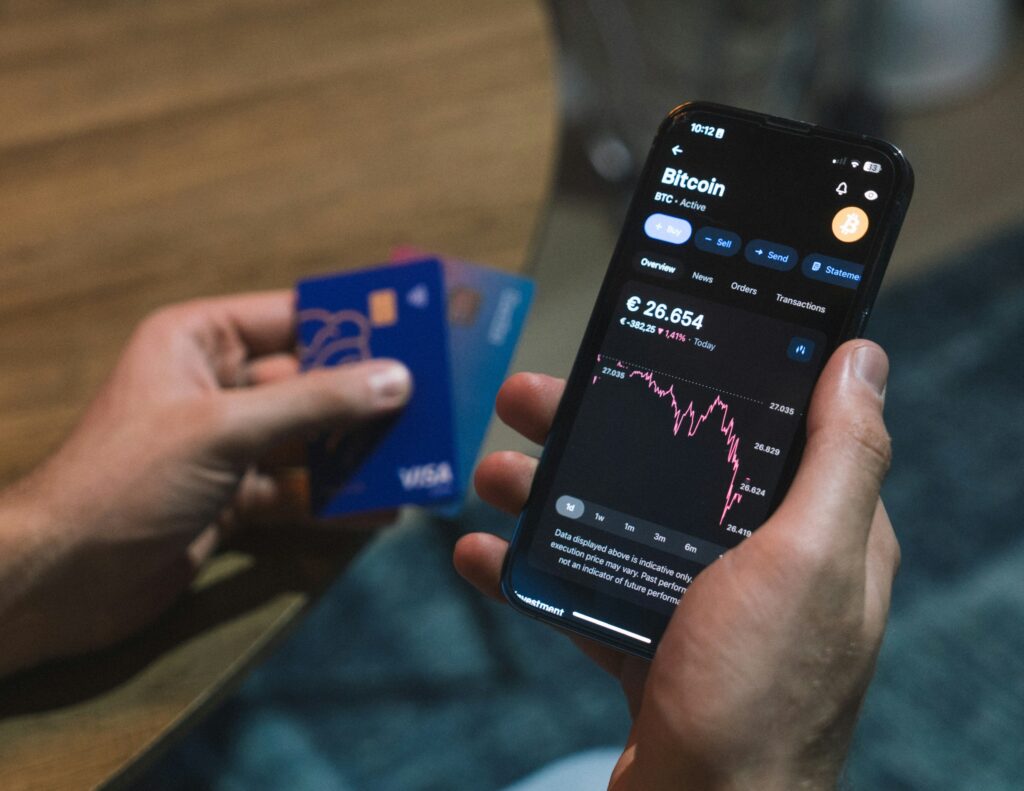
North Korean hackers didn’t just break records; they obliterated them. These cyber-bandits managed to pilfer an astounding $1.34 billion in cryptocurrency across 47 incidents in 2024. That’s more than double their haul from the previous year, proving that practice does indeed make perfect – at least when it comes to digital larceny.

David vs. Goliath: How They Did It
You might wonder how a nation often associated with limited internet access pulled off such sophisticated heists. The answer lies in their ingenious tactics:
- Social Engineering Supremacy: These hackers are masters of deception, often posing as job seekers to infiltrate blockchain companies.
- Malware Mayhem: They deployed nasty tools like TraderTraitor and AppleJeus to siphon millions from unsuspecting victims.
- Fake It Till You Make It: Some hackers even created elaborate fake personas on platforms like GitHub, LinkedIn, and Telegram to gain trust.

The Biggest Hits of 2024
Let’s break down some of the most jaw-dropping heists:
- DMM Bitcoin (Japan): A whopping $308 million stolen in May[
- WazirX (India): $235 million vanished in July, forcing the exchange to suspend trading
- Upbit and Radiant Capital: Each lost $50 million to these digital desperados
Why Should You Care?
This isn’t just about numbers on a screen. These stolen funds are allegedly fueling North Korea’s weapons programs. It’s like a high-stakes game of digital cops and robbers, but with real-world consequences.

The Global Response
In an unprecedented move, the U.S., Japan, and South Korea joined forces to sound the alarm. They’re urging the crypto industry to beef up security and warning companies to be wary of hiring suspicious IT workers. It’s like a crypto Avengers assembling to fight off the digital Thanos!

What’s Next?
As cryptocurrency values continue to soar (Bitcoin more than doubled in 2024!), these attacks are likely to intensify. The question is: can the good guys stay one step ahead, or will 2025 see even more digital dollars disappearing into the ether?
Remember, in the wild west of cryptocurrency, your digital wallet is only as safe as your cybersecurity practices. Stay vigilant, crypto cowboys and cowgirls!

Bolanle Media covers a wide range of topics, including film, technology, and culture. Our team creates easy-to-understand articles and news pieces that keep readers informed about the latest trends and events. If you’re looking for press coverage or want to share your story with a wider audience, we’d love to hear from you! Contact us today to discuss how we can help bring your news to life.












Independent films aren’t just competing with Hollywood anymore—they’re competing with everything. TikToks, YouTube essays, Netflix drops, sports clips, memes, and every other piece of content fighting for the same 2 seconds of attention you are.
That’s the real problem: your film isn’t just up against other movies. It’s up against the entire internet.
“Your indie film doesn’t fail online because it isn’t ‘good enough’—it fails because it’s invisible.”
After 25+ years around filmmakers, distributors, and audiences, I’ve seen the same thing happen over and over: a film people would love never reaches the people who would love it. Not because the art is bad, but because the strategy is missing.
Let’s break down why your indie film disappears online—and what to do differently.
1. You drop a film, not a story
Most filmmakers post: “My film is out! Link in bio.”
That’s an announcement, not a narrative.
Audiences don’t connect to files; they connect to stories, identities, and emotions. If all they see is a poster and a link, there’s no emotional doorway for them to walk through.
Ask yourself:
- What is the emotional wound or question at the heart of this film?
- Who exactly feels that wound in real life?
- How can I talk to them, not to “everyone”?“If your marketing doesn’t feel like a story, it will always feel like spam.”
Start posting the story around the film:
- The real-life moment that inspired it
- The doubt you had making it
- The one scene that almost broke you
- The uncomfortable truth the film is actually about
Now your film becomes a journey people want to follow, not just a link they scroll past.
2. You talk like a filmmaker, not like a human
Most posts sound like this:
“An exploration of grief and identity featuring award-winning performances and atmospheric cinematography.”
That’s festival-copy, not internet language.
Online, people skim. They need to feel something in one line.
Translate “filmmaker-speak” into human-speak:
- Instead of: “A meditation on loneliness”
Try: “This is for anyone who’s ever felt alone in a crowded room.” - Instead of: “A gritty drama about addiction”
Try: “I made this for the version of me that didn’t think they’d make it to 30.”“If your copy sounds like a grant application, don’t be surprised when nobody clicks.”
Write like you’re texting one friend who needs this film today. That’s the energy that cuts through.
3. You ignore the psychology of hooks
Online, you have 1–3 seconds. Hooks aren’t just marketing tricks; they’re psychological pattern-breakers.
The brain pays attention when:
- A belief is challenged
- A problem is named clearly
- A secret, shortcut, or mistake is promised
Weak hook:
“New indie film I’ve been working on for 3 years.”
Strong hook:
“Most indie films never find an audience—here’s how I tried not to be one of them.”
Weak hook:
“Trailer for my new short film.”
Strong hook:
“This is the film I almost deleted halfway through.”
“The job of the hook is not to explain your film—it’s to earn the next 5 seconds of attention.”
Before you post anything, ask:
“If I didn’t know me at all, would I stop scrolling for this first line?”
If the answer is no, rewrite the hook.
4. You only show the product, not the process
Psychologically, people bond with process, not just outcomes. They want to feel like they were in the trenches with you, not just invited to the premiere.
When you only show the poster and trailer, you cut them out of the journey. And if they weren’t there for the journey, they don’t feel invested in the destination.
Start sharing:
- The casting decision that changed everything
- The day everything went wrong on set
- The scene you shot 9 times and still weren’t sure about
- The email that said “no” that still motivates you“When people feel like they helped ‘build’ your film emotionally, they’re far more likely to share it.”
The more your audience feels like co-conspirators, the less likely your film is to vanish in their feed.
5. You made a film, but not an ecosystem
A single post doesn’t build an audience. A single film rarely does either.
What works is an ecosystem: themes, ideas, and conversations that your film plugs into.
Think in terms of:
- A recurring topic you own (e.g., “the reality of micro-budget filmmaking,” “African diaspora sci-fi,” “stories about fatherhood”)
- A repeatable content format (e.g., “60-second breakdowns of scenes,” “brutally honest production diaries,” “lessons from my failed shoots”)
- A clear promise to your audience (“If you follow me, you’ll get X consistently.”)“Your film is a flagship product. Your content is the neighborhood people live in.”
When your page becomes the place for a specific emotional or cultural conversation, your film stops being random content and starts being required viewing.
6. No clear path from attention to viewing
Even when filmmakers manage to grab attention, they often lose viewers in the next step.
Common problems:
- The link is hard to find
- The call to action is vague (“Check it out if you want”)
- There’s no urgency or reason to act now
Make it absurdly simple:
- One clear link: pinned, in bio, and in every caption
- One clear CTA: “Watch the full film free at the link in my bio—then comment your honest rating out of 10.”
- One clear reason: “It’s only online for 7 days” or “I’m reading every comment and using it for my next film.”“Attention without direction is just a moment. Attention with a clear path becomes momentum.”
You don’t just want views; you want behavior—clicks, watches, shares, comments. Design for that.
Final thought: You’re not too small. You’re just too quiet.
Most indie filmmakers secretly believe the problem is budget or connections.
Often, the problem is clarity, consistency, and courage.
Clarity in who the film is for.
Consistency in how you show up online.
Courage to be specific, direct, and occasionally uncomfortable.
“Your film doesn’t need everyone. It needs the right 1,000 people who feel like you made it for them.”
If you stop treating online as an afterthought and start treating it as the second half of your filmmaking, your work won’t just exist—it will be experienced.

On Tuesday, April 7, 2026, the President of the United States set an 8 p.m. deadline for a foreign nation to comply — or face the destruction of its entire civilian infrastructure. He said it out loud. On camera. And most of us kept scrolling.
This is not a movie. This is not a think piece about geopolitics. This is the moment we are actually living in.
What was actually said
At a press conference on Monday, President Donald Trump told reporters: “We have a plan, because of the power of our military, where every bridge in Iran will be decimated by 12 o’clock tomorrow night, where every power plant in Iran will be out of business — burning, exploding and never to be used again. Complete demolition. In four hours, if we want to.”
Then, on Tuesday morning, hours before his own deadline, he posted on Truth Social: “A whole civilization will die tonight, never to be brought back again. I don’t want that to happen, but it probably will.”
Read that again. The sitting President of the United States said a civilization will die. And then added, almost casually, that he probably couldn’t stop it.

Why this is not normal
What Trump described — deliberately targeting power plants, bridges, and civilian infrastructure — is not a military strategy. It is, by definition, a war crime.theguardian+1
Amnesty International was direct: “Deliberate attacks on civilian infrastructure like power plants are generally forbidden. Given that these power facilities are vital for the basic needs and livelihoods of millions of civilians, targeting them would be excessive and thus illegal under international humanitarian law, potentially constituting a war crime.” –theguardian
Over 100 international law experts from Harvard, Yale, Stanford, and the University of California have signed a joint statement raising “serious concerns” about U.S. actions and statements violating international humanitarian law. The International Committee of the Red Cross issued a rare public statement: “Waging war on essential infrastructure equates to waging war on civilians.” –theguardian

For context: the ICC issued arrest warrants for Russian military leaders for doing exactly what Trump is threatening to do — targeting a civilian power grid in Ukraine. The world called that a war crime then. The silence now is deafening.
The people inside the civilization
Iran is home to 88 million people. It is one of the world’s oldest civilizations — the successor to ancient Persia, with a history stretching back thousands of years. When Trump says “a civilization will die tonight,” he is not talking about a government. He is talking about hospitals losing power. Water treatment plants shutting down. Families in the dark. Children.
Human Rights Watch warned: “The crippling of Iran’s power facilities would be devastating to the Iranian populace, depriving hospitals, water supplies, and other essential civilian needs of electricity.” This isn’t a side effect of war. Trump’s own words suggest it is the strategy.
A world that can’t find its footing
Global leaders are watching in open alarm. Diplomats from over 40 nations held an emergency video conference — and ended it with no real solutions. New Zealand’s Prime Minister called Trump’s threats “unhelpful.” Saudi Arabia intercepted seven ballistic missiles near its own energy facilities the same week. Oil prices are spiking globally because one-fifth of the world’s oil and gas passes through the Strait of Hormuz — the chokepoint at the center of all of this.
The New York Times described the situation plainly: “In one moment, President Trump proclaims the conflict is nearing its conclusion. Moments later, he asserts it will persist for several weeks. Tension grips the globe.”–nytimes

Even Trump’s own former officials are sounding the alarm. One told Politico: “In no circumstance can Trump just walk away. He’ll be humiliated if he leaves, and we’ll be in a quagmire if he stays.” The U.S. military, meanwhile, is reportedly running out of viable military targets — meaning the pressure to shift toward civilian infrastructure is not just rhetoric.-politico
The numbness is the problem
On Easter Sunday, Pope Leo — in his first Easter mass as head of the Catholic Church — said something that should have stopped every news cycle cold: “We are growing accustomed to violence, resigning ourselves to it, and becoming indifferent.”
He was right. And that indifference is what makes moments like this possible.
We have been trained by years of outrage cycles, breaking news alerts, and doomscrolling to process the unthinkable as content. A president threatens to wipe out a civilization’s power grid in four hours — and the algorithm serves it between a meme and a music video. We watch. We maybe share it. We keep moving.

That is not a political observation. That is a human one.
The world is not watching Iran from a safe distance. Oil prices are already rising — you will feel it at the gas pump. If power plants go dark, global supply chains shiver. If the Strait of Hormuz stays closed, the economic ripple reaches every country that depends on energy. This is not a foreign story. It never was.
What watching means right now
We write about film, culture, and entertainment at Bolanle Media because we believe stories matter. We believe art is how humans make sense of the world. But right now, the world needs more than sense-making. It needs people who are paying attention — actually paying attention — to what is being said out loud, in press conferences, on Truth Social, with cameras rolling.
A civilization will die tonight. Those were the words. The deadline has passed. The question is not whether you agree with U.S. foreign policy. The question is whether you are willing to sit in the pew and not flinch while the world keeps burning around you.
We are not just watching a music video. We are watching history. And history will ask what we did with what we saw.
Sources: NBC News, Time Magazine, Al Jazeera, The Guardian, Reuters, CNBC, The New York Times, Human Rights Watch, Amnesty International, Global News
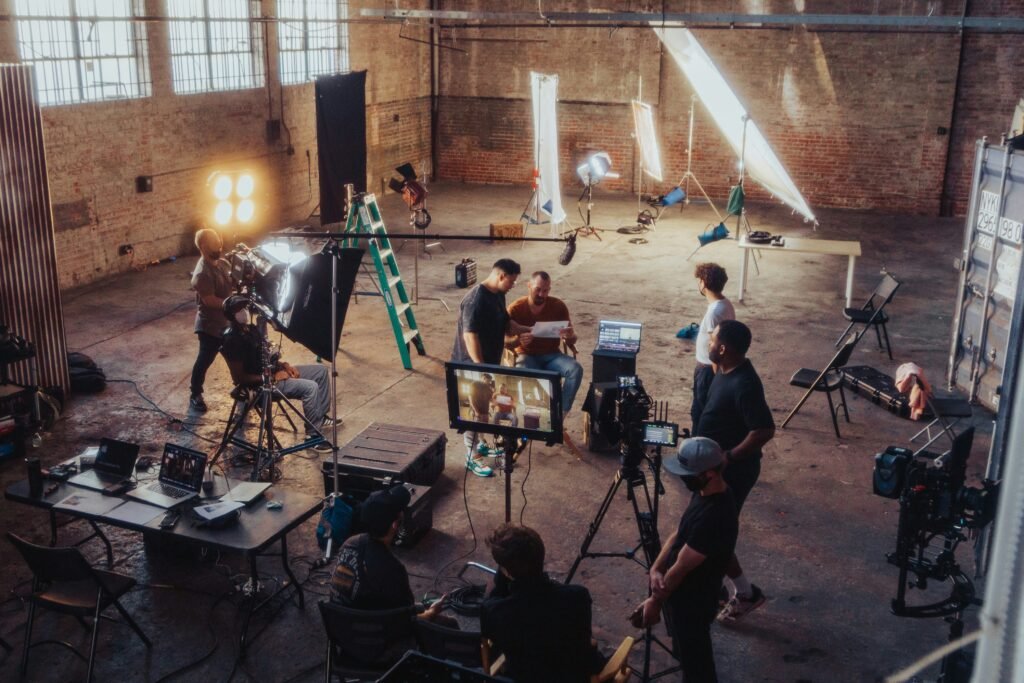
Independent filmmaking has never been more accessible. With affordable cameras, editing software, and distribution platforms, anyone with a story can bring it to life. Yet despite this creative democratization, most indie films never find an audience—or worse, never reach their full potential.
The truth is, indie films rarely fail because of a lack of passion. They fail because of avoidable mistakes in execution, planning, and perspective. If you understand where things typically go wrong, you can dramatically increase your chances of success.
1. Weak Scripts Sink Strong Ideas
A compelling concept is not the same as a compelling script. Many indie filmmakers rush into production with an idea they love, but without fully developing the story. The result? Films that look decent but feel hollow.
A strong script requires:
- Clear structure
- Authentic dialogue
- Character arcs that evolve
Filmmakers like Robert Rodriguez have long emphasized that storytelling outweighs budget. You can shoot on the cheapest camera available, but if your story doesn’t engage, your audience will disconnect quickly.
How to avoid it:
Spend more time writing than shooting. Workshop your script, get feedback, and revise relentlessly.
2. Bad Sound Breaks Immersion
Audiences will forgive grainy visuals—but they won’t tolerate poor audio. This is one of the most common and damaging mistakes in indie filmmaking.
Echo, background noise, and inconsistent levels instantly make a film feel amateur.
How to avoid it:
- Invest in decent microphones before upgrading your camera
- Record room tone
- Monitor audio during filming, not after
3. Trying to Do Too Much with Too Little
Ambition is essential, but overreaching is dangerous. Many indie filmmakers attempt large-scale stories—multiple locations, complex action sequences, big casts—without the resources to execute them properly.
The result is a film that feels incomplete or unfocused.
Compare that to films like Tangerine, which embraced limitations and used them creatively. Its contained story and raw style became strengths rather than weaknesses.
How to avoid it:
Write for what you have access to. Limit locations, control your environment, and build your story around realistic constraints.
4. Poor Direction of Actors
Even with a solid script, weak performances can undermine everything. Directing actors is a skill many indie filmmakers underestimate.
Giving vague directions like “be more emotional” rarely works. Actors need context, motivation, and trust.
How to avoid it:
- Communicate intentions, not just outcomes
- Create a collaborative environment
- Rehearse before shooting
Strong performances elevate a film; weak ones expose its flaws.
5. Ignoring the Editing Process
Many filmmakers treat editing as a final step rather than a critical phase of storytelling. In reality, editing is where the film truly takes shape.
Pacing issues, inconsistent tone, and unnecessary scenes often go unchecked.
How to avoid it:
- Be willing to cut scenes you love
- Focus on rhythm and flow
- Get fresh eyes on rough cuts
A well-edited film can transform average footage into something compelling.
6. No Clear Distribution Plan
Finishing a film is only half the battle. Without a strategy for distribution, even great indie films go unseen.
Some filmmakers focus solely on major festivals like Sundance, ignoring smaller festivals or alternative platforms that might be a better fit.
How to avoid it:
- Research festivals that align with your film
- Consider digital platforms and niche audiences
- Build a marketing plan early
Distribution should be part of your strategy from the beginning—not an afterthought.
7. Mistaking Passion for Preparation
Passion drives indie filmmaking—but it doesn’t replace planning. Many projects fall apart due to poor scheduling, unclear roles, or lack of contingency plans.
How to avoid it:
- Create a realistic production schedule
- Define roles clearly, even on small teams
- Prepare for setbacks
Professionalism isn’t about budget—it’s about discipline.
Final Thoughts
Indie filmmaking is challenging, unpredictable, and often exhausting. But failure isn’t inevitable—it’s usually the result of specific, avoidable missteps.
If you focus on strong storytelling, prioritize sound and performance, and approach your project with both creativity and strategy, you can separate your work from the countless films that never quite land.
The goal isn’t perfection. It’s intentional execution.
Because in independent film, success doesn’t come from having more resources—it comes from using what you have, wisely.

Why Your Indie Film Disappears Online

A Civilization Will Die Tonight — And We’re All Just Watching

Why Most Indie Films Fail (And How to Avoid It)


 Advice4 weeks ago
How to Find Your Voice as a Filmmaker
- News4 weeks ago
How Misinformation Overload Breaks Creative Focus
- News2 weeks ago
The Timothée Chalamet Guide to Ruining Your Image
- Entertainment3 weeks ago
This scene almost broke him. And changed his career.
- Entertainment3 weeks ago
7 Filmmaking Lessons From Michael B. Jordan’s Oscar Moment
- Entertainment2 weeks ago
The machine isn’t coming. It’s aleady the room.
- Advice3 weeks ago
Stop Waiting for Permission — The Film Industry Just Rewrote the Rules
- News3 weeks ago
How ‘Sinners’ Won The Oscars: Filmmaker Notes