Film Industry
100% Tariffs: The Death Sentence for International Movies

The 100% tariff announced by President Trump on movies produced outside the U.S. aims to revive the “dying” American film industry by discouraging studios from filming abroad, where tax incentives attract productions to countries like the UK, Canada, Australia, and New Zealand (Variety, 2024).
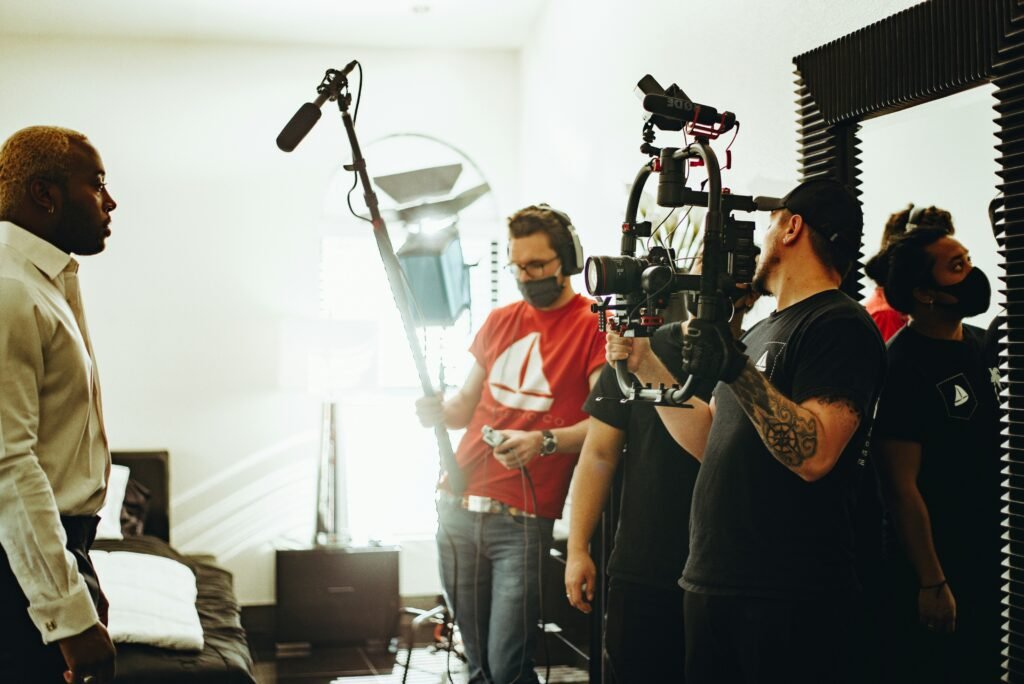
This tariff threatens to double costs for foreign-made films entering the U.S. market, potentially causing studios to shift production back to the U.S., but also risking fewer films being made due to increased expenses (Hollywood Reporter, 2024).

The move has sparked widespread alarm internationally, with film sectors in the UK, Australia, and New Zealand warning of devastating job losses and industry damage, especially as these countries have become major hubs for high-end film and TV production (Deadline, 2024). Industry insiders call the tariffs “insane” and warn they could cripple independent distributors and streaming platforms reliant on global production networks (The Guardian, 2024). Major U.S. media stocks, including Disney and Netflix, fell sharply following the announcement due to concerns over increased costs and disrupted international collaboration (CNBC, 2024).

Uncertainties remain about the tariffs’ exact scope-whether they apply to streaming content, co-productions, or how enforcement would work-adding to industry confusion and anxiety (Variety, 2024). Experts caution that retaliatory tariffs by other countries could further harm U.S. films abroad, potentially shrinking the global market and undermining Hollywood’s recovery from recent setbacks like the pandemic and strikes (Hollywood Reporter, 2024).

In summary, the 100% tariff on foreign-made films is widely seen as a drastic measure that could severely disrupt the global film industry, raise production costs, threaten thousands of jobs internationally, and create significant uncertainty for studios, distributors, and audiences worldwide (Deadline, 2024).

Bolanle Media covers a wide range of topics, including film, technology, and culture. Our team creates easy-to-understand articles and news pieces that keep readers informed about the latest trends and events. If you’re looking for press coverage or want to share your story with a wider audience, we’d love to hear from you! Contact us today to discuss how we can help bring your news to life








By Bolanle Media
She didn’t wait to be discovered. She didn’t follow the rules. And she didn’t let anyone else write her story.
Zendaya went from a Disney Channel kid to the youngest-ever two-time Emmy winner for lead actress in a drama — and she did it on her own terms. If you’re an actor trying to figure out how to build a career that actually lasts, her playbook is one of the most honest and practical ones in Hollywood right now.
Here’s what she does differently — and what you can take directly into your own career.

1. She Chose Roles. They Didn’t Choose Her.
Most actors take what they’re given. Zendaya negotiated.
At 17, when Disney offered her KC Undercover, she didn’t just say yes. She demanded to be a producer so she could shape the character herself. She specifically said she didn’t want her character to sing, dance, or follow any of the typical Disney girl tropes — because she wanted to show that girls could be defined by something other than performance.
That’s not diva behavior. That’s self-awareness.
“I wanted to make sure that she wasn’t good at singing or acting or dancing. There are other things that a girl can be.” — Zendaya
The lesson: Know what you stand for before you walk into the room. Agents, casting directors, and producers can feel the difference between someone who needs the job and someone who has a vision.
2. She Stayed Quiet While Everyone Else Got Loud
In a world where most celebrities flood the internet to stay relevant, Zendaya does the opposite.
She chooses restraint over noise. Intention over impulse. Longevity over virality. While other actors are chasing every trending moment, she allows space between wins — which does something powerful to how people perceive her. It turns success into a pattern, not a spike.
“Spikes feel lucky. Patterns feel earned. And earned success commands respect rather than temporary excitement.”
The lesson: You don’t have to be everywhere to be known. Strategic silence can build more authority than constant posting ever will.
3. She Was Fearless Enough to Fail
When Zendaya stepped into Euphoria, she wasn’t sure she could do it. The emotional weight of playing Rue was unlike anything she had done before.
But she’s said it clearly — greatness requires two things: being fearless and being willing to try.
“You can’t be afraid to look stupid, you can’t be afraid to mess up, you can’t be afraid of anything. The only way to get great is to be fearless and try.” — Zendaya
The lesson: The roles that scare you the most are usually the ones that will define you. Stop waiting until you feel ready. That feeling never comes.

4. She Prepared Like No One Was Watching
Talent alone didn’t get Zendaya to where she is. Preparation did.
For The Greatest Showman, she spent months training on the trapeze to perform her own stunts — not because she had to, but because she wanted to fully commit to the role. That extra preparation is a constant in everything she does, whether it’s acting, fashion, or advocacy.
“I have standards I don’t plan on lowering for anybody… including myself.” — Zendaya
The lesson: The work you put in before the audition, before the set, and before the camera rolls is what separates good actors from unforgettable ones.
5. She Stayed Grounded Without Shrinking
Fame didn’t change Zendaya because she never let it define her.
She’s spoken openly about staying grounded, keeping family close, and not applying unnecessary pressure to herself. She didn’t rush. She didn’t compare. She just kept building, step by step.
“I’ve just been living without applying any pressure, just going step by step.” — Zendaya
The lesson: Your career is a marathon. The actors who last are the ones who protect their peace as fiercely as they protect their craft.
Final Thought
Zendaya’s career isn’t a mystery — it’s a method. Intentional choices, fearless execution, and an unshakeable sense of self.
You don’t need her budget, her team, or her platform.
You need her mindset.
“I want to show that you don’t have to be older to live your dreams — you can do it at any age.” — Zendaya
Start there.
The machine isn’t coming. It’s already in the room.
Picture this: you spend two years writing a script. You hustle funding, build a team, reach out to casting. Then somewhere inside a studio, a software platform analyzes your concept against fifteen years of box office data and decides—before a single human executive reads page one—that your film is too risky to greenlight.
This isn’t a Black Mirror episode. This is Hollywood in 2026.
The Numbers Don’t Lie
The generative AI market inside media and entertainment just crossed $2.24 billion and is projected to hit $21.2 billion by 2035—a 25% annual growth rate. Studios like Warner Bros. are running platforms like Cinelytic, a decision-intelligence tool that predicts box office performance with 94–96% accuracy before a single dollar of production money moves.
Netflix estimates its AI recommendation engine saves the company $1 billion per year just in subscriber retention. Meanwhile, over the past three years, more than 41,000 film and TV jobs have disappeared in Los Angeles County alone.
That’s not a trend. That’s a restructuring.
The Moment That Changed Everything
In February 2026, ByteDance’s AI generator Seedance 2.0 produced a hyper-realistic deepfake video featuring the likenesses of Tom Cruise, Brad Pitt, and Leonardo DiCaprio. It went viral instantly. SAG-AFTRA called it “blatant infringement.” The Human Artistry Campaign called it “an attack on every creator in the world.”
Then came Tilly Norwood—a fully AI-generated actress created by production company Particle 6—who was seriously considered for agency representation in Hollywood. The first synthetic human to knock on that door.
Matthew McConaughey didn’t mince words at a recent industry town hall. He looked at Timothée Chalamet and said:
“It’s already here. Own yourself. Voice, likeness, et cetera. Trademark it. Whatever you gotta do, so when it comes, no one can steal you.”
James Cameron told CBS the idea of generating actors with prompts is “horrifying.” Werner Herzog called AI films “fabrications with no soul.” Guillermo del Toro said he would “rather die” than use generative AI to make a film.
But here’s the thing—not everyone agrees.
The Indie Filmmaker’s Double-Edged Sword
At SXSW 2026, indie filmmakers made something clear in a packed panel: they don’t want AI to make their movies. They want AI to “do their dishes.”
That’s the real conversation happening at the ground level.
Independent filmmaker Brad Tangonan used Google’s AI suite to create Murmuray—a deeply personal short film he says he never could have made without the tools. Not because he lacked talent, but because he lacked budget. He wrote it. He directed it. The AI executed parts of his vision he couldn’t afford to shoot.
In Austin, an independent filmmaker built a 7-minute short in three weeks using AI-generated video—a project that would have taken 3–4 months and cost ten times more the traditional way. That’s the version of this story studios don’t want you focused on.
At CES 2026, Arcana Labs announced the first fully AI-generated short film to receive a SAG-approved contract—a milestone that proves AI-assisted production can operate inside union protections when done right.
The Fight Coming This Summer
The WGA contract expires May 1, 2026. SAG-AFTRA’s expires June 30. AI is the headline issue at the bargaining table—and the last time these two unions went to war with studios over it, Hollywood shut down for 118 days.
SAG is expected to push the “Tilly Tax”—a fee studios pay every time they use a synthetic actor—directly inspired by Tilly Norwood’s emergence. The WGA already prohibits studios from handing writers AI-generated scripts for a rewrite fee. Now they want bigger walls.
Meanwhile, the Television Academy’s 2026 Emmy rules now include explicit AI language: human creative contribution must remain the “core” of any submission. AI assistance is allowed—but the Academy reserves the right to investigate how it was used.
The Oscars and Emmys are essentially saying: the robot didn’t get nominated. The human did.
What This Means for You
If you’re an indie filmmaker between 25 and 45, you’re operating in the most disruptive creative environment since the camera went digital. AI can cut your post-production time by up to 40%. It can help you pre-visualize shots, generate temp scores, clean up audio, and pitch your project with a sizzle reel you couldn’t afford six months ago.
But the machine that helps you make your film is the same machine that could make studios decide they don’t need you to make theirs.
Producer and director Taylor Nixon-Smith said it best: “Entertainment, once a sacred space, now feels like it’s in a state of purgatory.”
The question isn’t whether AI belongs in your workflow. It’s whether you’re the one holding the wheel—or whether the wheel is slowly being handed to an algorithm that has never once felt what it means to have a story only you can tell.
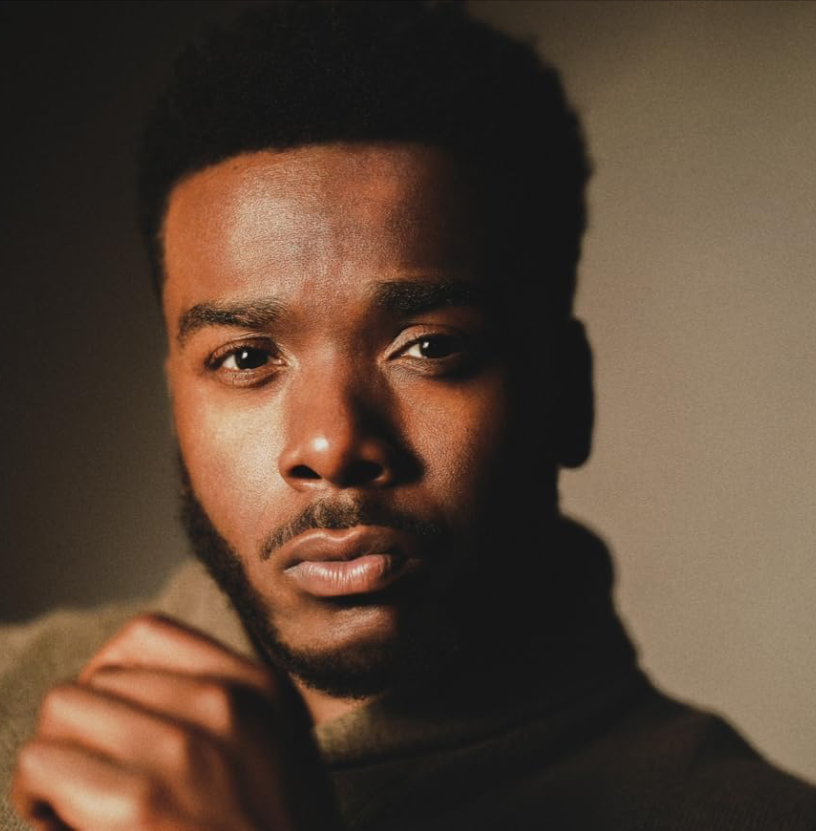
As Sinners surges into the cultural conversation, it’s impossible to ignore the force of Christian Robinson’s performance. His “let me in” door scene has become one of the film’s defining moments—raw, desperate, and unforgettable. But the power of that scene makes the most sense when you understand the journey that brought him there.
From church play to breakout roles
Christian’s path didn’t begin on a Hollywood set. It started in a Brooklyn church, when a woman named Miss Val kept asking him to be in a play.
“I told her no countless times,” he remembers. “Every time she saw me, she asked me and she wouldn’t stop asking me.”
He finally said yes—and everything changed.
“I did it once and I fell in love,” he says. That one performance pushed him into deep research on the craft, a move to Atlanta, and years of unglamorous work: training, auditioning, stacking small wins until he booked his first roles and then Netflix’s Burning Sands, where many met him as Big Country.
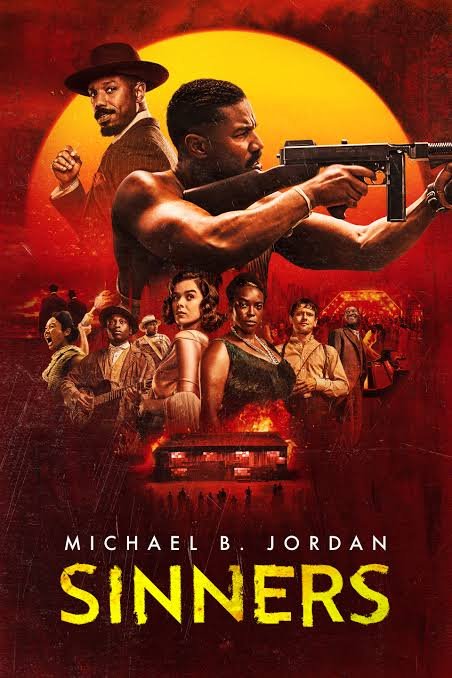
By the time Sinners came along, he wasn’t a newcomer hoping to get lucky. He was an actor who had quietly built the muscles to carry something bigger.
The door scene: life or death
On The Roselyn Omaka Show, Christian shared the directing note Ryan Coogler gave him before filming the door scene:
“He explained to me, ‘I need you to bang on this door as if your life depended on it. Like it’s a matter of life and death.’”
Christian didn’t just turn up the volume; he reached deeper.
“This film speaks a lot about our ancestors,” he told Roselyn Omaka. “So I tried to give a glimpse of what our ancestors would’ve experienced if someone or something that could bring ultimate destruction was after them. How hard would they bang? How loud would they scream to try to get into a place safely? That’s what I intended to convey in that moment.”
That inner picture—life or death, ancestors, ultimate destruction—is why the scene hits like more than a plot beat. It feels like generational memory breaking through a single frame.
Living through a “history” moment in real time
When Roselyn asks what he’s processing as Sinners takes off, Christian admits he’s still inside the wave.
“I’ve never experienced a project with this level of reception and energy and momentum,” he says. “People having their theories and breaking it down and doing reenactments… it’s never been a time like this in my career.”
He’s careful not to over‑define something that’s still unfolding: “There’s no way to give an accurate description of what I’m experiencing while I’m still experiencing it.” He knows he’ll need distance to name it fully.
But he can name one thing: “If I could gather any adjective to describe it, it would be gratefulness. I’m grateful.”
He also feels the weight of what this film might mean long-term:
“To know that I was there for a large amount of the time it was being brought to life, and a part of what the internet is saying will be history… this is something that I’m inspired by—to shoot for the stars in whatever passion rooted in creativity that you possess.”
Music, joy, and the man behind the moment
Christian talks about the music of Sinners as another force that shaped him. The score wasn’t playing nonstop; it showed up in key moments.
“The music was played when it was necessary to be played. But when it was played, it resonated,” he says. Hearing Miles Caton’s songs early, before the world did, he remembers thinking, “This is going to be magical… This is one of the ones right here.”
For all the heaviness of the story, he also brought levity. He laughs about being the jokester on set—singing Juvenile and Lil Wayne in the New Orleans hair and makeup trailer, trying to make everyone smile during Essence Fest weekend. “I’m a fun guy,” he says. “I love to see people laugh and have a good time.”
PATHS for us and opening doors
What might be most revealing is how seriously Christian takes his responsibility off screen. In 2015, sitting in his apartment outside Atlanta, he felt God tell him to start a nonprofit called PATHS.
“I heard from God and he told me to start a nonprofit called PATHS,” he recalls. At first, he and his peers went into schools and inner‑city communities to teach young people “the many different paths to entering the entertainment industry”—not just the craft, but “the practical steps and establishing yourself, like the business of an actor… a stunt person, hair and makeup, etc.”
When the pandemic hit and school visits stopped, he pivoted to a podcast and digital platform: “Fine, I’ll do it,” he laughs. Now PATHS for us lets “anyone anywhere that desires to be in entertainment hear from credible entertainment industry professionals on how they got to where they are and how you can do the same.”
Working on Sinners confirmed that he should go all in: “It just gave me exactly what I needed to know that I should pour my all into it.”
Honoring a history-making moment
As Sinners takes off, Christian keeps coming back to one word: gratefulness—for the film, for the collaborators, for the chance to be part of something people are calling historic.
At Bolanle Media, we see more than a viral scene. We see an artist whose craft is rooted in faith, ancestors, and hard-earned discipline; whose joy lifts the rooms he works in; and whose platform is opening real paths for others.
This scene almost broke him. And changed his career.
Now, as the world catches up, Christian Robinson is using that breakthrough not just to walk through new doors—but to help the next generation find theirs.

She Was Supposed to Come Home: The Life, Death, and Dehumanization of Ashlee Jenae

Bieber’s Coachella Set Has Everyone Arguing Again

Vertical Films Changed Everything. Are You Ready?


 News3 weeks ago
The Timothée Chalamet Guide to Ruining Your Image
- Entertainment3 weeks ago
The machine isn’t coming. It’s aleady the room.
- Advice4 weeks ago
Stop Waiting for Permission — The Film Industry Just Rewrote the Rules
- Entertainment2 weeks ago
What Kanye’s ‘Father’ Says About Power, Faith, and Control
- News3 weeks ago
How She Earns $40M+ In 2026
- News4 weeks ago
How ‘Sinners’ Won The Oscars: Filmmaker Notes
- News3 weeks ago
Did OnlyFans Save Creators—or Trap Them?
- News1 week ago
Why Your Indie Film Disappears Online