Entertainment
What the Epstein Files Actually Say About Jay-Z

The internet exploded this week after Jay-Z’s name surfaced in newly released Jeffrey Epstein documents—and 50 Cent is already trolling his way toward another Netflix documentary. But before the headlines spiral further out of control, here’s what the files actually say, what they don’t say, and why this story reveals more about how we consume scandal than it does about Jay-Z.

The Document That Started Everything
On Friday, January 30, 2026, the U.S. Department of Justice released over 3 million pages of records tied to the Epstein investigation under the Epstein Files Transparency Act. Buried within that mountain of material is a single FBI “crisis intake report” from 2019—essentially a logged phone call from a member of the public to the FBI’s national hotline.
In that tip, an anonymous woman claimed she was abducted multiple times over several years and drugged during each incident. She told the FBI she believed she was in Jeffrey Epstein’s Florida mansion on these occasions. In one alleged incident from 1996, she stated she awoke in a room where Harvey Weinstein was sexually assaulting her, and that Jay-Z (Shawn Carter) was also present in the room.

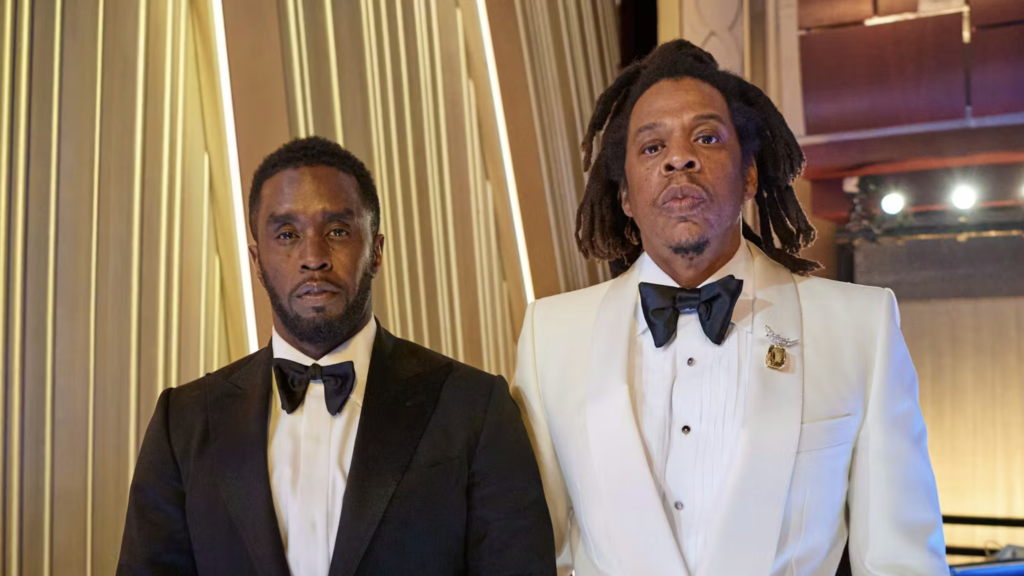
The woman also claimed that rapper Pusha T acted as one of several “handlers” who befriended and moved girls around, and that she attended a party around 2007 where both Weinstein and Pusha T were present before she was allegedly drugged and abused.
That’s it. That’s the entirety of Jay-Z’s connection to the Epstein files.
Why This Doesn’t Mean What You Think It Means
Here’s what most people scrolling past viral headlines are missing: FBI crisis intake reports are not evidence. They’re not verified claims. They’re not active investigations. They’re raw, unfiltered tips that anyone can call in—and federal authorities have explicitly warned that these documents “may include fake or false accusations” that are “unfounded and false.”
Legal experts are urging the public to understand what these intake forms represent: logged tips for potential follow-up, not proof of wrongdoing. Being named in an intake report doesn’t mean you’re guilty, under investigation, or even that the claim was ever looked into.
Jay-Z’s name does not appear in Epstein’s flight logs, personal address books, verified investigative evidence, or court filings. His mention exists only in this single, unverified hotline call.


The Timeline Problem Everyone’s Ignoring
The alleged incident involving Jay-Z is dated to 1996. That same year, Jay-Z released his debut album Reasonable Doubton June 25, 1996, through his own independent label Roc-A-Fella Records after every major label had turned him down. He was literally selling CDs from the trunk of his car on college campuses.
As one social media user pointed out, Jay-Z “wasn’t nobody” in 1996—at least not somebody running in Jeffrey Epstein’s elite billionaire circles. He was a hustler trying to break into the music industry, not a mogul attending private island parties.
The Pusha T timeline is even more problematic. The tipster claimed Pusha T was a “handler” in incidents around 1996 and at a 2007 party.
But in 1996, Pusha T was a teenager who had just signed his first record deal with his brother as part of the group Clipse with Elektra Records—they hadn’t even released their debut album yet. Their breakout hit “Grindin’” didn’t drop until 2002.
Multiple commenters online have pointed out the absurdity: “Pusha wasn’t even out nor the Clipse in 96.”

Enter 50 Cent, Stage Left
If there’s one constant in hip-hop, it’s that 50 Cent will never miss an opportunity to turn controversy into content. After Jay-Z’s name started trending off the Epstein file release, 50 posted AI-generated images and announced “I gotta do a doc on this sh!t.”
This isn’t new territory for Curtis Jackson. In December 2025, he executive-produced Sean Combs: The Reckoning, a Netflix documentary about Diddy that became the number one show on the platform, even beating Stranger Things. Critics accused him of being “petty,” but the docuseries was praised for its investigative depth and victim-centered storytelling—and 50 proved he could monetize outrage into premium content.
Now, with Jay-Z’s name in the Epstein files, 50 smells blood in the water. His Jay-Z “documentary” announcement is part troll, part business pitch, and entirely on-brand. He’s turned decades-old beef with Jay-Z into a potential streaming deal, weaponizing one unverified FBI tip line call into the next chapter of his “accountability documentarian” persona.

The Anatomy of a Viral Lie
This story is a masterclass in how misinformation spreads faster than facts. The headline “Jay-Z Named in Epstein Files” is technically true—but it’s designed to trigger maximum shock without context. By the time someone reads past the headline to learn it’s an unverified hotline tip, the damage is done. The screenshot has been shared. The conspiracy theories are trending. The outrage cycle is complete.
Being “in the files” has become shorthand for guilt, even when the files themselves explicitly warn against that interpretation. Bill Gates, Jamie Foxx, and dozens of other celebrities are mentioned in various Epstein documents—some in emails, some in photos from public events, some in unverified tips. None of that proves criminal behavior, but nuance doesn’t go viral.

What We Actually Know
Let’s be clear about the facts:
- Jay-Z is mentioned in one FBI crisis intake report from 2019, based on an anonymous tip.
- The tip describes an alleged 1996 incident where the caller claims Jay-Z was present during an assault by Harvey Weinstein.
- The caller admitted her memory was foggy because she said she was drugged.
- This claim has not been corroborated by flight logs, address books, witness testimony, or any other evidence.
- No investigation appears to be underway based on this tip.
- Federal authorities have warned that intake reports can contain false information.
There is no verified connection between Jay-Z and Jeffrey Epstein. Period.


Why This Matters Beyond Jay-Z
This moment reveals something larger than one rapper’s name in a document dump. It shows how easily public perception can be manipulated when institutions release massive troves of unvetted material without adequate context. The DOJ may have released these files in the name of transparency, but without proper framing, transparency becomes a weapon for conspiracy theorists and clout-chasers.
It also shows the power—and danger—of the “documentary as diss track” era we’re living in. 50 Cent can float the idea of a Jay-Z doc, generate millions of impressions, and potentially land a deal without producing a single frame of footage. Whether that’s genius entrepreneurship or irresponsible exploitation depends on your perspective—but it’s undeniably effective.
The Bottom Line
Jay-Z’s name appearing in the Epstein files is not proof of guilt, association, or wrongdoing. It’s proof that someone called an FBI hotline in 2019 and made an unverified claim about an event they say happened in 1996, when both Jay-Z and Pusha T were nowhere near the level of fame or access that would put them in Epstein’s orbit.
50 Cent knows this. The internet knows this—or at least, should. But in an era where engagement beats accuracy and headlines erase context, “Jay-Z in the Epstein Files” is enough to fuel a thousand conspiracy theories, a million social media posts, and potentially one very lucrative Netflix documentary.
The real question isn’t what Jay-Z did or didn’t do in 1996. It’s whether we’re willing to let one anonymous, unverified phone call define someone’s legacy—and whether the people profiting from that chaos have any responsibility to tell the full story.
As of now, Jay-Z has not publicly commented on his inclusion in the files. Pusha T has remained silent as well. And 50 Cent? He’s already posted another meme.