News
How Misinformation Overload Breaks Creative Focus

Misinformation overload doesn’t just confuse you—it fractures your attention, hijacks your nervous system, and makes it nearly impossible to create with clarity. When your brain is stuck sorting “what’s real” from “what’s rumored,” your creative work doesn’t just slow down; it starts to feel unsafe to even begin.
In the newsroom, we see this pattern constantly: when a story becomes a nonstop stream of claims, counterclaims, screenshots, “leaks,” and reaction content, the audience doesn’t end up informed—they end up flooded. And for filmmakers, writers, editors, and entrepreneurs, that flood hits the part of you that’s responsible for focus, judgment, and decisive action.

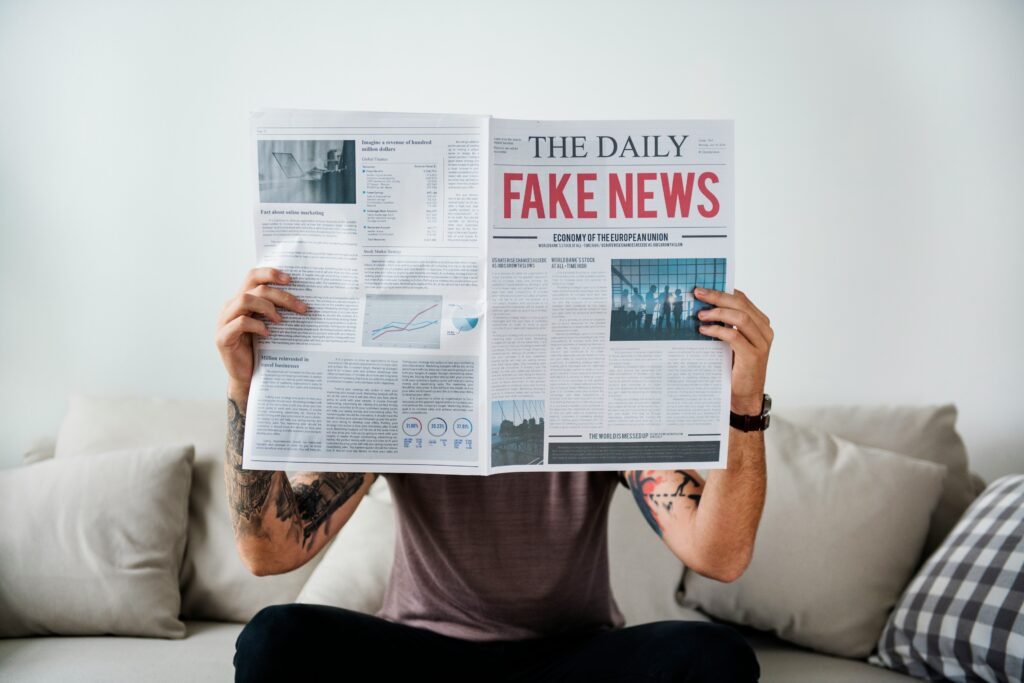
The modern trap: infinite updates, zero certainty
There’s a particular kind of exhaustion that comes from trying to track a high-temperature story online. You’re not simply consuming information—you’re doing mental triage every minute:
- Is this confirmed or speculation?
- Is this a primary source or someone’s interpretation?
- Is the clip edited?
- Is the account credible?
- Why are ten people saying ten different things?
This is what breaks people. Not one article. Not one update. It’s the endless requirement to verify reality while the feed keeps moving.
Why creators are extra vulnerable
Creators are pattern-seekers by design. You’re trained to read subtext, connect dots, and search for meaning—skills that make great storytelling possible. But in a misinformation-heavy environment, those strengths can be exploited.
Instead of using your brain to build a story, you’re using it to defend yourself against confusion. Your mind becomes a courtroom, a detective board, and a crisis team all at once. That’s not “research.” That’s cognitive overload.

What misinformation overload does to your creative brain
When your system is overloaded, you’ll notice changes like:
- You can’t start, even though you care.
- You jump between tasks and finish none.
- You feel compelled to “check updates” mid-work session.
- You lose confidence in your instincts.
- Your creativity becomes reactive (responding to the feed) instead of generative (creating from vision).
This is the quiet damage: your attention span shortens, your risk tolerance drops, and your work becomes harder to trust—because you don’t feel internally steady.
The “who can I trust?” spiral
One of the most corrosive effects of misinformation overload is relational paranoia. When the feed is full of allegations, lists, rumors, and “everyone is compromised” language, your mind starts scanning your own life the same way.
You begin asking:
- Who should I work with?
- Who should I avoid?
- If I collaborate with the wrong person, will it hurt my career?
- If I say the wrong thing, will I get dragged?
Some caution is wise. But when your career is being steered by fear and uncertainty, you stop moving. And a creative career that stops moving starts shrinking.
A newsroom perspective: being informed vs being consumed
Here’s the line we want you to remember:
Being informed is intentional.
Being consumed is automatic.
Being informed means you check a limited number of reliable sources, you notice what’s verified vs unverified, and you step away. Being consumed means you keep refreshing, keep scrolling, keep absorbing emotional pressure—until you feel like you can’t breathe without an “update.”
If you’re consumed, your next best move is not another deep dive. It’s distance.

The 72-hour clarity reset (built for creators)
If your focus is broken, don’t try to “power through.” Do this instead:
- Create a 72-hour boundary: No threads, no reaction videos, no screenshot “proof” without sourcing, no doomscrolling.
- Choose two check-in windows: For example, 12:00pm and 6:00pm only.
- Cut the loop at the source: Remove the apps that trigger spirals from your home screen (or delete them temporarily).
- Protect one daily creation block: 60–90 minutes, phone in another room, one deliverable (one page, one scene pass, one rough cut, one outline).
- Do one grounding activity per day: Walk, stretch, cook, clean, journal—low-stimulation inputs that calm your body so your mind can work again.

What to do when you come back online
After your reset, return with rules—not vibes:
- Don’t confuse volume with truth.
- Don’t confuse confidence with credibility.
- Don’t outsource your nervous system to strangers.
- If you can’t verify it, don’t build your day around it.
And most importantly: don’t let the feed decide what you create next.
Your next move needs you clear
If you’re trying to figure out your next step—your next film, your next pitch, your next collaborator, your next chapter—you need clarity more than you need more content.
Disconnect long enough to hear your own signal again. That’s where the work lives.
If you tell me your ideal word count (600, 900, 1200, or 1400) and whether you want this framed strictly for filmmakers or for “creatives + entrepreneurs,” I’ll tighten the structure and tailor the examples to match your audience on Bolanle Media.