Entertainment
When “Professional” Means Silent

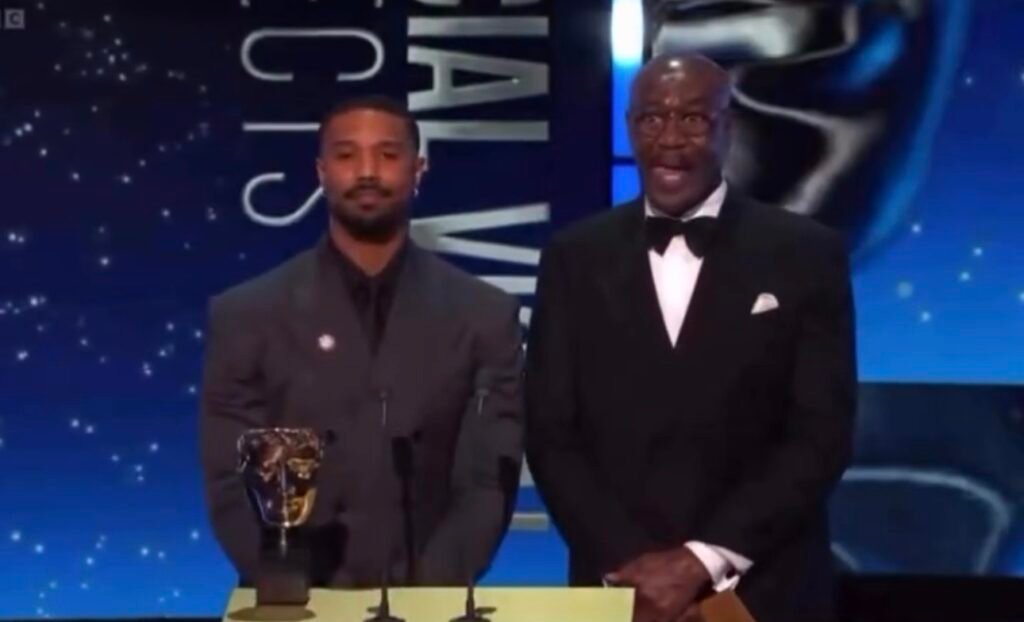
Michael B. Jordan and Delroy Lindo did not walk onto the BAFTA stage expecting to become a case study in how the industry mishandles racism in real time. They were there to present, hit their marks, and do what award shows have always asked of Black talent: bring charisma, sell the moment, keep the night moving.
Instead, while they stood under the lights, a man in the audience shouted the N‑word. The word carried across the theater and through the broadcast. The cameras kept rolling. The teleprompter kept scrolling. And the two men at the center of it did what they’ve been trained their entire careers to do: they kept going.
The incident was shocking, but the pattern around it was familiar.
The Apologies That Came After the Credits
In the days that followed, BAFTA released a public apology. The organization said it took responsibility for putting its guests “in a very difficult situation,” acknowledged that the word used carries deep trauma, and apologized to Michael B. Jordan and Delroy Lindo. It also praised them for their “dignity and professionalism” in continuing to present.
The man who shouted the slur, a Tourette syndrome campaigner, explained that his outbursts are involuntary and expressed remorse for the pain his tic caused. That context about disability matters. Any honest conversation has to hold space for the reality that not every harmful word is spoken with intent.

But context doesn’t erase impact. For people watching at home—and especially for the men on that stage—the sequence was still the same: a slur detonated in the room, the show continued as if nothing happened, and the institutional response arrived later, in carefully crafted language.
Delroy Lindo summed up the experience by saying he and Jordan “did what we had to do,” and added that he wished someone from the organization had spoken with them directly afterward. That gap between polished statements and real‑time care is exactly where trust breaks down.

Who Is “Professionalism” Really Protecting?
Strip away the PR and a hard truth emerges: almost all of the pressure fell on the people who were harmed, not the people in charge.
On stage, “professionalism” meant Jordan and Lindo were expected to stay composed so the room wouldn’t be uncomfortable. Off stage, “professionalism” meant the institution focused on managing optics after the fact instead of disrupting the show in the moment.
That raises a question the industry rarely wants to confront:
When we call for professionalism, whose comfort are we protecting?
For Black artists, professionalism has too often meant:
- Take the hit and keep your face neutral.
- Don’t make it awkward for the audience or the brand.
- Don’t risk being labeled “difficult,” no matter how blatant the disrespect.
It’s easy to admire that composure. It’s harder to admit that the system routinely demands it from the very people absorbing the harm.
If It Can Happen There, It Can Happen Anywhere
This didn’t happen in a chaotic open mic or an unsupervised live stream. It happened at one of the most carefully produced film ceremonies in the world—an event with run‑of‑show documents, stage managers, and communication channels in everyone’s ears.
If an incident like this can unfold there without a pause, it can unfold anywhere:
- At a regional festival Q&A when an audience member crosses a line.
- At a comedy show when someone heckles with a “joke” that’s really just a slur.
- At a film panel where the only Black creator on stage gets a loaded question and is expected to smile through it.
The honest question for anyone who runs events isn’t “How could BAFTA let this happen?” It’s “What would we actually do if it happened in our room?”
Would your moderator know they have explicit permission to stop everything?
Would your team know who goes to the stage, who speaks to the audience, and who stays with the person targeted?
Or would you also be scrambling to get the language right in a statement tomorrow?

Redefining Professionalism in 2026
If this moment is going to mean anything, the definition of professionalism has to change.
Professionalism cannot just be “don’t lose your cool on stage.” It has to include the courage and structure to protect the people on that stage when something goes wrong.
A better standard looks like this:
- Pause the show when serious harm happens. A clean program is not more important than a person’s dignity.
- Acknowledge it in the room. Name what happened in clear terms instead of pretending it didn’t occur and quietly editing it later.
- Center the person targeted. Check on them, give them options, and let their comfort—not the schedule—drive the next move.
- Plan the response before you need it. Build safety and harassment protocols into your festival, awards show, or live event so no one is improvising under pressure.
Sometimes the most professional thing you can do is allow a little discomfort in the room. It signals that human beings matter more than the illusion of seamlessness.
The Standard Going Forward
Michael B. Jordan and Delroy Lindo did what they have always been rewarded for doing: they protected the show. They shouldn’t have had to.
True respect for their craft and humanity would have looked like a room that moved to protect them instead—stopping the script, resetting the energy, and making it clear that the problem wasn’t their reaction, but the harm they’d just absorbed.
No performer should be asked to choose between their dignity and their career. So if you work anywhere in this industry—onstage or behind the scenes—this incident quietly handed you a new baseline:
Call it out.
Pause the show.
Back the person who was harmed.
That’s what professionalism should mean in 2026.