
Related: Celebrities Who Are Committed to Going Green
Advertisement

Andrew Toth/Getty Images
Ian Somerhalder and Nikki Reed firmly stand by their decision to move their family from Hollywood to a farm.
The couple started dating in 2014 and got engaged just six months later. Two years after their 2015 nuptials, Somerhalder and Reed expanded their family with daughter Bodhi. After becoming a mother, Reed suggested that she and Somerhalder move away from Hollywood.
“To be fully transparent about it, I really did not want to be in the public eye anymore,” Reed, who rose to stardom for roles in movies such as Thirteen and Twilight, told Santa Barbara Magazine in 2022. “California has the ability to offer seclusion, but you can also be in driving distance to these major cities at the drop of a hat.”
Reed, who welcomed a son with Somerhalder in June 2023, discussed the pair’s joint love of animals and sustainability efforts. Their home in the countryside featured rain barrels that catch excess water and hydroponic veggie gardens. In addition to composting, Reed noted that she drinks water from her own well when possible and opted out of having a car. The actress said she prefers hand-me-downs as gifts for her daughter and recycles their clothing.
“If I could like tell you my dream,” she added at the time, “it would be to achieve total food autonomy, to have zero connection to a supermarket, to city water, to anything like that — to be able to live without relying on any system. So, you know, we’re not too far off from that.”
Somerhalder has also opened up about preferring to live on a farm.
“[I love] walking through the farm with kids and dogs and family,” the actor, who is known for playing Damon Salvatore on The Vampire Diaries, told E! in November 2023. “Every stop, you’re pulling off of trees or off of bushes, pulling up out of the ground and feeding everyone as you’re moving through the farm.”
Scroll on for Somerhalder and Reed’s quotes about choosing the countryside over their careers as actors in Hollywood:
Presley Ann/Getty Images
“Part of what we really focus on as a household is the idea of being really connected with nature,” Reed told Us Weekly while at the 2nd Annual Environmental Media Association Honors Benefit Gala in September 2019. “My dream would be for [our daughter] to be a farmer.”
During an interview in May 2022, Reed reflected on her love for the outdoors, telling People, “Nature is the best form of therapy. And it’s instant — you don’t have to spend six months in nature before you feel it. Go on a hike and release endorphins. Look at a tree instead of the blue light on your phone. All of our souls need a dose of that kind of medicine.”
Reed confirmed that her life on the farm inspired a step back from acting.
“It was a very scary pivot for me to leave the only career I had ever known, that I had worked in since I was 13, to try something new,” she added. “But I learned a lot about what’s important to me. A lot of things that came with a Hollywood lifestyle, there isn’t synergy with the priorities I now have in my life and with the people I want to surround myself with.”
That same month, Somerhalder pointed out that his and Reed’s move to the countryside was a long time coming for them.
“At the end of the day, we are farm people. Our cars and our boots are covered in dust, horsehair, and tack — and we love it. The life that we have both lived in the entertainment industry and the life that we are creating are vastly different,” he told New Beauty. “The life we thrive in and the life we want to create for our daughter is one of peace, tranquility and nature. Or, at least a nice balance. When mom and dad have to work in the city, the family makes city life fun.”
Somerhalder admitted the duo needed a break from Hollywood after hustling for years.
“I’ve been on the road since I was 16, so has my wife. I think we both have always yearned to live off the land, in a place that’s our land — and that is exactly what we have set out to do and we are doing it,” he concluded. “Our shared love of this life brings us closer together every day and, together, we are building a regenerative and peaceful farm life.”
Amy Sussman/Getty Images
According to Somerhalder, the choice to have a quieter life allowed him and Reed to implement more sustainable efforts.
“[It’s been] magic. It’s really the way it’s always supposed to have been,” he told People in August 2022. “I think now you’re seeing a lot of people who were working in corporate offices, and you can see it now from a societal standpoint. People are having a really hard time getting back to work. People have realized that their time and the value of their time and the value proposition of time has shifted a bit. Be more engaged, be outdoors more, spend more time with one another.”
The actor said he didn’t “plan on being on screen for a long time” despite his successful acting career.
“I think what the pandemic sort of did was show us that moments matter. Birthdays matter. Holidays matter. These small little granular moments with one another really matter,” he added. “And that is why Nikki and I find that rural or even urban/rural lifestyle — which I think a lot of people are getting into, whether it’s permaculture, building food forests — we’re past the point of just thinking that we’re going to stop all this by not using plastic straws and driving electric cars.”
“I’m an aspiring farmer — literally. I wish I could give it all up to live in nature with the animals. I’m sort of pulled between two worlds, which is the life of a crazy-busy businesswoman, and then someone who really wants to create that quiet time,” Reed told New Beauty in January 2023. “Animals and nature are my peace. That’s where I thrive. … Right now, raising babies is the most important thing for me.”
Jon Kopaloff/Getty Images
After hinting at his departure from acting, Somerhalder elaborated on the benefits, telling E! News in January 2023, “I love what I did for a really long time. I love making films, I just did it for so long. We had an amazing run. But this is our 2.0 version — about to be 3.0 version.”
Andrew Toth/Getty Images Ian Somerhalder and Nikki Reed firmly stand by their decision to move their family from Hollywood to a farm. The couple started dating in 2014 and got engaged just six months later. Two years after their 2015 nuptials, Somerhalder and Reed expanded their family with daughter Bodhi. After becoming a mother, Reed
Us Weekly Read More
And honestly? That might be exactly what he wanted.
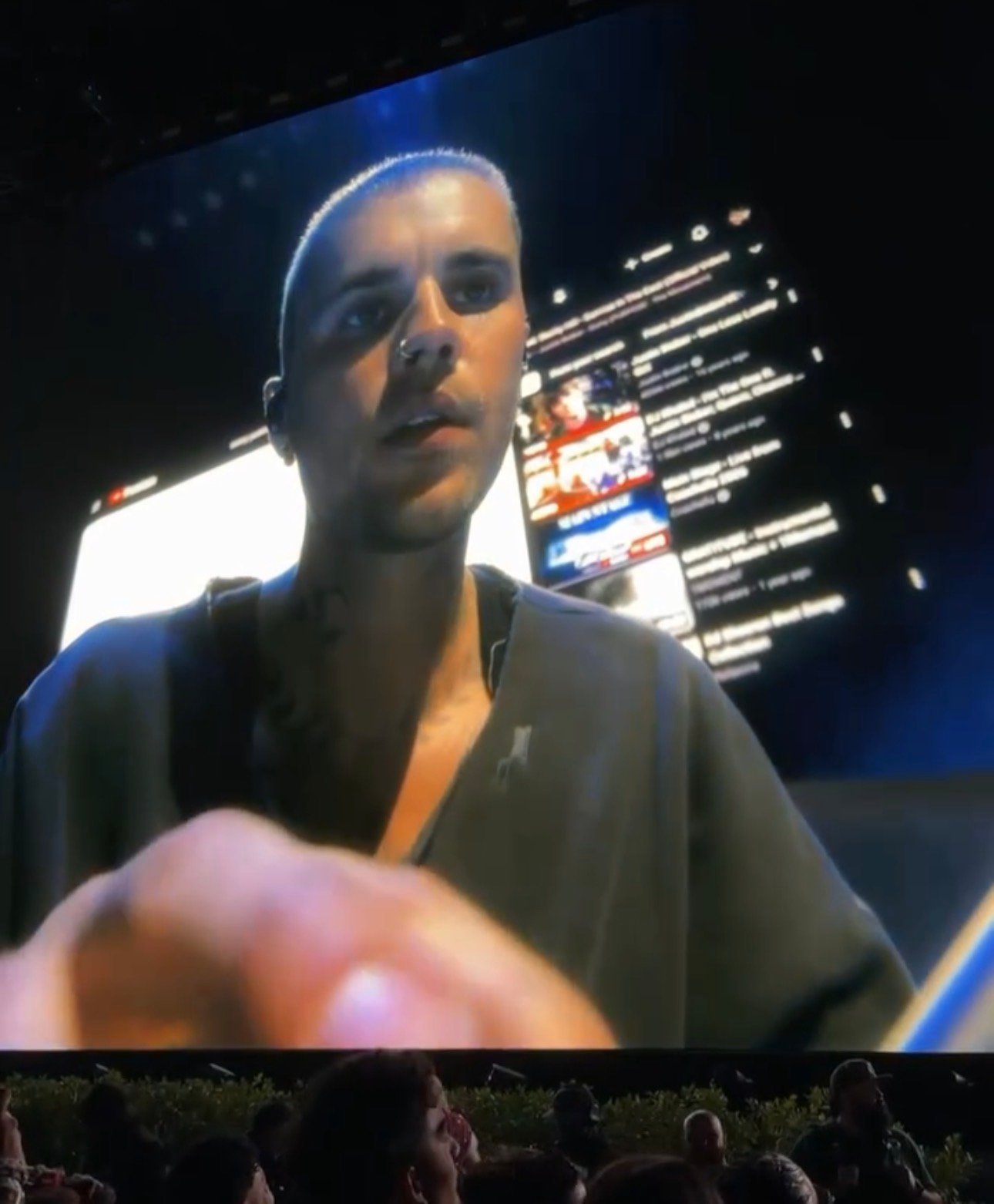
Justin Bieber stepped onto the Coachella stage Saturday night as the highest-paid headliner in the festival’s history — reportedly pocketing $10 million — and proceeded to sit down at a laptop and play YouTube videos.
The internet, predictably, lost its mind.
This was Bieber’s first major U.S. performance since his Justice era — a long-awaited comeback after battling Ramsay Hunt syndrome in 2022, which caused partial facial paralysis, plus years of mental health struggles and a very public disappearing act from the industry.
The stage setup was minimal: a fluid cocoon-like structure, no backup dancers, no elaborate lighting rigs. Just Bieber, a stool, and a laptop.
He opened with tracks from his 2025 albums Swag and Swag II, then invited the crowd on a journey — “How far back do you go?”
What followed was a nostalgic scroll through his entire career: old YouTube covers before he was famous, classic hits “Baby“ and “Never Say Never“ playing on screen while he sang alongside his younger self. Guests including The Kid Laroi, Wizkid, and Tems joined him throughout the night.
He even played his viral “Standing on Business” paparazzi rant and re-enacted it live, hoodie on, completely unbothered.
But here’s what the critics burying him in their hot takes chose not to lead with: Bieber closed his set with worship music.
In the middle of Coachella — one of the most secular stages on the planet — he performed songs rooted in his Christian faith, openly crediting Jesus as the reason he was standing on that stage at all.
It wasn’t subtle. It wasn’t a quick prayer and a thank-you. He leaned into it fully, in front of a crowd of 125,000 people who came expecting pop bangers and got a testimony instead.
For fans who have followed his faith journey — his deep involvement with Hillsong and later Churchome, his baptism in 2014, and his very public declaration that Jesus saved his life during his darkest years — the moment landed like a full-circle miracle.
Critics have been brutal.
Zara Larsson summed up the skeptics perfectly, posting on TikTok: “It’s giving let’s smoke and watch YouTube“ — and that clip went just as viral as the performance itself.
One fan on X wrote: “I’m crying, this might actually be the worst performance I’ve ever seen. He’s just playing videos from YouTube… zero effort, pure laziness.”
The comparison to Sabrina Carpenter’s Friday headlining set — elaborate staging, multiple costume changes, celebrity cameos — only made Bieber’s stripped-down show look more controversial.
And the $10 million figure kept coming up. People felt cheated.
Here’s where it gets interesting.
One commenter on X put it best: “He did not force a high-production machine that could burn him out again. Instead, he sat with his past, scrolling through old YouTube videos, duetting with his younger self, and mixing nostalgia with new chapters.”
As the set progressed, Bieber visibly opened up. He removed his sunglasses. He took off his hoodie. He smiled, made jokes about falling through a stage as a teenager.
One Instagram account with millions of followers posted: “This Justin Bieber performance healed something in me.”
That healing language is intentional for Bieber — it mirrors how he talks about his faith. In interviews, he has repeatedly said Jesus didn’t just save his career; He saved his life. The worship set at Coachella wasn’t a gimmick. It was a confession.
Love it or hate it, Bieber’s Coachella set is the most talked-about moment from Weekend One — more than Karol G making history as the first Latina to headline the festival, more than Sabrina Carpenter’s spectacle.
That’s not an accident.
In an era where every headliner tries to out-produce the last one, Bieber walked out with a laptop, a stool, and his faith — and made it personal. For millions of fans watching, the worship songs weren’t filler. They were the point.
Whether you call it lazy or legendary, one thing is clear: Justin Bieber isn’t performing for the critics anymore. He’s performing for an audience of One — and the rest of us just happened to be there.
Drop your take in the comments — was Bieber’s Coachella set lazy, legendary, or something even bigger?
People don’t watch films the way they used to—and if you’re still cutting everything for the big screen first, you’re losing the audience that lives in your pocket.
Every swipe on TikTok is a tiny festival: new voices, wild visuals, heartbreak, comedy, and chaos, all judged in under three seconds. In that world, vertical films aren’t a gimmick. They’re the new front door to your work, your brand, and your career.
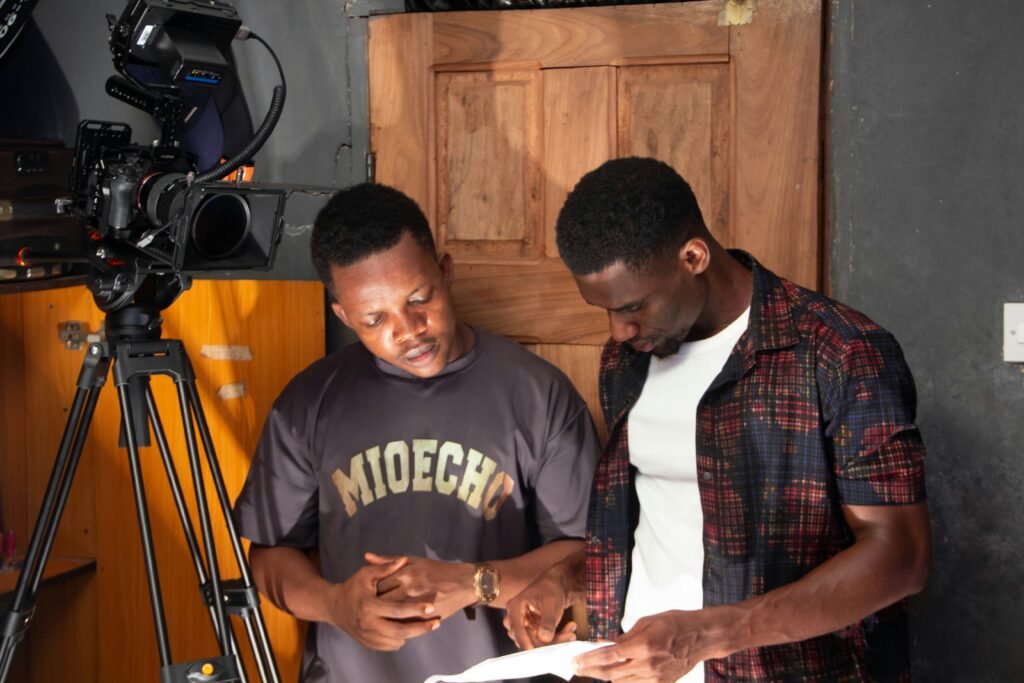
Think about where you’ve discovered your favorite clips lately: your phone, in bed, in an Uber, between texts. The “cinema” experience has shrunk into a glowing rectangle we hold inches from our face. That’s intimate. That’s personal. That’s power.
Vertical video fills that space completely. No black bars. No distractions. Just one story, one face, one moment staring back at you. It feels less like “I’m watching a movie” and more like “this is happening to me.” For storytellers, that’s gold.
Film school taught you:
Vertical filmmaking says: bring all of that craft… and then flip it. You still need composition, rhythm, framing, and sound. But now:
It’s not “less cinematic.” It’s a different kind of cinematic—one that lives where people already are instead of asking them to come to you.
Here’s the secret no one tells you: audiences don’t just fall in love with stories; they fall in love with people. Vertical video lets your characters exist outside the runtime.
Imagine this:
When someone feels like they “know” a character from their feed, buying a ticket or renting your film stops feeling like a risk. It feels like catching up with a friend.

Vertical films thrive on honesty. Shaky behind-the-scenes clips. Laughing fits between takes. The director’s 2 a.m. rant about a shot that won’t work. The makeup artist fixing tears after a heavy scene. That’s the texture that makes people care about the final product.
You don’t have to be perfect. You have to be present.
Ideas you can start capturing tomorrow:
When you show the process, you’re not just selling a film—you’re inviting people into a journey.
Most people treat vertical video like a one-off blast: post, pray, forget. Instead, think like a showrunner.
Ask yourself:
Suddenly, your feed isn’t random. It’s a season. People don’t just “like” a video—they “follow” to see what happens next.
We’re in a rare moment where a micro-drama shot on your phone can sit in the same feed as a studio campaign and still win. A fearless 45-second monologue in a bathroom. A quiet scene of someone deleting a text. A single, wordless push-in on a face that tells the whole story.
Vertical films give you:
You don’t have to wait for permission, a greenlight, or a perfect budget. You can start where you are, with what you have, and let the audience tell you what’s working.
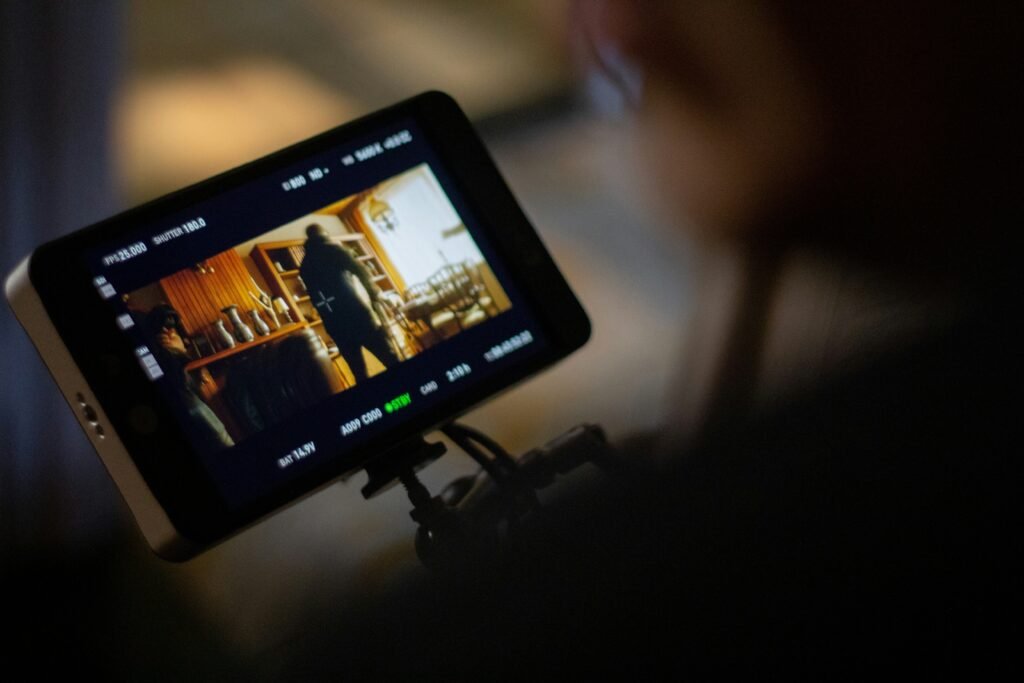
Some filmmakers will roll their eyes and call vertical a phase. They’ll keep making beautiful work that no one sees until a festival says it exists. Others will treat every swipe, every scroll, and every tiny screen as a chance to connect, teach, provoke, and move people.
Those are the filmmakers whose names we’ll be hearing in five years.
The question isn’t whether vertical films are “real cinema.” The question is: when the next person scrolls past your work, do they feel nothing—or do they stop, stare, and think, “I need more of this”?
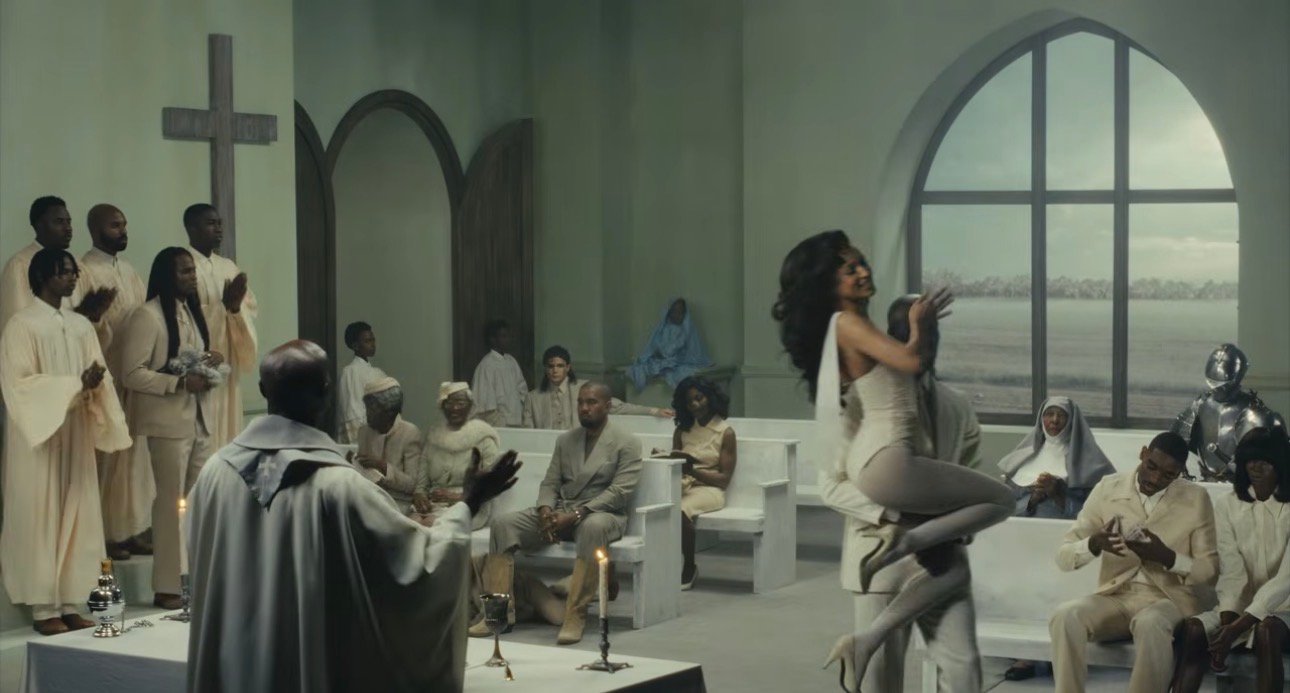
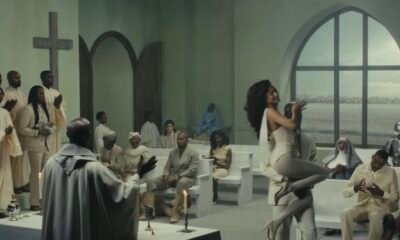
Kanye West’s “Father” video looks like a fever dream in a church, but underneath the spectacle it’s a quiet argument about who really runs the world. The altar isn’t just about God; it’s about every “father” structure that decides what’s true, who belongs, and who gets cast out.
The church in “Father” doesn’t behave like a safe, sacred space. It feels like a headquarters. The aisle becomes a catwalk for power: brides, a knight, a nun, a Michael Jackson double, astronauts, Travis Scott, all moving through the frame while Kanye mostly sits and watches. The room doesn’t change for them—they’re the ones being processed.
That’s the first big tell: this isn’t just about religion. It’s about systems. The church stands in for any institution that claims moral authority—governments, platforms, labels, churches, media—places where identity, status, and “truth” are negotiated behind the scenes. Faith is the language; control is the product.
In this universe, Kanye isn’t the leader of the service. He’s a problem in the pews. The wildest scene makes that explicit: astronauts move in, pull off his mask, expose him as an “alien,” and carry him out. It’s funny, surreal—and brutal.
That moment plays like a metaphor for what happens when someone stops being useful to the system. If you’re too unpredictable, too loud, too off‑script, the institution finds a way to unmask you, label you, and remove you. But here’s the twist: once he’s gone, the spectacle continues. Travis still shines, the ceremony rolls on, the church keeps doing what the church does. The message is cold: no one is bigger than the machine.
The title “Father” is doing triple duty: God, parent, and patriarchal authority. The video leans into a hard question—are we following something we believe in, or something we’re afraid to disappoint?
Inside this church, people don’t react when things get strange. A nun is handled like a criminal, cards burn, an alien is dragged away, and the room barely flinches. That’s not devotion, that’s conditioning. The deeper critique is that many of our modern “faiths”—political, religious, even fandom—have slid from relationship into obedience. You’re not invited to wrestle with meaning; you’re expected to sit down, sing along, and accept the script.
The casting in “Father” feels like a visual ranking chart. The knight represents sanctioned force: power that’s old, armored, and legitimated by history. The cross and church setting evoke sacrifice: whose pain gets honored, whose story gets canonized, whose doesn’t. The Michael Jackson lookalike signals how even fallen icons remain useful as symbols long after their humanity is gone.
In that context, Kanye’s removal reads as a sacrifice that keeps the system intact. Take the problematic prophet out of the frame, keep the music, keep the ritual, keep the brand. The father‑system doesn’t collapse; it adjusts. Control isn’t loud in this world—it’s quiet, procedural, dressed like order.
The most uncomfortable part of “Father” is that the congregation keeps sitting there. No one storms out. No one screams. The church absorbs aliens, icons, arrests, and weddings like it’s a normal Sunday. That’s where the video stops being about Kanye and starts being about us.
We’ve learned to scroll past absurdity and injustice with the same blank face as those extras in the pews. Faith becomes content. Outrage becomes engagement. Power becomes invisible. “Father” takes all of that and crushes it into one continuous shot, asking a bigger question than “Is Kanye back?”
It’s asking: in a world where power wears holy clothes, faith is filmed, and control looks like normal life, who is your father really—and are you sure you chose him?



The Timothée Chalamet Guide to Ruining Your Image


This scene almost broke him. And changed his career.

The machine isn’t coming. It’s aleady the room.

Stop Waiting for Permission — The Film Industry Just Rewrote the Rules

What Kanye’s ‘Father’ Says About Power, Faith, and Control

How ‘Sinners’ Won The Oscars: Filmmaker Notes

How She Earns $40M+ In 2026

Did OnlyFans Save Creators—or Trap Them?




