News
The Franchise Is Over. Here’s Who’s Winning Now.

Something shifted in the last 12 months that Hollywood is still struggling to explain. The blockbusters kept coming—sequels, prequels, shared universes, reboots—and the audiences kept showing up a little less excited each time. The numbers don’t lie: in 2025, there were 112 wide-released films, yet the domestic box office still lagged more than 20% below 2019 pre-pandemic levels. Studios spent more, marketed harder, and kept betting on familiar IP. And still, something wasn’t landing.
Meanwhile, something else was quietly winning.
The audience already knew before Hollywood did
A YouGov study released in early 2026 made it plain: only 29% of Americans want to see more superhero and franchise films, while 40% want fewer. The most-requested genre? Comedy—with 57% of respondents calling for more of it. People aren’t done with movies. They’re done with being processed through a content pipeline designed for IP portfolios, not human beings.

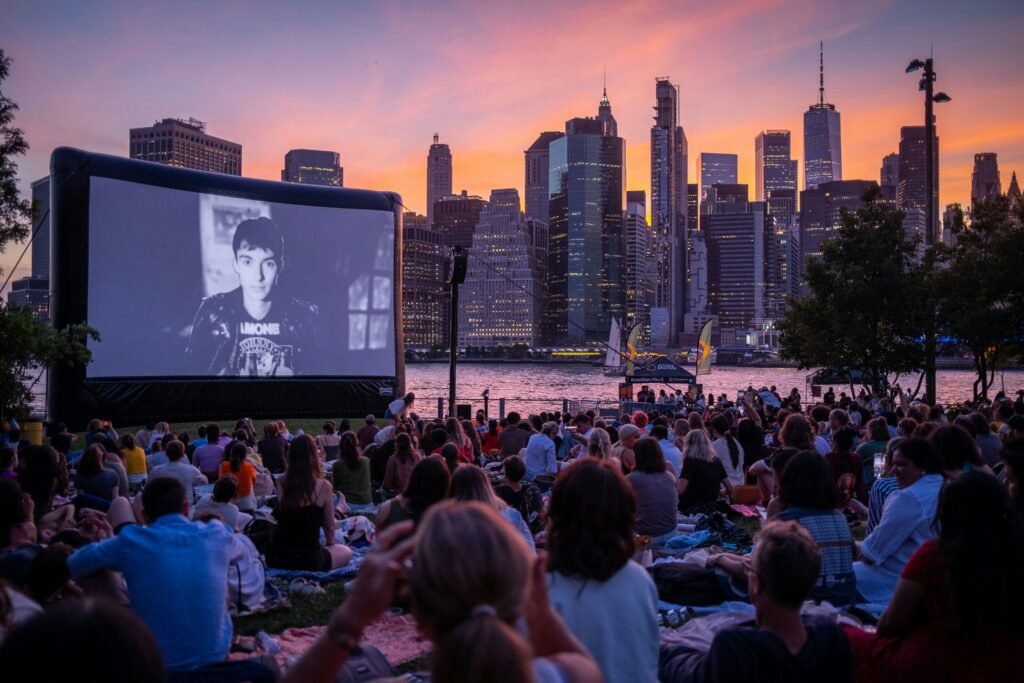
The data backs that up at the box office too. Ryan Coogler’s Sinners—an original film, no existing IP, no cinematic universe setup—opened No. 1 and became the highest-grossing original movie since 2019. A24 has built an entire empire off originals, with 18 Oscar wins in a single year. The pattern is consistent: when audiences actually feel something, they show up and they tell everybody.
Independent film is filling the emotional void
The indie world already knew this. Independent films that crack the code share a simple formula: 90%+ audience satisfaction scores, festival validation, and word-of-mouth that money can’t buy. Films like Hamnet, The Secret Agent, and Eternity all hit those thresholds and turned limited-screen runs into cultural moments that rivaled blockbuster marketing campaigns.
As one industry analyst put it, “The landscape has changed; audiences are more discerning now. Word of mouth carries more weight than ever.” You can’t manufacture that in a writers’ room built around a franchise bible. It has to be felt.
Film festivals are now the most important discovery engine left. As streaming platforms pull back from their buying frenzies and studios keep recycling familiar characters, festivals have become the place where real taste is made—where a film earns its audience one real human reaction at a time.
Comedy specifically is having a cultural reset
This isn’t a general indie moment—comedy is leading it. After years of the industry treating comedy as a lesser genre, audiences are reclaiming it as essential. Sundance 2026 leaned hard into pitch-black satire, romantic comedies, and showbiz send-ups that generated the most buzz of the festival. People are exhausted, anxious, and overloaded—and laughter that means something is exactly what they are looking for.


The comedy films that are breaking through aren’t the safe, focus-grouped studio comedies. They’re the ones with a point of view, a real voice, and something uncomfortable to say. They’re the indie ones. They’re the festival ones.
What this means for independent filmmakers right now
Three top indie producers at Sundance 2026 said what needed to be said: independent film doesn’t just need to survive the current landscape, it needs to own it. The tools have never been more accessible. The audience hunger has never been more real. And the gatekeeping structures that kept indie films in the margins are visibly cracking.
The filmmaker who wins in this moment isn’t the one who pitches the safest version of a familiar story. It’s the one who trusts that real, specific, human storytelling is the only kind that spreads in a world drowning in content.
The franchise may not be dead. But the audience’s emotional loyalty to it? That’s already gone. And the filmmakers who understand that first are the ones who get to be next.