Entertainment
Stephen Amell Asks Strikers Not to ‘Whip’ Food at Him on Picket Line on August 1, 2023 at 6:50 pm Us Weekly

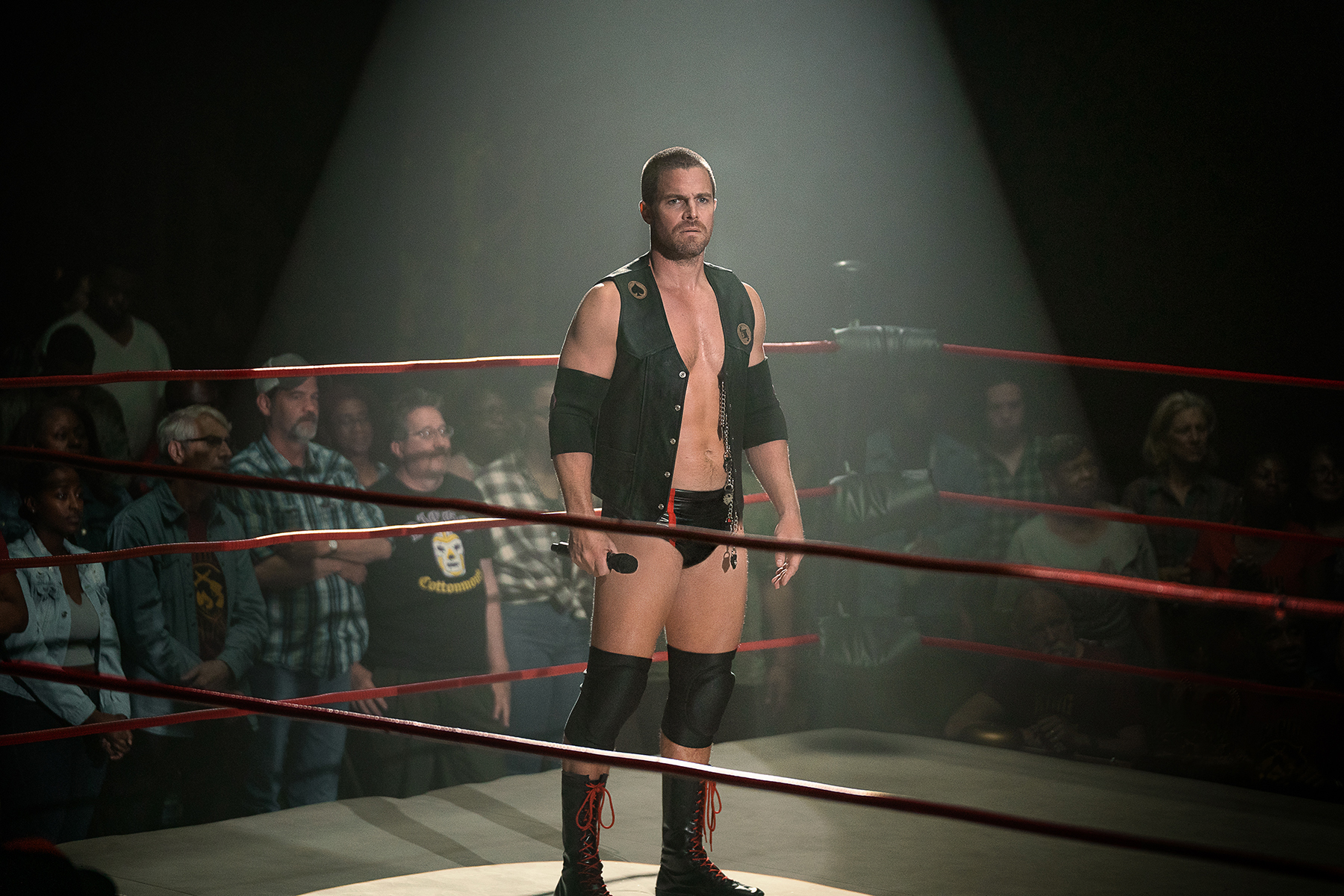
Stephen Amell as Jack Spade in ‘Heels’ Daniel Delgado/Starz
Stephen Amell addressed his recent comments about the ongoing SAG-AFTRA strike after receiving major backlash.
“Understandably, there has been a lot of reaction to the comments I made this weekend about our strike. To ensure there is no misunderstanding about my thoughts and intentions I’m providing what I actually said and clarity/context to ensure my feelings aren’t unintentionally misinterpreted,” Amell, 42, wrote via Instagram on Tuesday, August 1. “We all know soundbites can be taken out of context and I have too much respect for my fellow union members to not clarify the record.”
The actor asserted that he is on the same side as his fellow union members, adding, “This doesn’t need much clarity: My support is unconditional and I stand with them.”
Amell also noted that he understands “fundamentally” why actors are on strike.
“My off the cuff use of the word ‘support’ is clearly contradictory to my true feelings and my emphatic statement that I stand with my union. Of course I don’t like striking. Nobody does. But we have to do what we have to do,” he continued. “In full context: I’m an actor and I was speaking extemporaneously for over an hour. I emote, but I certainly don’t think these issues are simple. Our leadership has an incredibly complicated job and I am grateful for all that they do. Despite some of my terrible early acting work, I assure you, I’m not a robot. From an intellectual perspective, I understand why we are striking, but that doesn’t mean it isn’t emotionally frustrating on many levels for all involved.”
Stephen Amell as Jack Spade in ‘Heels’ Daniel Delgado/Starz
Amell’s statement came after he made headlines for questioning how SAG has addressed its labor dispute with the Alliance of Motion Picture and Television Producers. The inion formally initially a strike last month after failing to reach an agreement regarding contract negotiations. (The AMPTP represents major companies such as Netflix, Amazon, Apple, Disney, Discovery-Warner, NBC Universal, Paramount and Sony.)
“I feel like I’m insulated in Hollywood, because that’s where I live … [but] I feel like a lot of people in this room aren’t aware of the strike,” Amell told fans at GalaxyCon, which took place from Thursday, July 27, to Sunday, July 30. “I support my union, I do. And I stand with them. I do not support striking. I don’t. I think that it is a reductive negotiating tactic. I find the entire thing incredibly frustrating. I think that the thinking as it pertains to shows like [Heels], the show that I’m on that premiered last night, I think it’s myopic.”
In response, Amell’s former Arrow costar Kirk Acevedo responded to the original comments by tweeting, “This f–king guy,” alongside two middle finger emojis, a dragon and an eye roll emoji.
While walking back his opposition to the strike, Amell explained his use of the word “myopic” in the context of his upcoming work. Due to union guidelines, members are not allowed to promote projects created under the former AMPTP contract — which includes season 2 of Amell’s show Heels.
“Nothing about the strike is funny but if I may self deprecate for a moment. I have no clue what I was trying to say here and who says, ‘I think that thinking…?’ Perhaps it was an inarticulate shoutout to our crew and cast, who mean the world to me,” he added on Tuesday. “I’m simply sad that we don’t have a chance to celebrate a show that all of us figuratively and I literally, broke my back for.”
He concluded: “As I said from the jump, I want to ensure that my thoughts and intentions are not misconstrued. This situation reminds of the proverb, ‘the road to hell is paved with good intentions,’ which apparently, after reading a limited amount of the commentary, is a place many of you would like me to visit. However, at least for the foreseeable future, I choose to stand with my union. When you see me on a picket line please don’t whip any hard fruit.”
Stephen Amell addressed his recent comments about the ongoing SAG-AFTRA strike after receiving major backlash. “Understandably, there has been a lot of reaction to the comments I made this weekend about our strike. To ensure there is no misunderstanding about my thoughts and intentions I’m providing what I actually said and clarity/context to ensure my
Us Weekly Read More


Continue Reading

The machine isn’t coming. It’s already in the room.
Picture this: you spend two years writing a script. You hustle funding, build a team, reach out to casting. Then somewhere inside a studio, a software platform analyzes your concept against fifteen years of box office data and decides—before a single human executive reads page one—that your film is too risky to greenlight.
This isn’t a Black Mirror episode. This is Hollywood in 2026.
The Numbers Don’t Lie
The generative AI market inside media and entertainment just crossed $2.24 billion and is projected to hit $21.2 billion by 2035—a 25% annual growth rate. Studios like Warner Bros. are running platforms like Cinelytic, a decision-intelligence tool that predicts box office performance with 94–96% accuracy before a single dollar of production money moves.
Netflix estimates its AI recommendation engine saves the company $1 billion per year just in subscriber retention. Meanwhile, over the past three years, more than 41,000 film and TV jobs have disappeared in Los Angeles County alone.
That’s not a trend. That’s a restructuring.

The Moment That Changed Everything
In February 2026, ByteDance’s AI generator Seedance 2.0 produced a hyper-realistic deepfake video featuring the likenesses of Tom Cruise, Brad Pitt, and Leonardo DiCaprio. It went viral instantly. SAG-AFTRA called it “blatant infringement.” The Human Artistry Campaign called it “an attack on every creator in the world.”
Then came Tilly Norwood—a fully AI-generated actress created by production company Particle 6—who was seriously considered for agency representation in Hollywood. The first synthetic human to knock on that door.
Matthew McConaughey didn’t mince words at a recent industry town hall. He looked at Timothée Chalamet and said:
“It’s already here. Own yourself. Voice, likeness, et cetera. Trademark it. Whatever you gotta do, so when it comes, no one can steal you.”
James Cameron told CBS the idea of generating actors with prompts is “horrifying.” Werner Herzog called AI films “fabrications with no soul.” Guillermo del Toro said he would “rather die” than use generative AI to make a film.
But here’s the thing—not everyone agrees.
The Indie Filmmaker’s Double-Edged Sword
At SXSW 2026, indie filmmakers made something clear in a packed panel: they don’t want AI to make their movies. They want AI to “do their dishes.”
That’s the real conversation happening at the ground level.
Independent filmmaker Brad Tangonan used Google’s AI suite to create Murmuray—a deeply personal short film he says he never could have made without the tools. Not because he lacked talent, but because he lacked budget. He wrote it. He directed it. The AI executed parts of his vision he couldn’t afford to shoot.
In Austin, an independent filmmaker built a 7-minute short in three weeks using AI-generated video—a project that would have taken 3–4 months and cost ten times more the traditional way. That’s the version of this story studios don’t want you focused on.
At CES 2026, Arcana Labs announced the first fully AI-generated short film to receive a SAG-approved contract—a milestone that proves AI-assisted production can operate inside union protections when done right.
The Fight Coming This Summer
The WGA contract expires May 1, 2026. SAG-AFTRA’s expires June 30. AI is the headline issue at the bargaining table—and the last time these two unions went to war with studios over it, Hollywood shut down for 118 days.
SAG is expected to push the “Tilly Tax”—a fee studios pay every time they use a synthetic actor—directly inspired by Tilly Norwood’s emergence. The WGA already prohibits studios from handing writers AI-generated scripts for a rewrite fee. Now they want bigger walls.
Meanwhile, the Television Academy’s 2026 Emmy rules now include explicit AI language: human creative contribution must remain the “core” of any submission. AI assistance is allowed—but the Academy reserves the right to investigate how it was used.
The Oscars and Emmys are essentially saying: the robot didn’t get nominated. The human did.
What This Means for You
If you’re an indie filmmaker between 25 and 45, you’re operating in the most disruptive creative environment since the camera went digital. AI can cut your post-production time by up to 40%. It can help you pre-visualize shots, generate temp scores, clean up audio, and pitch your project with a sizzle reel you couldn’t afford six months ago.
But the machine that helps you make your film is the same machine that could make studios decide they don’t need you to make theirs.
Producer and director Taylor Nixon-Smith said it best: “Entertainment, once a sacred space, now feels like it’s in a state of purgatory.”
The question isn’t whether AI belongs in your workflow. It’s whether you’re the one holding the wheel—or whether the wheel is slowly being handed to an algorithm that has never once felt what it means to have a story only you can tell.
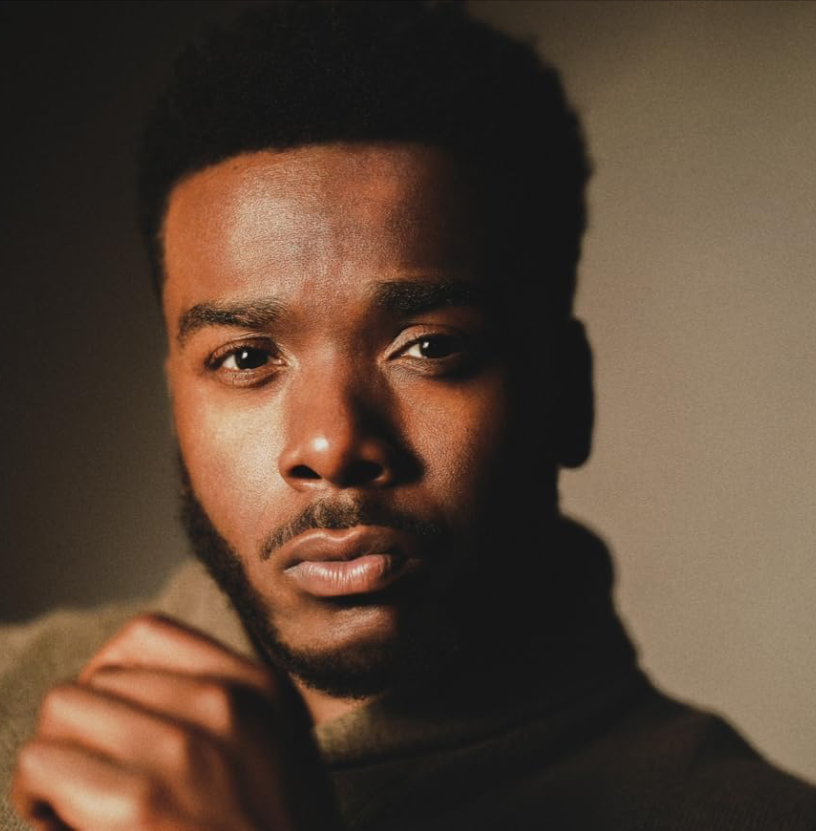
As Sinners surges into the cultural conversation, it’s impossible to ignore the force of Christian Robinson’s performance. His “let me in” door scene has become one of the film’s defining moments—raw, desperate, and unforgettable. But the power of that scene makes the most sense when you understand the journey that brought him there.
From church play to breakout roles
Christian’s path didn’t begin on a Hollywood set. It started in a Brooklyn church, when a woman named Miss Val kept asking him to be in a play.
“I told her no countless times,” he remembers. “Every time she saw me, she asked me and she wouldn’t stop asking me.”
He finally said yes—and everything changed.
“I did it once and I fell in love,” he says. That one performance pushed him into deep research on the craft, a move to Atlanta, and years of unglamorous work: training, auditioning, stacking small wins until he booked his first roles and then Netflix’s Burning Sands, where many met him as Big Country.
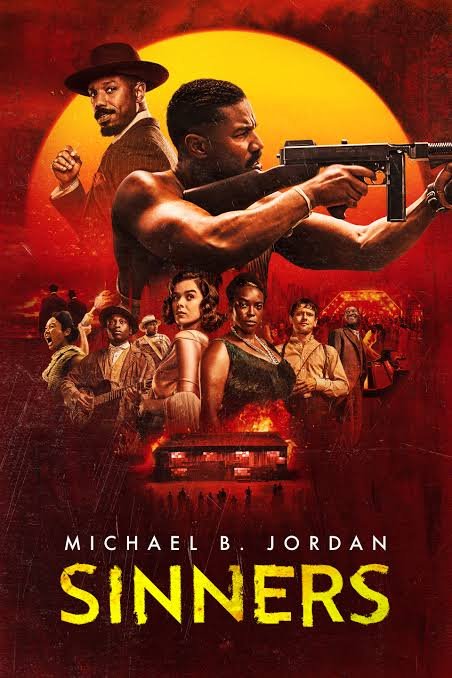
By the time Sinners came along, he wasn’t a newcomer hoping to get lucky. He was an actor who had quietly built the muscles to carry something bigger.
The door scene: life or death
On The Roselyn Omaka Show, Christian shared the directing note Ryan Coogler gave him before filming the door scene:
“He explained to me, ‘I need you to bang on this door as if your life depended on it. Like it’s a matter of life and death.’”
Christian didn’t just turn up the volume; he reached deeper.
“This film speaks a lot about our ancestors,” he told Roselyn Omaka. “So I tried to give a glimpse of what our ancestors would’ve experienced if someone or something that could bring ultimate destruction was after them. How hard would they bang? How loud would they scream to try to get into a place safely? That’s what I intended to convey in that moment.”
That inner picture—life or death, ancestors, ultimate destruction—is why the scene hits like more than a plot beat. It feels like generational memory breaking through a single frame.
Living through a “history” moment in real time
When Roselyn asks what he’s processing as Sinners takes off, Christian admits he’s still inside the wave.
“I’ve never experienced a project with this level of reception and energy and momentum,” he says. “People having their theories and breaking it down and doing reenactments… it’s never been a time like this in my career.”
He’s careful not to over‑define something that’s still unfolding: “There’s no way to give an accurate description of what I’m experiencing while I’m still experiencing it.” He knows he’ll need distance to name it fully.
But he can name one thing: “If I could gather any adjective to describe it, it would be gratefulness. I’m grateful.”
He also feels the weight of what this film might mean long-term:
“To know that I was there for a large amount of the time it was being brought to life, and a part of what the internet is saying will be history… this is something that I’m inspired by—to shoot for the stars in whatever passion rooted in creativity that you possess.”
Music, joy, and the man behind the moment
Christian talks about the music of Sinners as another force that shaped him. The score wasn’t playing nonstop; it showed up in key moments.
“The music was played when it was necessary to be played. But when it was played, it resonated,” he says. Hearing Miles Caton’s songs early, before the world did, he remembers thinking, “This is going to be magical… This is one of the ones right here.”
For all the heaviness of the story, he also brought levity. He laughs about being the jokester on set—singing Juvenile and Lil Wayne in the New Orleans hair and makeup trailer, trying to make everyone smile during Essence Fest weekend. “I’m a fun guy,” he says. “I love to see people laugh and have a good time.”
PATHS for us and opening doors
What might be most revealing is how seriously Christian takes his responsibility off screen. In 2015, sitting in his apartment outside Atlanta, he felt God tell him to start a nonprofit called PATHS.
“I heard from God and he told me to start a nonprofit called PATHS,” he recalls. At first, he and his peers went into schools and inner‑city communities to teach young people “the many different paths to entering the entertainment industry”—not just the craft, but “the practical steps and establishing yourself, like the business of an actor… a stunt person, hair and makeup, etc.”
When the pandemic hit and school visits stopped, he pivoted to a podcast and digital platform: “Fine, I’ll do it,” he laughs. Now PATHS for us lets “anyone anywhere that desires to be in entertainment hear from credible entertainment industry professionals on how they got to where they are and how you can do the same.”
Working on Sinners confirmed that he should go all in: “It just gave me exactly what I needed to know that I should pour my all into it.”
Honoring a history-making moment
As Sinners takes off, Christian keeps coming back to one word: gratefulness—for the film, for the collaborators, for the chance to be part of something people are calling historic.
At Bolanle Media, we see more than a viral scene. We see an artist whose craft is rooted in faith, ancestors, and hard-earned discipline; whose joy lifts the rooms he works in; and whose platform is opening real paths for others.
This scene almost broke him. And changed his career.
Now, as the world catches up, Christian Robinson is using that breakthrough not just to walk through new doors—but to help the next generation find theirs.

Michael B. Jordan’s first Oscar win for Sinners isn’t just a milestone for his career — it’s a masterclass for filmmakers watching from the edit bay, the writing desk, or the no‑budget set.
For years, Jordan has been building toward this moment: from early TV roles to his breakout in Fruitvale Station, the cultural shockwave of Black Panther, and his evolution into a producer and director. His Sinners performance and awards run crystallize a set of habits, choices, and values that rising filmmakers can actually use.
1. “Find Your Coogler”: The Power of Long-Term Collaboration
Jordan’s professional story is inseparable from his collaboration with Ryan Coogler. They’ve moved together from intimate indie drama to franchise-level spectacle, and now to awards-season dominance with Sinners.
“Find your people and grow with them, not just next to them.”
For filmmakers, the takeaway is simple:
- Stop thinking in “one‑off” crews.
- Start identifying the producers, DPs, editors, writers, and actors you want to build years of work with.
That kind of trust lets you move faster, go deeper, and take bigger risks together.
2. Preparation That Lets You Jump Off the Cliff
Jordan has talked in interviews about preparing so thoroughly that he can “let go” when the cameras roll. The homework — script work, character study, physical training, emotional research — is what makes the risk possible.
You can translate that directly into a filmmaking workflow:
- Do the table read.
- Break down the script scene by scene.
- Build visual references and emotional maps.
The more you handle before you’re on set, the more you can afford to explore, improvise, and discover in real time.
“Preparation buys you freedom on set.”
3. Take the “Bad Idea” Swing
A key pattern in Jordan’s choices is betting on material that doesn’t always look safe or obvious on paper. Roles and projects that feel intense, specific, or risky are often the ones that end up resonating the most.
For filmmakers, that means:
- Stop sandpapering your scripts into something generic.
- Start protecting the sharp edges — the personal details, the uncomfortable moments, the cultural specifics.
The project that scares you a little might be the one that actually breaks you out.
“If it feels too safe, it’s probably not big enough.”
4. One Hat at a Time (On Purpose)
Jordan is a modern multi-hyphenate — actor, producer, director — but he’s also strategic about when he wears which hat. On some projects, he leans fully into performance and trusts his team with everything else; on others, like Creed III, he steps behind the camera and takes on the entire vision.
Filmmakers can learn from that restraint:
- It’s okay to not direct, shoot, edit, and produce every single project.
- Choosing one primary role per project can sharpen the overall result.
Ask yourself on each film: “What’s the one role where I add the most value here?” Then structure the team accordingly.
“You don’t have to do everything on every film.”

5. Build an Ecosystem, Not Just a Résumé
Through his company and slate, Jordan is doing more than collecting credits. He’s building an ecosystem where the stories he cares about have a home — a pipeline for voices, genres, and perspectives that might not get space elsewhere.
That’s a roadmap for independent filmmakers and media founders:
- Create recurring spaces (a series, a channel, a festival, a label) where your sensibility is the default.
- Think beyond the single film; think in seasons, slates, and communities.
Your “ecosystem” might start as a simple recurring short-film series on your site, or a curated block at a festival. Over time, it becomes infrastructure.
“Don’t just book jobs. Build a world.”
6. Honor the Lineage You Stand On
When he accepted his Oscar, Jordan made a point to acknowledge the Black artists and legends who paved the way before him. That posture matters. It keeps ego in check and places today’s wins inside a longer lineage of struggle and progress.
Filmmakers can mirror that by:
- Citing their influences openly.
- Educating themselves on the history of the craft, especially in their own communities.
- Using their platforms to shine a light on peers and predecessors.
This isn’t just about being gracious; it’s about knowing you’re part of a story bigger than one awards season.
“Your win is a chapter, not the whole book.”
7. Let the Win Raise Your Standards
The most powerful thing about this moment is that it doesn’t feel like a finish line. Jordan’s energy reads as: this is motivation, not retirement. The recognition becomes pressure to work smarter, deeper, and more intentionally.
Filmmakers can turn every “win” — whether it’s an Oscar, a festival laurel, a viral clip, or a private email from someone impacted by your work — into fuel for the next draft and the next shoot.
Ask:
- What did I do well here that I can codify into my process?
- Where did I get lucky, and how can I replace luck with craft next time?
“Treat every win as a new baseline, not a peak.”
Why This Matters for Our Community
At Bolane Media, we see Michael B. Jordan’s Oscar moment not just as a celebrity headline, but as a roadmap for emerging storytellers — especially those building from underrepresented communities and independent spaces.
If you’re a filmmaker reading this:
- Identify one of these seven lessons.
- Apply it to your next project, not the hypothetical big one five years from now.
Then share your work with us. We want to see what you build.

Entertainment2 days ago
The machine isn’t coming. It’s aleady the room.

News3 days ago
The Timothée Chalamet Guide to Ruining Your Image

News5 days ago
Did OnlyFans Save Creators—or Trap Them?


 Advice2 weeks ago
How to Find Your Voice as a Filmmaker
- News2 weeks ago
How Misinformation Overload Breaks Creative Focus
- News4 weeks ago
From Seen to Secured: How Filmmakers Are Owning Their Value
- News4 weeks ago
March 1 in NYC: Love Notes From Harlem at Don’t Tell Mama
- Entertainment2 weeks ago
This scene almost broke him. And changed his career.
- Entertainment2 weeks ago
7 Filmmaking Lessons From Michael B. Jordan’s Oscar Moment
- Advice2 weeks ago
Stop Waiting for Permission — The Film Industry Just Rewrote the Rules
- News2 weeks ago
How ‘Sinners’ Won The Oscars: Filmmaker Notes