
News
Meet Pope Leo XIV: From Chicago Cardinal to Leader of the Catholic World

In a historic and unexpected turn of events, Cardinal Robert Francis Prevost of Chicago has been elected as the new pope, taking the name Pope Leo XIV. This marks the first time an American has ascended to the papacy, sending waves of excitement and anticipation through the Catholic world and beyond.
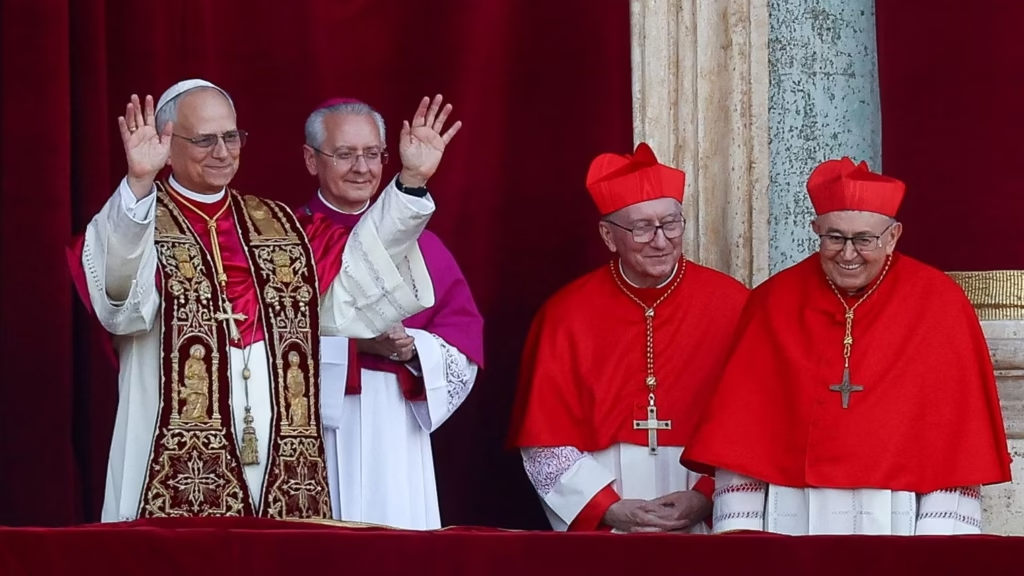
From Chicago Streets to the Vatican’s Spotlight
Born and raised in the Chicago area, Prevost’s journey to the papacy is nothing short of remarkable. A man of deep faith and intellect, he studied mathematics and philosophy before dedicating his life to the Church as a member of the Order of Saint Augustine. His early years were spent serving communities in Peru as a missionary, where he earned a reputation for humility, compassion, and strong leadership.

A Global Leader with a Local Heart
Prevost’s rise through the Church hierarchy was steady but unassuming. Known for his calm demeanor and thoughtful approach, he served as Prior General of the Augustinians and later as Bishop of Chiclayo in Peru. His appointment as head of the Vatican’s Dicastery for Bishops put him at the center of shaping the Church’s future leadership worldwide.
A New Pope for a New Era
Taking the name Leo XIV, the new pope signals a connection to the great reformers of the past while charting a course for a Church that is inclusive yet rooted in tradition. In his first address to the faithful, Pope Leo XIV called for unity, dialogue, and a Church “open to all, especially the marginalized.”

Balancing Tradition and Progress
Observers describe Pope Leo XIV as a centrist who seeks to balance the progressive momentum of his predecessor with a respect for Church doctrine. He has voiced caution on some social issues but remains committed to expanding the role of women in Church leadership and fostering pastoral care for all believers.

What’s Next?
As Pope Leo XIV steps into his new role, Catholics worldwide are watching closely. His unique background – bridging American roots and Latin American experience – positions him to be a unifying figure in a Church facing challenges from secularism, internal divisions, and calls for reform.
One thing is clear: Pope Leo XIV’s election is more than a historic first; it’s a bold new chapter for the Catholic Church on the global stage. The world awaits to see how this Chicago-born leader will shape the future of one of the world’s oldest and most influential institutions.

Bolanle Media covers a wide range of topics, including film, technology, and culture. Our team creates easy-to-understand articles and news pieces that keep readers informed about the latest trends and events. If you’re looking for press coverage or want to share your story with a wider audience, we’d love to hear from you! Contact us today to discuss how we can help bring your news to life









Bolanle Tech Newsroom Report
Instagram Is Quietly Changing What “Private” Means in Your DMs
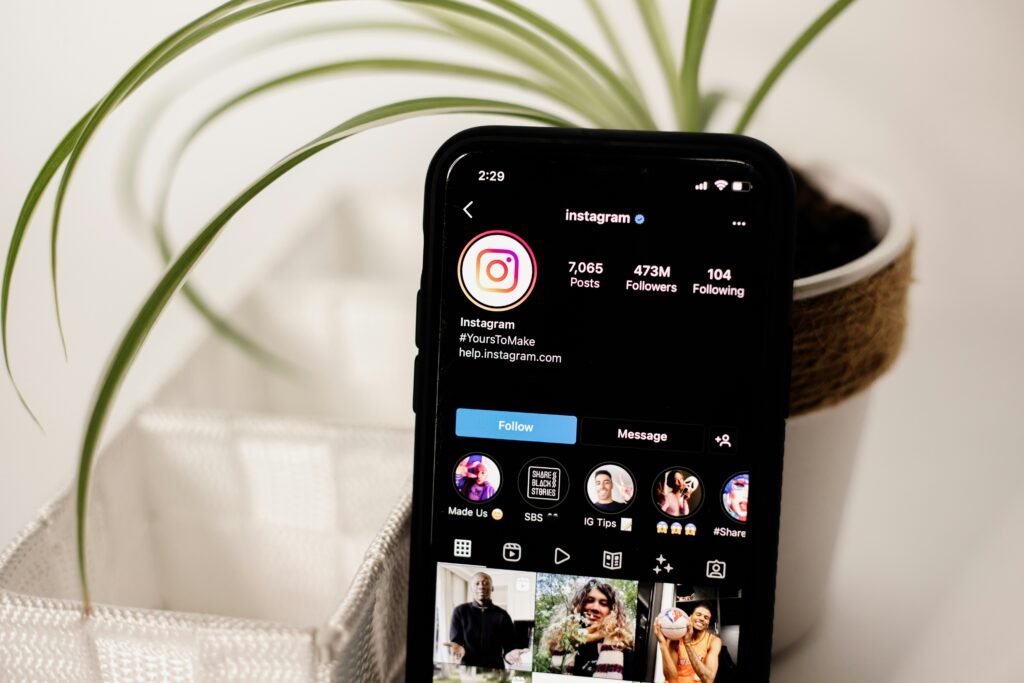
From the Bolanle Tech Newsroom: Instagram has officially confirmed it will stop supporting end‑to‑end encrypted DMs on that date, and this is a documented policy change, not a rumor. That optional encrypted mode was the one feature that kept certain chats locked so tightly that not even Meta could read them, and once it’s gone, your “private” conversations lose their highest level of protection. In simple terms, the lock on those messages is being removed, and Meta will once again be in a position to see more of what you say in DMs if it chooses to, or if it is compelled to by law.

End‑to‑end encryption is what made some Instagram chats feel like a sealed envelope: the message left your phone scrambled and only arrived readable on the other person’s device. Without that, your DMs sit on Meta’s servers in a form that can be scanned by safety systems, reviewed for policy violations, and potentially used to inform AI and ad targeting. Meta is presenting this as a clean‑up of a “low‑usage” feature and is directing privacy‑focused users toward WhatsApp instead. But if you’ve been sending addresses, money talk, contracts, intimate photos, or receipts over Instagram, this marks a serious shift in what “private” really means on the platform.
“THESE CHATS WON’T BE PUBLIC, BUT THEY WON’T BE FULLY LOCKED DOWN EITHER.”
Practically, this does not mean your DMs become public or searchable by other users—strangers still can’t just open your messages, and your audience settings, blocking, and reporting tools remain in place.
What changes is who else can see inside: Meta’s internal systems, safety tools, and, when required, law enforcement will have a clearer path to the content of your conversations than they did under full end‑to‑end encryption. That is why privacy advocates are sounding the alarm—and why, from the Bolanle Tech Newsroom, our guidance is to treat Instagram DMs as semi‑public space: useful for networking, coordination, and light conversation, but not the place to keep your most sensitive secrets.

The question Sydney Sweeney’s career forces every serious artist to ask themselves.
Most people say they want to be an actor. But wanting the life and being willing to do what the life requires are two entirely different things. Sydney Sweeney’s performance as Cassie Howard in Euphoria is one of the clearest examples in recent television of what it actually looks like when an artist refuses to protect themselves from the story they are telling.
The Performance That Started a Conversation
Cassie Howard is not a comfortable character to watch. She is messy, desperate, and heartbreakingly human in ways that most scripts would have softened or simplified. Sydney Sweeney did not soften her. She played every scene at full exposure — the breakdowns, the humiliation, the moments where Cassie is both completely wrong and completely understandable at the same time.
What made the performance remarkable was not the difficulty of the scenes. It was the consistency of her commitment to them. Night after night on set, take after take, she showed up and gave the camera something real. That is not a small thing. That is the kind of discipline that separates working actors from generational ones.
What the Industry Does Not Tell You
The entertainment industry sells you a version of success built around talent, timing, and luck. And while all three matter, none of them are the real differentiator in a room full of equally talented people. The real differentiator is willingness — the willingness to be honest, to be vulnerable, and to let the work require something personal from you.
Most actors hit a wall at some point in their career where a role demands more than they have publicly shown before. The ones who say yes to that moment, who trust the material and the director enough to go somewhere uncomfortable, are the ones audiences remember long after the credits roll.
Sydney Sweeney said yes repeatedly. And the industry took notice.

The Question Worth Asking Yourself
Before you answer, really think about it. There is a moment in every serious audition room where someone might ask you to go further than you are comfortable with — to access something real, to stop performing and start revealing. In that moment, you have to decide what your dream is actually worth to you and, more importantly, what parts of yourself you are not willing to trade for it.
That is the question Euphoria quietly raises for anyone watching with ambition in their chest. Not “could I do that,” but “should I ever feel pressured to.” There is a difference between an artist who chooses vulnerability as a creative tool and one who is pressured into exposure they never agreed to. Knowing that difference is not a weakness. It is the most important thing a young actor can understand before they walk into a room that will test it.
Because the only role that truly costs too much is the one that asks you to abandon who you are to play it.
What You Can Take From This
Whether you are an actor, a filmmaker, a content creator, or someone simply building something from scratch, the principle is the same. The work that connects with people is almost always the work that cost the creator something real. Audiences can feel the difference between performance and truth. They always could.
Sydney Sweeney did not become one of the most talked-about actresses of her generation because she got lucky. She got there because she was willing to be completely, uncomfortably human in front of a camera — and because she knew exactly who she was before she let the role take over.
That combination — full commitment and a clear sense of self — is rarer than talent. And it is the thing worth chasing.
Written for Bolanle Media | Entertainment. Culture. Conversation.

A thought piece on grief, social media cruelty, and what we owe each other in mourning.
She Had Everything to Live For
On April 5, 2026 — her 31st birthday — Ashlee Jenae Robinson was on top of the world. She was standing somewhere between a safari in Tanzania and the rest of her life, and the man she loved was on one knee. She said yes. She posted the photos. She smiled for the camera. The woman who had spent years building a brand out of joy, travel, and living beautifully was finally living her dream.
Seven days later, she was dead.
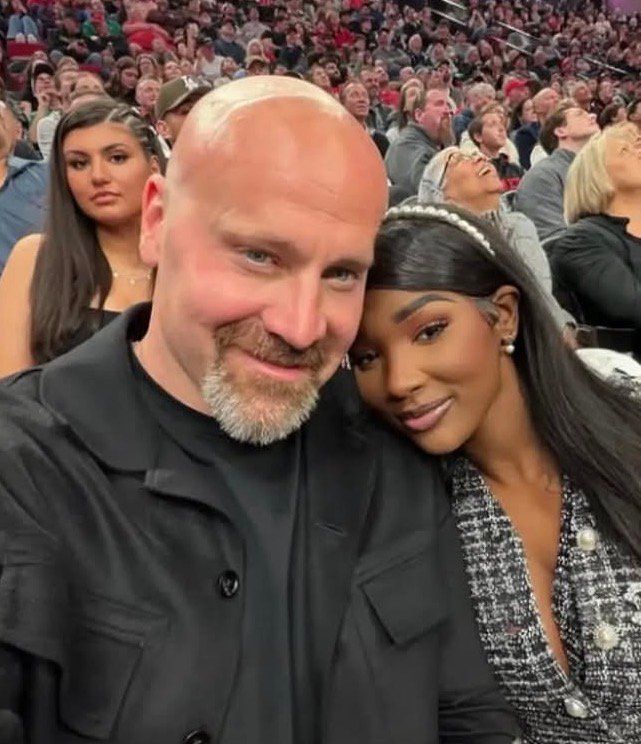
Ashlee Jenae — known to her 130,000+ Instagram followers as a Miami-based lifestyle influencer and “soft life divestor” — was found unconscious in her villa at the Serval Wildlife Resort in Zanzibar, Tanzania. She was rushed to a local hospital and pronounced dead hours later. The circumstances of her death remain under active investigation. No autopsy or toxicology results have been publicly confirmed. Her fiancé, Joe McCann, 45 — a Miami-based crypto hedge fund manager and founder of Asymmetric Financial — told authorities she had “hanged herself on the door.” Her family, her friends, and thousands of people across the internet are not buying it.
But here is the disturbing twist that says everything about where we are as a society: before the investigation even had time to breathe, a significant portion of the internet turned its attention away from the man authorities are now questioning — and toward her. Her tweets. Her opinions. Her dating choices.
The conversation did not start with, “What happened to Ashlee?” It started with, “What did she say about Black men?”
The Investigation: What We Know
The facts, as reported and verified, are these: Ashlee and McCann had been dating roughly a year and a half before the trip. On April 8, an argument between them became serious enough that hotel management separated the couple into different rooms. On April 9, McCann called Ashlee’s mother, Yolanda Endres, and told her “Ashly did something to herself and was being taken to the hospital” — and that she was “stable.” He did not contact her family until 11 hours after the incident allegedly occurred.
She was not stable. She was dead.
Ashlee’s mother told CBS News that her daughter had called on April 8 to let her family know she was in an argument with McCann. Her parents have publicly stated they do not believe their daughter took her own life. Her close friend Savannah Britt, a PR executive, immediately took to X (Twitter): “We need justice for my friend Ashlee Jenae who was found dead in her hotel in Tanzania and her fiancé Joe McCann claims she hung herself. Anyone who knows Ash knows she would NEVER commit suicide.”
As of April 15, 2026, Zanzibar authorities have withheld McCann’s passport and are continuing to question him — though he has not been arrested, and he is being interviewed as a witness. The Tanzanian police have listed Ashlee’s “immediate cause of death” as cerebral hypoxia by strangulation and suffocation — language that has sent shockwaves through the internet and fueled calls for accountability. McCann has not issued any public statement mourning Ashlee. He continued posting on X about cryptocurrency.
Her father has set up a GoFundMe with a $50,000 goal to cover funeral costs and the mounting expenses of navigating an international investigation — even though his daughter’s fiancé was described as a millionaire.
None of this is disputed. All of it is devastating.
The Social Media Wildfire: When Grief Became a Gender War
What should have been a story about a family searching for answers became something uglier, faster than it should have.
Within hours of the news breaking, a segment of social media — disproportionately men, though not exclusively — began unearthing Ashlee’s old tweets and Instagram posts. In 2024, Ashlee had posted: “Every day, Black men wake up and find new ways to embarrass us.” She had shared think pieces critical of dating dynamics within the Black community. She had built part of her brand around the concept of “divesting” — a term used in certain online spaces to describe Black women who choose to pursue relationships with non-Black men.
For some, those tweets were justification for silence. For others, they became justification for something far worse.
YouTube videos with titles like “Black Men Are Celebrating the Death of This Influencer” and “Why Black Men Aren’t Concerned With Ashlee Jenae’s Tragic End” began accumulating tens of thousands of views. Comment sections exploded. People who had never heard of Ashlee Jenae before her death were debating whether she “deserved” sympathy — or whether her death was a form of karmic justice for words she had typed years earlier on the internet.
Let that sit for a moment. A 31-year-old woman is dead. Her cause of death lists strangulation. Her family is grieving thousands of miles from home, fighting to bring her body back. And the internet’s first instinct was to dig up her tweets.
Did She “Deserve” to Die? The Answer Is No — And That Should Not Be Controversial
Let’s be unambiguous: No human being deserves to die for their opinions, their relationship choices, or their social media posts. Period.
The “she dissed Black men” argument that circulated online is not a counter-argument. It is a deflection. It is a way of making Ashlee responsible for her own alleged murder — which is precisely the same logic that has been used to silence Black women in domestic violence cases for generations. It is the same logic that says a woman’s past is more important than the circumstances of her death.
Yes, Ashlee made pointed comments about Black men. She was not alone — and those comments existed within a long, painful, and complicated history of gender dynamics in the Black community that neither began nor ended with her tweets. She was also a woman who was human, flawed, funny, vibrant, loved by her family, and — by all accounts from those who knew her — full of life.
The men who celebrated her death because of tweets did not actually believe those tweets were wrong. If they truly believed that dehumanizing commentary was harmful, they would have recognized the exact same energy in their own responses. You do not fight dehumanization with more dehumanization.
And for the record — the man actually in the room when Ashlee died was not a Black man. The man whose passport was confiscated by Tanzanian authorities is not a Black man. The man who waited 11 hours to call her family is not a Black man. Whatever complicated feelings exist about Ashlee’s online commentary, none of it is relevant to who is currently being questioned in connection with her death.
The “Soft Life” Conversation and What It Reveals
Ashlee Jenae was part of a growing movement of Black women online who spoke candidly about wanting to be cherished, protected, and provided for — and who found that pursuit within interracial relationships. The “soft life divesting” community, while controversial, is also a direct response to real experiences: Black women consistently report some of the highest rates of intimate partner violence and homicide victimization in the U.S. Many were drawn to “divesting” rhetoric precisely because they were fleeing danger, not inviting it.
The cruel irony of Ashlee’s death — allegedly at the hands of the white man she loved — has not been lost on observers across the political and cultural spectrum. But rather than sitting with that irony and allowing it to open a real, honest conversation about how allwomen deserve to vet their partners carefully — regardless of race — some chose to weaponize it. They used her death as a “told you so” instead of a call for justice.
The soft life influencer was flawed. She had opinions that stung. She made enemies online. She also had a mother, a father, a best friend who loved her, and a future she was just beginning to imagine. Those two things can coexist — and the second list is the only one that matters when we are talking about a grieving family and an active homicide investigation.

What We Owe Each Other in Grief
There is something deeply broken in a culture that produces YouTube videos debating whether a dead woman deserved empathy before her body has even been repatriated.
It is worth asking: what does it say about us — as a community, as content consumers, as human beings — that the first impulse when a young Black woman dies under suspicious circumstances is not to demand justice, but to audit her tweet history?
Black women in America are among the most likely to be victims of intimate partner homicide. They are also among the least likely to receive sustained media coverage or public outpouring when they are killed. The Ashlee Jenae case broke through — briefly — but even that attention was immediately hijacked into a gender war that ultimately served no one, least of all Ashlee.
Empathy is not an endorsement. Grieving someone does not mean you agreed with them. It means you recognize their humanity. And if we cannot extend that to a 31-year-old woman found dead in a foreign country under deeply suspicious circumstances, we should ask ourselves hard questions about what we have become.
The Best YouTube Videos Covering This Story
For those seeking to understand the full scope of this conversation — the facts, the grief, and the cultural debate — the following videos represent the range of perspectives that have emerged:Video Title Channel / Creator Angle “Social Media Influencer Ashlee Jenae’s Death Under Investigation” CBS News Straight-news coverage; family interviews; official investigation update “Black Men Are Celebrating the Death of This Influencer” Flakko News Commentary on the online backlash; breaks down the gender war dynamic “Why Black Men Aren’t Concerned With Ashlee Jenae’s Tragic End” Independent commentary Explores the cultural reasons for apathy; attempts nuanced framing “‘Soft Life Divestor’ 31 YO Woman Reportedly Ends Life in Tanzania” Jaye De Black Pro-justice perspective; challenges suicide narrative; supports family’s claims “Ashlee Jenae’s Soft Life Takes a Dark Turn” Independent commentary Broader cultural critique of “soft life” ideology and relationship vetting “Ashlee Jenae in Tanzania — They’re Pushing the Wrong Narrative” Independent commentary Critical of those using Ashlee’s death to attack Black men; calls for accountability on all sides
A Final Word
Ashlee Jenae went to Tanzania to celebrate her birthday and say yes to love. She posted about it. She was glowing. She was 31 and alive and dreaming.
She deserved to come home.
Whatever complicated feelings exist about her words, her brand, or her choices — she deserved to come home. Her parents deserved to receive their daughter back safely, not have to crowdfund a $50,000 investigation from a continent away. Her best friend deserved not to have to post a viral plea for justice from her phone.
The investigation is not over. No arrests have been made. The truth may still come. What will not come back is Ashlee Jenae Robinson, who was once a vibrant, complicated, opinionated, alive young woman who laughed and traveled and loved and posted about it.
Mourn her anyway. She earned it.
If you or someone you know is in crisis, contact the 988 Suicide & Crisis Lifeline by calling or texting 988.
If you have information about this case, Ashlee’s family has asked that all verified information be directed through official channels.

ON MAY 8, 2026, YOUR INSTAGRAM DMS STOP BEING TRULY PRIVATE

How Far Would You Go to Book Your Dream Role?

She Was Supposed to Come Home: The Life, Death, and Dehumanization of Ashlee Jenae


 News3 weeks ago
The Timothée Chalamet Guide to Ruining Your Image
- Entertainment3 weeks ago
The machine isn’t coming. It’s aleady the room.
- Entertainment3 weeks ago
What Kanye’s ‘Father’ Says About Power, Faith, and Control
- News4 weeks ago
Did OnlyFans Save Creators—or Trap Them?
- News4 weeks ago
How She Earns $40M+ In 2026
- News2 weeks ago
Why Your Indie Film Disappears Online
- News2 weeks ago
The Franchise Is Over. Here’s Who’s Winning Now.
- News2 weeks ago
A Civilization Will Die Tonight — And We’re All Just Watching