
Advice
Mastering Movies: Essential Strategies for Filmmakers

From character development to budget management, we’ll explore essential strategies to help you navigate the world of filmmaking with confidence. Join us on this journey into the art of cinema, where creativity meets practical know-how. Let’s get started!
1. Character Development:
- Begin by crafting characters with rich backgrounds, distinct personalities, and clear goals. Consider their past experiences, fears, and desires, which shape their decisions throughout the story.
- Dive into their motivations: What drives them forward? What are their deepest desires or fears? How do these motivations clash or align with other characters?
- Introduce flaws and vulnerabilities that humanize them and create opportunities for growth. Characters should evolve over the course of the film, facing challenges that force them to confront their weaknesses.
- Utilize Pixar’s storytelling formula by prioritizing character development over complex plot scenarios. Audiences often connect more deeply with well-developed characters than intricate storylines.
2. Genre Switching:
- Explore the possibility of blending genres to create a unique and compelling narrative. Consider mixing elements of drama, comedy, thriller, or science fiction to keep the audience engaged and intrigued.
- Incorporate strong female leads to provide diverse perspectives and challenge traditional gender roles. Highlighting multidimensional female characters can attract a broader audience and resonate with viewers on a deeper level.
- Embrace unconventional storytelling techniques that defy genre conventions, allowing for surprising plot twists and unexpected character arcs.


3. Visualizing Ideas:
- Utilize storyboards as a visual tool to map out key scenes, camera angles, and visual motifs. Storyboarding helps to organize ideas, plan transitions, and establish the visual style of the film.
- Experiment with different artistic styles and visual approaches to convey the tone and atmosphere of the story. Pay attention to color schemes, lighting, and composition to evoke the desired emotional response from the audience.
- Collaborate with a talented storyboard artist to bring your vision to life, refining concepts and refining sequences to enhance storytelling clarity.
4. Real-Life Inspiration:
- Draw inspiration from real-life events, personal experiences, or historical occurrences to infuse authenticity and relevance into the story. Explore themes that resonate with contemporary audiences and address universal human experiences.
- Adapt news headlines, social issues, or cultural phenomena into compelling narratives that spark discussion and reflection. Use storytelling as a vehicle to explore complex societal issues and provoke thought-provoking conversations.
- Inject personal anecdotes or emotional truths into the narrative, drawing from your own life experiences to add depth and sincerity to the storytelling.
5. Collaboration:
- Foster collaboration with professionals, freelancers, and production crews to harness diverse perspectives and expertise. Surround yourself with a talented team that shares your creative vision and brings complementary skills to the table.
- Encourage open communication and collaboration throughout the filmmaking process, soliciting feedback and ideas from all members of the team. Embrace constructive criticism as an opportunity for growth and refinement.
- Establish a collaborative environment that values creativity, innovation, and inclusivity, where every team member feels empowered to contribute their unique insights and talents.
6. Budget Consideration:
- Conduct thorough budget planning to ensure that your creative vision aligns with financial constraints. Identify key expenses such as location rentals, equipment rentals, and talent fees, allocating resources accordingly.
- Practice reverse budgeting techniques to prioritize essential elements of the production while minimizing unnecessary expenditures. Focus on maximizing the impact of limited resources through strategic planning and resourcefulness.
- Seek out cost-effective solutions and creative alternatives to expensive production challenges, leveraging the skills and expertise of your team to achieve high-quality results within budgetary constraints.
By incorporating these detailed considerations into your movie planning process, you can lay a solid foundation for a successful and engaging film project that resonates with audiences on multiple levels.
Ready to take the next step in bringing your film to life? Our team is here to help. With our expertise in storytelling, production, and budget management, we’ll work closely with you to refine your vision and prepare your film for the big screen. From brainstorming sessions to script consultations, we’ll guide you through every step of the process, ensuring that your story reaches its full potential. Don’t let your cinematic dreams remain just dreams—reach out to us today and let’s turn them into reality. Together, we’ll create an unforgettable ending that leaves audiences craving more.














The question Sydney Sweeney’s career forces every serious artist to ask themselves.
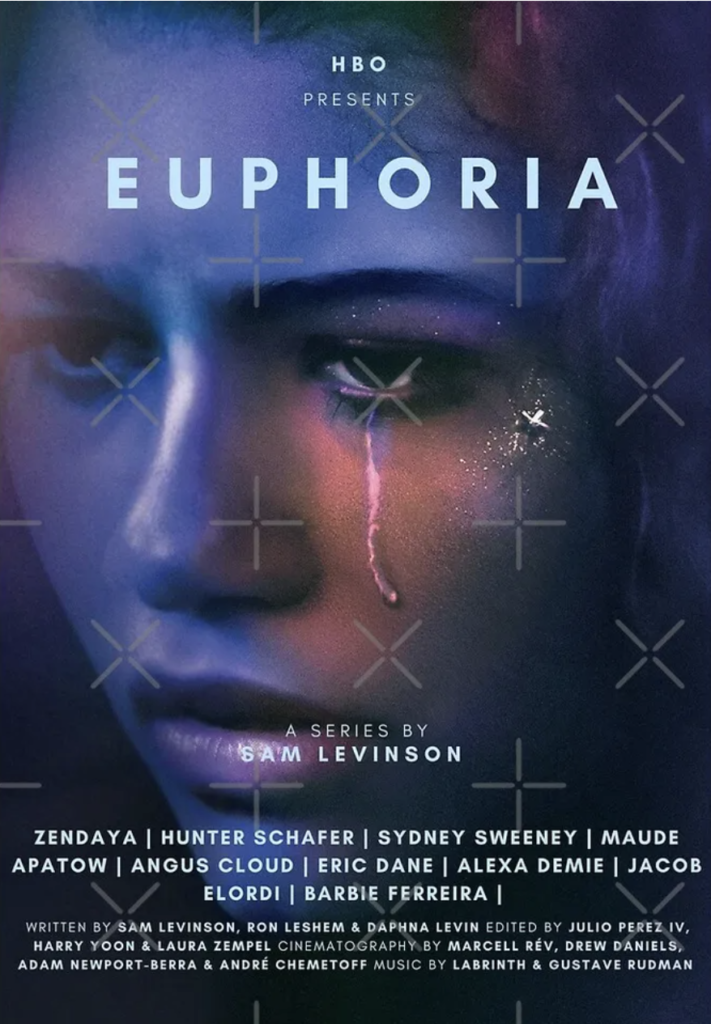
Most people say they want to be an actor. But wanting the life and being willing to do what the life requires are two entirely different things. Sydney Sweeney’s performance as Cassie Howard in Euphoria is one of the clearest examples in recent television of what it actually looks like when an artist refuses to protect themselves from the story they are telling.
The Performance That Started a Conversation
Cassie Howard is not a comfortable character to watch. She is messy, desperate, and heartbreakingly human in ways that most scripts would have softened or simplified. Sydney Sweeney did not soften her. She played every scene at full exposure — the breakdowns, the humiliation, the moments where Cassie is both completely wrong and completely understandable at the same time.
What made the performance remarkable was not the difficulty of the scenes. It was the consistency of her commitment to them. Night after night on set, take after take, she showed up and gave the camera something real. That is not a small thing. That is the kind of discipline that separates working actors from generational ones.
What the Industry Does Not Tell You
The entertainment industry sells you a version of success built around talent, timing, and luck. And while all three matter, none of them are the real differentiator in a room full of equally talented people. The real differentiator is willingness — the willingness to be honest, to be vulnerable, and to let the work require something personal from you.
Most actors hit a wall at some point in their career where a role demands more than they have publicly shown before. The ones who say yes to that moment, who trust the material and the director enough to go somewhere uncomfortable, are the ones audiences remember long after the credits roll.
Sydney Sweeney said yes repeatedly. And the industry took notice.
The Question Worth Asking Yourself
Before you answer, really think about it. There is a moment in every serious audition room where someone might ask you to go further than you are comfortable with — to access something real, to stop performing and start revealing. In that moment, you have to decide what your dream is actually worth to you and, more importantly, what parts of yourself you are not willing to trade for it.
That is the question Euphoria quietly raises for anyone watching with ambition in their chest. Not “could I do that,” but “should I ever feel pressured to.” There is a difference between an artist who chooses vulnerability as a creative tool and one who is pressured into exposure they never agreed to. Knowing that difference is not a weakness. It is the most important thing a young actor can understand before they walk into a room that will test it.
Because the only role that truly costs too much is the one that asks you to abandon who you are to play it.
What You Can Take From This
Whether you are an actor, a filmmaker, a content creator, or someone simply building something from scratch, the principle is the same. The work that connects with people is almost always the work that cost the creator something real. Audiences can feel the difference between performance and truth. They always could.
Sydney Sweeney did not become one of the most talked-about actresses of her generation because she got lucky. She got there because she was willing to be completely, uncomfortably human in front of a camera — and because she knew exactly who she was before she let the role take over.
That combination — full commitment and a clear sense of self — is rarer than talent. And it is the thing worth chasing.
Written for Bolanle Media | Entertainment. Culture. Conversation.

By Bolanle Media
She didn’t wait to be discovered. She didn’t follow the rules. And she didn’t let anyone else write her story.
Zendaya went from a Disney Channel kid to the youngest-ever two-time Emmy winner for lead actress in a drama — and she did it on her own terms. If you’re an actor trying to figure out how to build a career that actually lasts, her playbook is one of the most honest and practical ones in Hollywood right now.
Here’s what she does differently — and what you can take directly into your own career.

1. She Chose Roles. They Didn’t Choose Her.
Most actors take what they’re given. Zendaya negotiated.
At 17, when Disney offered her KC Undercover, she didn’t just say yes. She demanded to be a producer so she could shape the character herself. She specifically said she didn’t want her character to sing, dance, or follow any of the typical Disney girl tropes — because she wanted to show that girls could be defined by something other than performance.
That’s not diva behavior. That’s self-awareness.
“I wanted to make sure that she wasn’t good at singing or acting or dancing. There are other things that a girl can be.” — Zendaya
The lesson: Know what you stand for before you walk into the room. Agents, casting directors, and producers can feel the difference between someone who needs the job and someone who has a vision.
2. She Stayed Quiet While Everyone Else Got Loud
In a world where most celebrities flood the internet to stay relevant, Zendaya does the opposite.
She chooses restraint over noise. Intention over impulse. Longevity over virality. While other actors are chasing every trending moment, she allows space between wins — which does something powerful to how people perceive her. It turns success into a pattern, not a spike.
“Spikes feel lucky. Patterns feel earned. And earned success commands respect rather than temporary excitement.”
The lesson: You don’t have to be everywhere to be known. Strategic silence can build more authority than constant posting ever will.
3. She Was Fearless Enough to Fail
When Zendaya stepped into Euphoria, she wasn’t sure she could do it. The emotional weight of playing Rue was unlike anything she had done before.
But she’s said it clearly — greatness requires two things: being fearless and being willing to try.
“You can’t be afraid to look stupid, you can’t be afraid to mess up, you can’t be afraid of anything. The only way to get great is to be fearless and try.” — Zendaya
The lesson: The roles that scare you the most are usually the ones that will define you. Stop waiting until you feel ready. That feeling never comes.

4. She Prepared Like No One Was Watching
Talent alone didn’t get Zendaya to where she is. Preparation did.
For The Greatest Showman, she spent months training on the trapeze to perform her own stunts — not because she had to, but because she wanted to fully commit to the role. That extra preparation is a constant in everything she does, whether it’s acting, fashion, or advocacy.
“I have standards I don’t plan on lowering for anybody… including myself.” — Zendaya
The lesson: The work you put in before the audition, before the set, and before the camera rolls is what separates good actors from unforgettable ones.
5. She Stayed Grounded Without Shrinking
Fame didn’t change Zendaya because she never let it define her.
She’s spoken openly about staying grounded, keeping family close, and not applying unnecessary pressure to herself. She didn’t rush. She didn’t compare. She just kept building, step by step.
“I’ve just been living without applying any pressure, just going step by step.” — Zendaya
The lesson: Your career is a marathon. The actors who last are the ones who protect their peace as fiercely as they protect their craft.
Final Thought
Zendaya’s career isn’t a mystery — it’s a method. Intentional choices, fearless execution, and an unshakeable sense of self.
You don’t need her budget, her team, or her platform.
You need her mindset.
“I want to show that you don’t have to be older to live your dreams — you can do it at any age.” — Zendaya
Start there.
The gatekeepers didn’t just open the door. They left the building.
For decades, filmmakers were told the same story: get the right agent, land the right festival, sign with the right distributor. But in 2026, that story is officially over — and the filmmakers who haven’t gotten the memo are the ones still struggling.

The Old Playbook Is Dead
Streamer acquisitions at Sundance, TIFF, and Cannes have slowed dramatically. The era of premiering your indie film and getting scooped up by Netflix or A24 is no longer a reliable strategy. Buyers are still at festivals — but they’re fewer, more selective, and harder to reach. What that means for you: a festival is now a marketing machine and a career pipeline, not a sales event.
The filmmakers who are winning right now have accepted one uncomfortable truth: the burden of keeping your film alive falls on you. That’s not a threat — it’s the greatest creative freedom this industry has ever offered.
You Already Have Everything You Need
Here’s what Netflix didn’t want you to know: you have more production power in your pocket than Scorsese had in his first decade. A phone. Editing software. AI tools that cost less than your monthly coffee budget. Runway, Higgsfield, ElevenLabs, and Sora are no longer “experimental toys” — they’re production tools being used on actual sets right now.
AI won’t replace your voice. But it will replace the filmmaker who refuses to evolve. Use it for script breakdowns, VFX, dubbing for global distribution, and post-production workflows. The filmmakers leveraging these tools are cutting costs and moving faster than anyone expected.
Your Audience Is Your Distribution Deal
The new model is simple: build your audience before you need them. Document your process. Post weekly. Your personal brand is now your most important asset — more valuable than any distribution agreement you could sign. Platforms like Filmhub, Vimeo On Demand, and Gumroad let you sell directly to fans and keep your rights intact.
Direct-to-audience events — roadshow screenings, pop-up premieres, immersive experiences — are becoming a core release strategy in 2026. You don’t need a theater chain. You need fifty cities and a ticket link.
The One Rule That Changes Everything
Make one complete film every week. Twenty-four hours to think. Twenty-four hours to shoot. The rest of the week to edit and post. Not because every film will be great — but because the filmmaker who ships beats the filmmaker who perfects every single time.
In 2026, a filmmaker with deep trust in a niche audience has a more reliable platform than a studio trying to win the general market. Stop chasing scale. Build something real. The rules didn’t just change — they changed for you.

How Far Would You Go to Book Your Dream Role?

She Was Supposed to Come Home: The Life, Death, and Dehumanization of Ashlee Jenae

Bieber’s Coachella Set Has Everyone Arguing Again


 News3 weeks ago
The Timothée Chalamet Guide to Ruining Your Image
- Entertainment3 weeks ago
The machine isn’t coming. It’s aleady the room.
- Advice4 weeks ago
Stop Waiting for Permission — The Film Industry Just Rewrote the Rules
- Entertainment2 weeks ago
What Kanye’s ‘Father’ Says About Power, Faith, and Control
- News4 weeks ago
How She Earns $40M+ In 2026
- News3 weeks ago
Did OnlyFans Save Creators—or Trap Them?
- News1 week ago
Why Your Indie Film Disappears Online
- News2 weeks ago
The Franchise Is Over. Here’s Who’s Winning Now.











NeuroTest reviews
February 29, 2024 at 11:30 pm
you are in reality a just right webmaster The site loading velocity is incredible It seems that you are doing any unique trick In addition The contents are masterwork you have performed a wonderful task on this topic