News
Mass Shooting at New York’s 345 Park Avenue Kills Five People


A tragic mass shooting occurred on the evening of July 28, 2025, at the prominent 345 Park Avenue office tower in Midtown Manhattan. Five people, including a New York City police officer and the perpetrator, lost their lives during the incident, which has shaken the city and drawn national attention.

Officials identified the shooter as Shane Devon Tamura, 27, of Las Vegas. He arrived in New York just hours before the attack and was heavily armed with an M-4 style rifle. Tamura entered the building’s lobby, opening fire and fatally shooting Police Officer Didarul Islam and a female civilian. He then proceeded to the 33rd floor, where he shot others before turning the weapon on himself. The death toll includes the police officer, two women, a man, and the gunman. One individual remains hospitalized in critical but stable condition, while four more suffered minor injuries during the chaos.

Investigators are working to determine Tamura’s motives. Authorities discovered a note mentioning chronic traumatic encephalopathy (CTE) and referencing the NFL, with the shooter blaming football for neurological problems. However, police clarified that Tamura was not a professional football player, having only played in high school, and had a history of mental health challenges.
The 345 Park Avenue building houses major tenants such as the NFL’s headquarters and the Blackstone Group. While security remains heightened and the investigation is ongoing, police have found no conclusive evidence linking Tamura’s actions to the NFL’s operations.
Rapid action by law enforcement contained the threat, and the building was evacuated floor by floor. Officials emphasize that the shooter acted alone, and there is no ongoing danger to the public. The city continues to mourn as investigators probe Tamura’s background, mental health history, and any connection between his past head injuries and the violent attack.










British actor and producer Idris Elba is moving ahead with plans to establish a state-of-the-art film studio and creative hub in Accra, Ghana, in a move industry observers say could significantly boost the country’s screen sector and the wider African film ecosystem.
The multimillion-dollar complex is planned for a 22-acre site near Osu Castle in Accra and is expected to combine full production facilities with a strong talent development component.
The project has been described as both a studio and a training ground, aimed at equipping Ghanaian and African creatives with world-class skills across directing, production, cinematography, post-production, and related disciplines.
Elba, whose work spans blockbuster franchises and prestige television, has been vocal about his commitment to building sustainable film infrastructure on the continent rather than limiting engagement to short-term shoots. The Ghana studio forms part of a broader vision to position Africa as a competitive production destination, with facilities capable of servicing both local storytellers and international productions.
Industry analysts note that many African filmmakers continue to face structural challenges, including limited access to purpose-built sound stages, modern post-production services, and consistent training pathways. By situating a major creative hub in Accra, the initiative is expected to address some of these gaps, create employment opportunities, and attract higher-budget projects to Ghana.
The planned studio is also being framed as a catalyst for economic growth, with potential knock-on benefits for tourism, hospitality, and ancillary services that support film and television production. Local stakeholders have welcomed the development as a sign of growing confidence in Ghana’s creative economy and its ability to compete on a global stage.
Early reaction across social and traditional media has highlighted enthusiasm among filmmakers, actors, and young creatives who see the project as a landmark investment in African talent. As plans progress, further details on the construction timeline, partners, and specific training programs are expected to be announced.
There are videos circulating online showing Idris Elba discussing and outlining his vision for the Ghana studio project, including interview segments and news features that provide additional context and visual coverage of the announcement.
What SAG-AFTRA’s AI Rules Mean For Actors & Filmmakers in 2026
AI isn’t coming for the film industry—it’s already inside your contracts. SAG-AFTRA has been building an AI rulebook across multiple agreements, from TV/streaming to video games and commercials, and those choices will shape how your face, body, and voice can be used.
1. SAG-AFTRA’s AI “guardrails” in one page
SAG-AFTRA says its AI framework is built on three core promises: clear consent, fair compensation, and control over performances.
In practice, that means:
- Your name, image, and voice are treated as rights that must be licensed, not free raw material.
- Any AI recreation of you is supposed to require informed consent, not buried boilerplate.
- Unions are pushing to make it cheaper to hire a human than to rely on synthetic replicas.
Across contracts, SAG-AFTRA has been adding AI protections in the TV/Theatrical deal that ended the 2023 strike, in animation and commercials agreements, and in the newer Interactive Media (video game) agreement ratified in 2025.
2. What “digital replicas” actually are
Newer agreements break AI uses into categories so producers can’t hide everything under vague language.
Key terms:
- Vocal digital replica: An AI-generated version of your voice, trained from your recorded work and used to create new lines you didn’t physically say.
- Visual digital replica: A digital version of your likeness used to generate new shots or performances.
- Independently created digital replica (ICDR): A replica made from non‑union material or by prompting a generative model with your name (for example, a game company asking a tool to “make a voice like X”).
Under the 2025 Interactive Media Agreement, for example:
- These different replica types all require consent and disclosure.
- Producers must track when they use replicas and pay based on output (like per line of AI dialogue).
- Consent has to be “clear and conspicuous,” often in a separate rider that describes what the replica will do and whether it will handle sensitive material.
3. Seedance 2.0: why everyone’s talking about it
In February 2026, SAG-AFTRA publicly condemned Seedance 2.0, a new AI video model, saying it enables blatant infringement of performers’ voices and likenesses and undermines their ability to earn a living.
The union’s position:
- Seedance 2.0 disregards law, ethics, industry norms and consent by allowing unauthorized cloning and mash‑ups.
- It’s being criticized at the exact same time SAG-AFTRA is back at the table negotiating a new TV/Theatrical/Streaming contract, where AI protections are a top priority.
For you, Seedance 2.0 is a case study in what not to do: using AI tools that ingest copyrighted work or people’s likenesses without explicit, documented permission.
4. If you’re an actor: your AI checklist
Before you sign any contract, look for language about “digital replicas,” “AI,” “synthetic performance,” or “simulation.” Then ask three questions:
- Can they create a digital replica of me?
Is the contract asking for the right to use your voice or image to generate new material that looks/sounds like you? - What do I get paid if they use it?
Is there separate compensation for AI-generated lines, scenes, or future uses, or is the contract trying to roll everything into a one‑time fee? - Can I say no later?
Does the agreement give you any ability to suspend or revoke consent, especially if the content changes (becomes more sensitive, political, or explicit) or if there’s a labor dispute?
Practical moves:
- Keep a copy of every AI rider you sign and what you were told the replica would be used for.
- If something feels too broad (“any use, in any medium, forever”), ask for narrower language or talk to your rep/union before signing.
- Use SAG-AFTRA’s AI resource pages and explainers to understand your rights and current policy fights.
5. If you’re a filmmaker or producer: how not to get burned
Using AI on your project doesn’t have to mean fighting your cast later—but only if you handle it correctly.
Non‑negotiables if you’re working with union talent:
- Get explicit, written consent before creating any replica, with a rider that describes the use in plain language.
- Budget for AI‑related pay. Many agreements treat AI output as additional work, not a free bonus.
- Avoid gray‑area tools. If a model has been publicly condemned by the performers’ union for unauthorized cloning, using it with performers’ likenesses is both an ethical and legal risk.
- Align your paperwork with union rules. Update your deal memos so AI sections don’t quietly overreach beyond what the union agreements allow.
If you’re non‑union, following these standards still protects you:
- You reduce your exposure to future lawsuits or takedowns.
- You build trust with actors who may join your projects precisely because you’re not cutting corners on AI.
6. Where to learn more
If you want to go deeper than this article, start with:
- Union AI hubs and FAQs explaining their core principles.
- AI bargaining timelines that show what’s already been won and what’s still being fought over.
- Interactive media and digital replica explainers that spell out definitions, consent rules, and pay structures.
- Public statements about tools like Seedance 2.0, which show where the red lines are.
7. The bottom line
AI is not a side issue anymore—it is part of how performance is captured, stored, and reused. The only real question is whether that happens with you or to you.
If you’re an actor, your power starts with reading every AI line in your contracts and refusing to trade your likeness for a one‑time fee. If you’re a filmmaker, your reputation will be built on whether people trust you with their face, their voice, and their future earning potential.
The machine is here. The artists who last will be the ones who learn the rules, push for better ones, and refuse to treat human performance as disposable training data.
Save this, share this with your cast and crew, and make sure the story you’re telling about AI is one you’d be proud to see on screen.

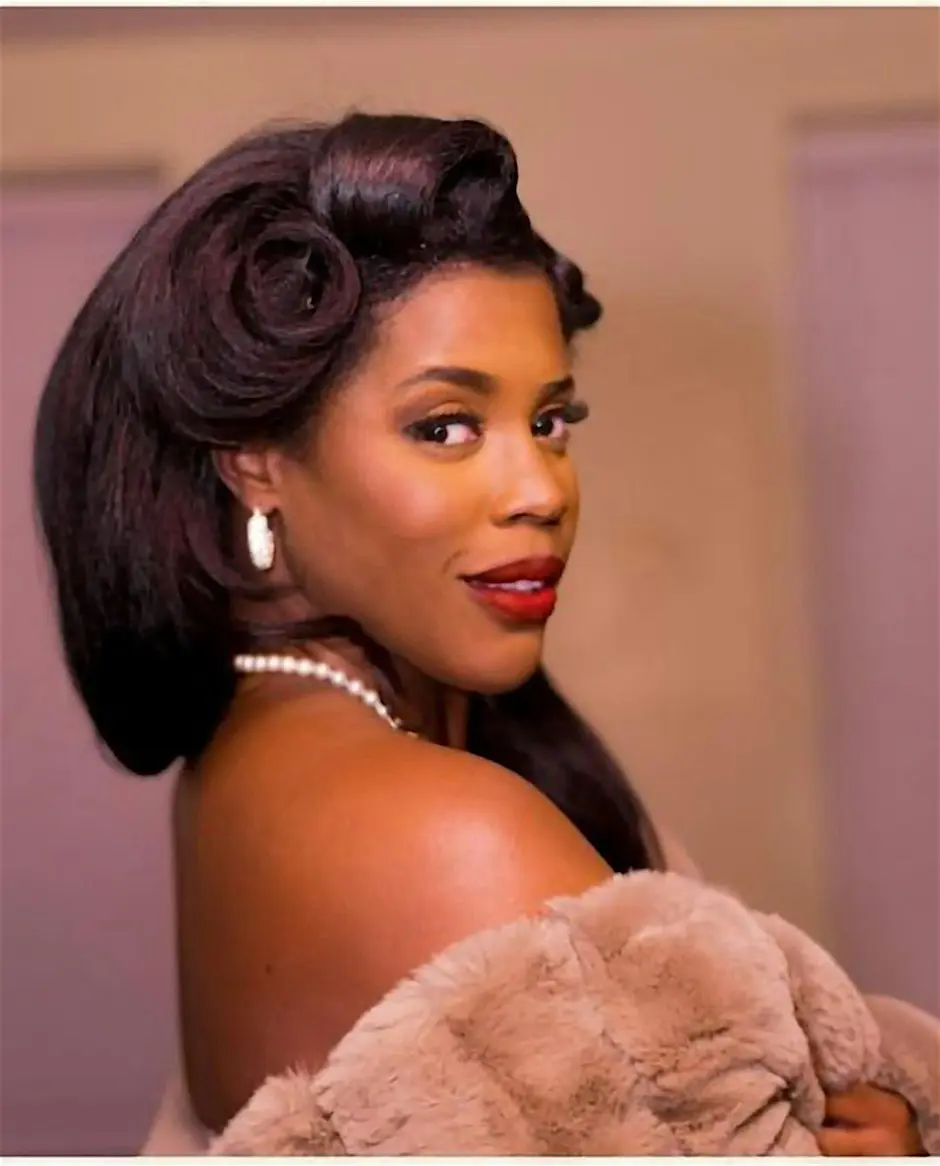
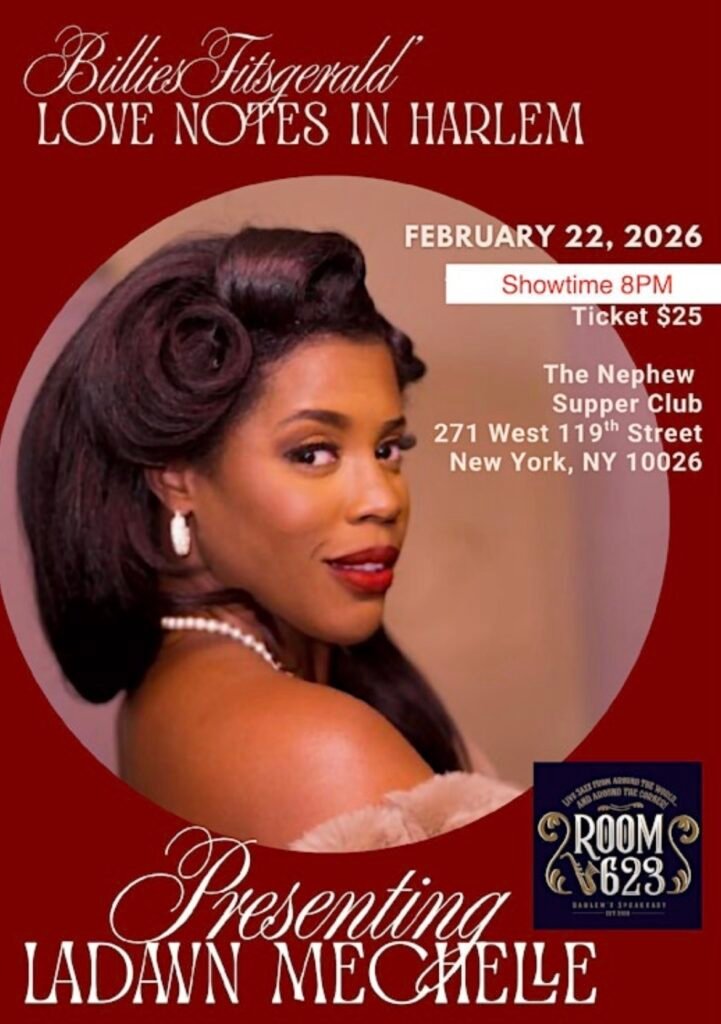
Harlem doesn’t always announce its biggest nights in advance—but when it does, you feel it in the air. From Feb 22 through Mar 22, Room 623 in New York, NY becomes the home of an intimate, soulful run you’ll want to say you caught in real time: “Billie Fitzgerald: Love Notes to Harlem.” This isn’t a background-music type of evening—it’s a sit-forward, lock-in, feel-every-note experience starring the main event herself: Ladawn Taylor.
Ladawn takes the stage as headliner, producer, and vocalist, leading the night with presence, storytelling, and a voice that pulls the room into one shared heartbeat. The show invites you into “love notes” inspired by Harlem’s soulful vibes—heartfelt stories paired with live tunes that bring the spirit of Harlem to life, not as nostalgia, but as something living and happening right now. If you’ve been craving culture that feels close, real, and electric, this is exactly what it looks like.
And while Ladawn is the star, she’s surrounded by talent that strengthens the whole experience: Stephen White (vocalist) and Safin Karim (accompanist) join her to build a live sound that’s rich, emotional, and unforgettable. This is the kind of lineup that doesn’t just “support” a headliner—it amplifies her, giving Ladawn space to soar, improvise, and turn the room into a moment people can’t stop talking about.
The setting is part of the magic. The series is in-person and 18+, designed for grown, ready-to-vibe energy—an up-close Harlem night where the music hits different because you’re right there for it. And the address puts you exactly where you need to be: Room 623, 271 West 119th Street, New York, NY 10026.
Call it a date night, a friend night, a solo “I’m outside” night—just don’t call it optional. This is Harlem’s hottest ticket for a reason: Ladawn Taylor Live is the kind of experience you share because it’s not just an event—it’s proof you were in the room when something special happened.

Idris Elba’s Multimillion-Dollar Film Studio Is Coming to Ghana

Dr. Ric Mathis Turns a Film Screening Into a Lifesaving Movement With Heartbeat

When “Professional” Means Silent


 Advice1 week ago
How to Make Your Indie Film Pay Off Without Losing Half to Distributors
- Entertainment4 weeks ago
What the Epstein Files Actually Say About Jay-Z
- Film Industry4 weeks ago
AI Didn’t Steal Your Job. It Revealed Who Actually Does the Work.
- Entertainment3 weeks ago
What Epstein’s Guest Lists Mean for Working Filmmakers: Who Do You Stand Next To?
- Business2 weeks ago
How Epstein’s Cash Shaped Artists, Agencies, and Algorithms
- News4 weeks ago
Catherine O’Hara: The Comedy Genius Who Taught Us That Character Is Everything
- Business2 weeks ago
New DOJ Files Reveal Naomi Campbell’s Deep Ties to Jeffrey Epstein
- Film Industry1 week ago
Why Burnt-Out Filmmakers Need to Unplug Right Now