Entertainment
Justin Bieber’s Ups and Downs Through the Years on August 24, 2023 at 6:32 pm Us Weekly


Justin Bieber. Theo Wargo/Getty Images
Justin Bieber has faced his fair share of hardships since skyrocketing to fame after being discovered by Scooter Braun in 2007.
Upon breaking onto the scene with his debut album, My World 2.0, the two-time Grammy winner was beloved by the world over for his boyish charm, famous hair “swoop” and age-appropriate love songs.
However, in the years that followed, Bieber’s partying ways became the subject of much scrutiny and worry — from his fans, parents and Braun himself.
“I was worried every night that I was going to lose him. I thought he was going to die,” Braun shared on “The Red Pill” podcast in 2018. “I thought he was going to sleep one night and that he would have so much crap in his system that he would not wake up the next morning.”
Bieber’s romantic life also made frequent headlines — namely, his high-profile romances with Selena Gomez and future wife Hailey Bieber.
Keep scrolling for Justin’s highs and lows throughout the years:
Christopher Polk/Getty Images
Shooting to Fame
Braun discovered Justin on YouTube when the singer was just a young teen in the early 2000s. The “Baby” singer released his debut album, My World 2.0, in 2010 following his My World EP. The record ultimately went 4x platinum.
N-Word Scandal
In 2014, Justin dealt with two racism scandals in one week. In the videos shared online, one clip showed the singer telling a racist joke five years prior, while the other piece of footage featured a young Justin singing a racist parody of his song “One Less Lonely Girl.” The parody replaced “girl” with the N-word and made references to the KKK.
“I’m very sorry,” Justin said in a statement to the Associated Press at the time. “I take all my friendships with people of all cultures very seriously and I apologize for offending or hurting anyone with my childish and inexcusable behavior.”
He added: “I thought it was ok to repeat hurtful words and jokes, but I didn’t realize at the time that it wasn’t funny and that in fact my actions were continuing the ignorance. Thanks to friends and family I learned from my mistakes and grew up and apologized for those wrongs. Now that these mistakes from the past have become public I need to apologize again to all of those who I have offended.”
Substance Abuse Issues
In his 2020 documentary, Justin Bieber: Seasons, the Canada native got real about his struggles with substance abuse.
“My security and stuff would come into my room at night to check my pulse. People don’t know how serious it got. It was legit crazy scary,” he recalled. “I was waking up in the morning and the first thing I was doing was popping pills and smoking a blunt and starting my day. It just got scary. I basically said to myself, I’m like, ‘God, if you’re real, you get me through this season of stopping these pills and stuff, and if you do, I’ll do the rest of the work.’”
Mama Drama
Justin and his mom, Pattie Mallette — who was just a teen when she gave birth to her only son in March 1994 — were always extremely close. However, their relationship soured as Justin struggled with drugs.
“I was distant because I was ashamed,” he later reflected to Billboard in 2015 about his relationship with his mom. “We spent some time not talking, so it takes time to rebuild that trust. She’s living in Hawaii now, so it’s hard, but getting better. She’s an amazing woman and I love her.”
Kevin Mazur/WireImage
Selena Gomez Relationship
Justin and Gomez went public with their romance at the 2011 Vanity Fair Oscars party, breaking up for the first time one year later. As the duo continued to be on and off over the next several years — with both stars dating other A-listers in their “off” periods — they ultimately called it quits for good in 2018, several months before Justin proposed to Hailey.
Hailey Bieber Marriage
The future couple initially met in 2008 after being introduced by Hailey’s dad, actor Stephen Baldwin. While Justin and Hailey became friends — and on and off romantic partners — in the years following, the “What Do You Mean?” artist got real about not wanting to hurt the model while he focused on himself.
“What if Hailey ends up being the girl I’m gonna marry, right? If I rush into anything, if I damage her, then it’s always gonna be damaged,” Justin told GQ in 2016. “It’s really hard to fix wounds like that. It’s so hard. … I just don’t want to hurt her.”
Two years later — after his final split from Gomez — Justin and Hailey tied the knot in a courthouse ceremony in New York City. In 2019, they threw a larger ceremony attended by their families and friends.
Arturo Holmes/MG21/Getty Images
Health Problems
Justin got real about his battle with Lyme disease in 2020.
“While a lot of people kept saying Justin Bieber looks like s—t, on meth etc. they failed to realize I’ve been recently diagnosed with Lyme disease, not only that but had a serious case of chronic mono which affected my, skin, brain function, energy, and overall health,” he wrote via Instagram at the time.
Two years later, Justin canceled his tour dates amid another health scare — this time: Ramsay Hunt Syndrome.
“It is from this virus that attacks the nerve in my ear and my facial nerves and has caused my face to have paralysis,” Justin said in an Instagram video at the time, showing his followers that he couldn’t move half of his face. “As you can see this eye is not blinking. I can’t smile on this side of my face. This nostril will not move.”
As for his canceled concert dates, “I’m just physically not capable of doing them,” Justin noted. “This is pretty serious as you can see. I wish this wasn’t the case. But obviously, my body is telling me I need to slow down.”
Dropping Scooter as His Manager
In August 2023, a source exclusively told Us Weekly that Justin “officially let Scooter go as his manager” amid reports that Demi Lovato and Ariana Grande also parted ways with the music executive.
The insider added that it was Hailey who “led the charge that led Justin to leave him for another manager.”
A separate insider, however, told Us one day prior that “all of Scooter Braun’s clients are under contract and negotiations have been going on for several months as Scooter steps into his larger role as Hybe America CEO.” The source elaborated: “People are spreading rumors based on what they know, but they are off. Scooter’s team at SB Projects are still handling both Justin and Ariana as they work through what this new structure looks like.”
Justin Bieber has faced his fair share of hardships since skyrocketing to fame after being discovered by Scooter Braun in 2007. Upon breaking onto the scene with his debut album, My World 2.0, the two-time Grammy winner was beloved by the world over for his boyish charm, famous hair “swoop” and age-appropriate love songs. However,
Us Weekly Read More


Continue Reading

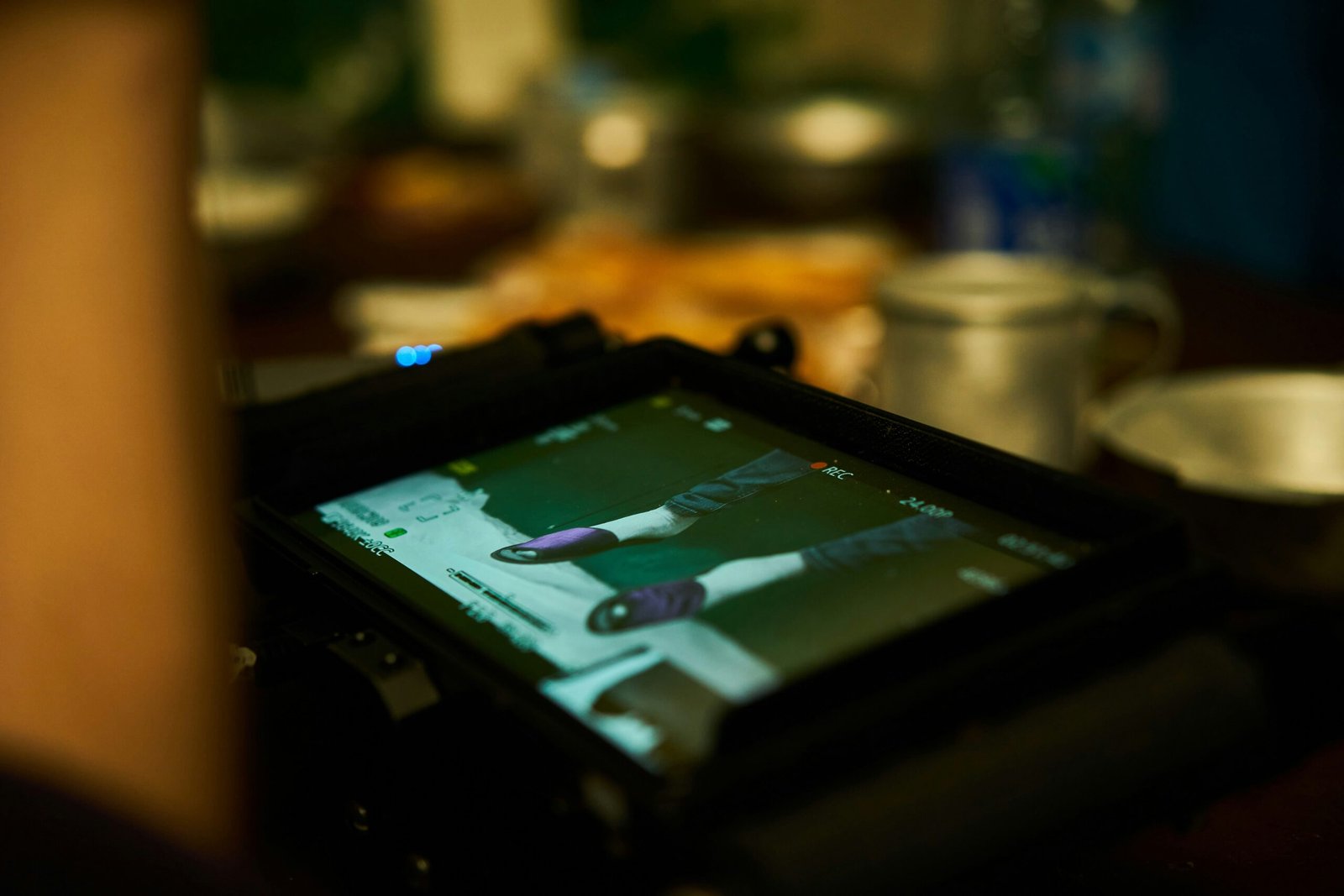
People don’t watch films the way they used to—and if you’re still cutting everything for the big screen first, you’re losing the audience that lives in your pocket.
Every swipe on TikTok is a tiny festival: new voices, wild visuals, heartbreak, comedy, and chaos, all judged in under three seconds. In that world, vertical films aren’t a gimmick. They’re the new front door to your work, your brand, and your career.
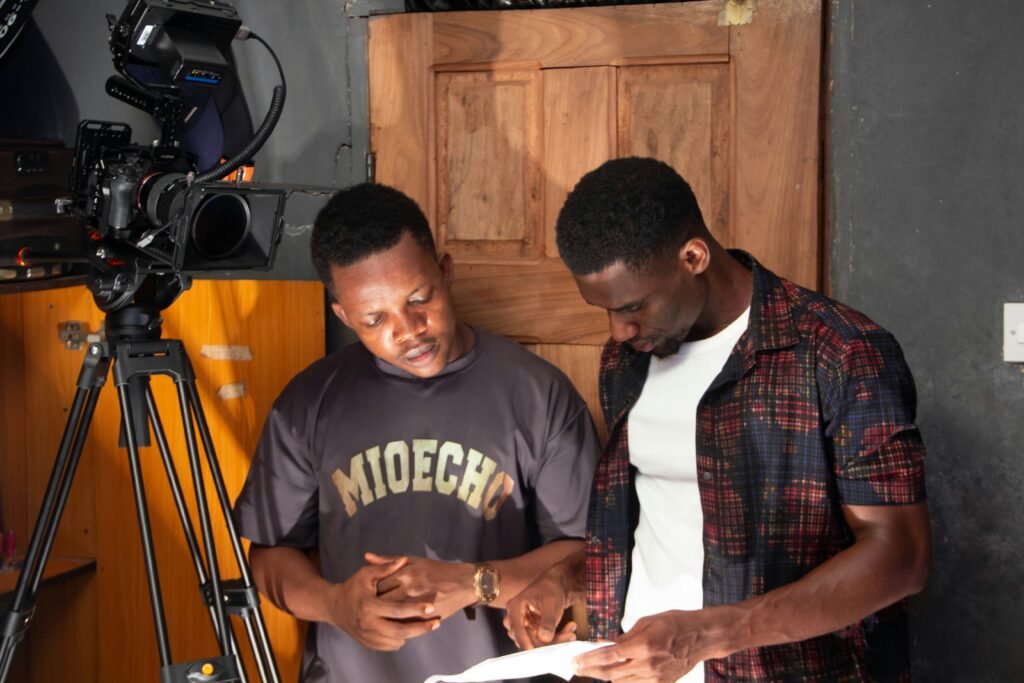
The movie theater is now in your hand
Think about where you’ve discovered your favorite clips lately: your phone, in bed, in an Uber, between texts. The “cinema” experience has shrunk into a glowing rectangle we hold inches from our face. That’s intimate. That’s personal. That’s power.
Vertical video fills that space completely. No black bars. No distractions. Just one story, one face, one moment staring back at you. It feels less like “I’m watching a movie” and more like “this is happening to me.” For storytellers, that’s gold.
The old rules still matter—but they bend
Film school taught you:
- Compose for the wide frame.
- Let the world breathe at the edges.
- Save the close-up for maximum impact.
Vertical filmmaking says: bring all of that craft… and then flip it. You still need composition, rhythm, framing, and sound. But now:
- The close-up is the default, not the climax.
- Depth replaces width—what’s in front and behind matters more than left and right.
- Micro-scenes—60 seconds or less—must feel like complete emotional beats.
It’s not “less cinematic.” It’s a different kind of cinematic—one that lives where people already are instead of asking them to come to you.
Your characters can live beyond the film
Here’s the secret no one tells you: audiences don’t just fall in love with stories; they fall in love with people. Vertical video lets your characters exist outside the runtime.
Imagine this:
- The day your trailer drops, your lead character is already a recurring presence on people’s For You Pages.
- There are 10 short vertical scenes—arguments, confessions, jokes—that never made the final cut but live as their own mini-episodes.
- Fans aren’t asking “What is this movie?” They’re asking, “When do I get more of her?”
When someone feels like they “know” a character from their feed, buying a ticket or renting your film stops feeling like a risk. It feels like catching up with a friend.

Behind the scenes is no longer optional
Vertical films thrive on honesty. Shaky behind-the-scenes clips. Laughing fits between takes. The director’s 2 a.m. rant about a shot that won’t work. The makeup artist fixing tears after a heavy scene. That’s the texture that makes people care about the final product.
You don’t have to be perfect. You have to be present.
Ideas you can start capturing tomorrow:
- “What we can’t afford, so we’re faking it.”
- “The shot we were scared to try.”
- “One thing we argued about for three days.”
When you show the process, you’re not just selling a film—you’re inviting people into a journey.
Think in episodes, not posts
Most people treat vertical video like a one-off blast: post, pray, forget. Instead, think like a showrunner.
Ask yourself:
- If my project were a vertical series, what’s Episode 1? What’s the hook?
- How can I end each clip with a question, a twist, or a feeling that makes people need the next part?
- Can I tell one complete emotional story across 10 vertical videos?
Suddenly, your feed isn’t random. It’s a season. People don’t just “like” a video—they “follow” to see what happens next.
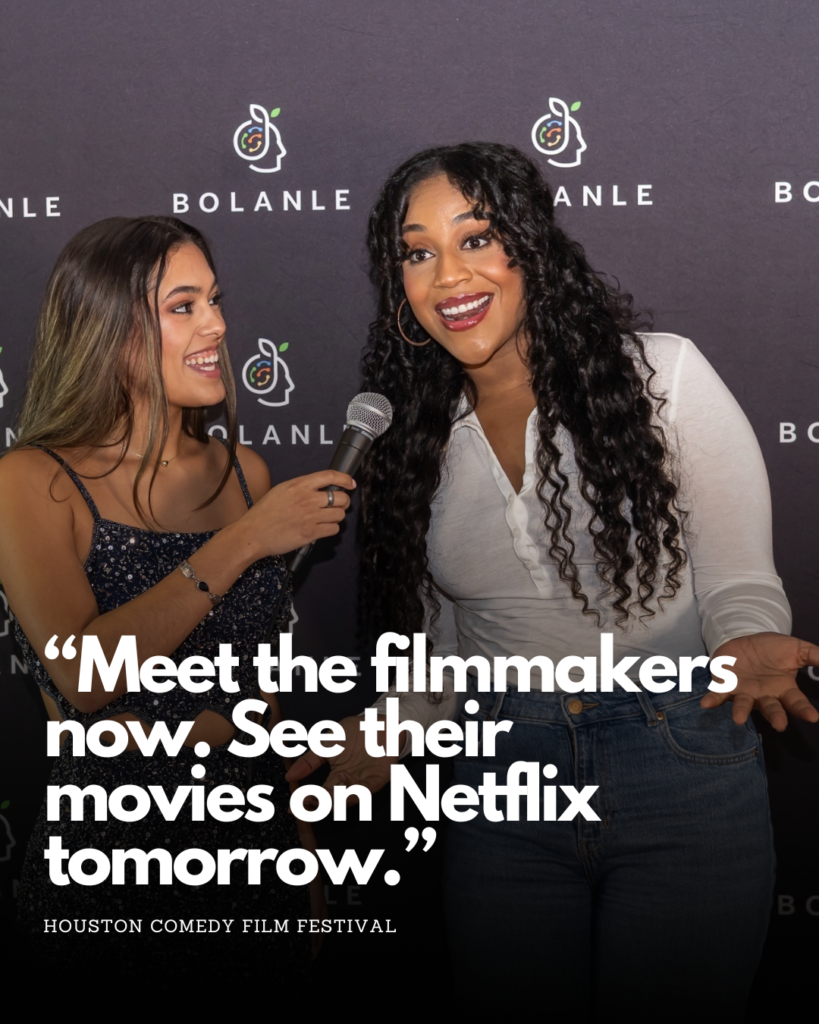
The attention is real. The opportunity is bigger.
We’re in a rare moment where a micro-drama shot on your phone can sit in the same feed as a studio campaign and still win. A fearless 45-second monologue in a bathroom. A quiet scene of someone deleting a text. A single, wordless push-in on a face that tells the whole story.
Vertical films give you:
- Low cost, high experimentation.
- Immediate feedback from real viewers.
- Proof that your story, your voice, your world can hold attention.
You don’t have to wait for permission, a greenlight, or a perfect budget. You can start where you are, with what you have, and let the audience tell you what’s working.
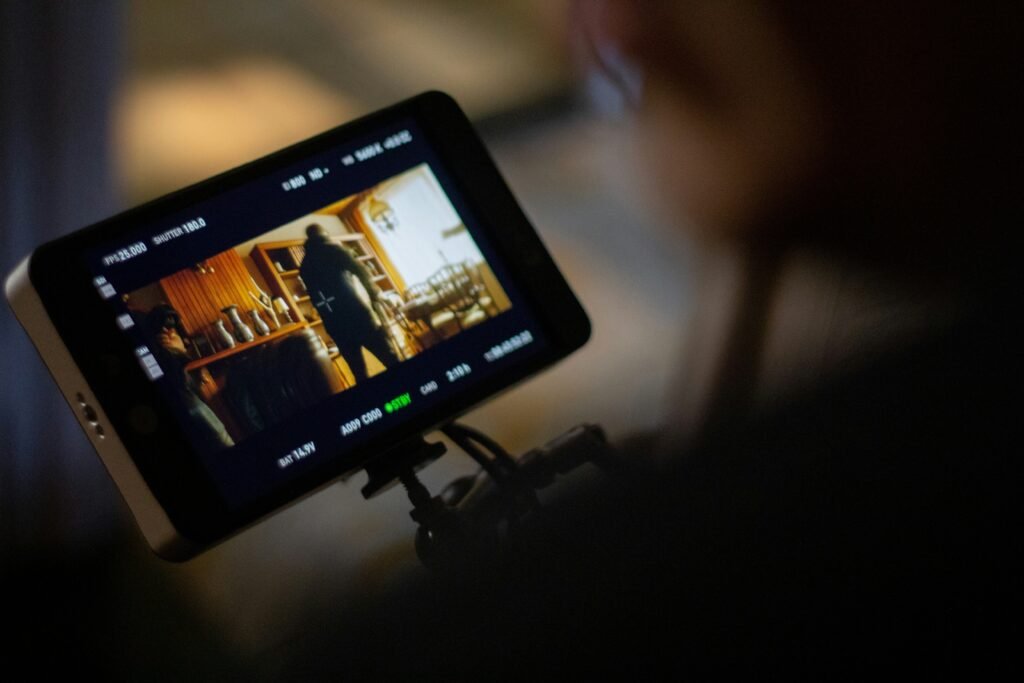
So, are you ready?
Some filmmakers will roll their eyes and call vertical a phase. They’ll keep making beautiful work that no one sees until a festival says it exists. Others will treat every swipe, every scroll, and every tiny screen as a chance to connect, teach, provoke, and move people.
Those are the filmmakers whose names we’ll be hearing in five years.
The question isn’t whether vertical films are “real cinema.” The question is: when the next person scrolls past your work, do they feel nothing—or do they stop, stare, and think, “I need more of this”?
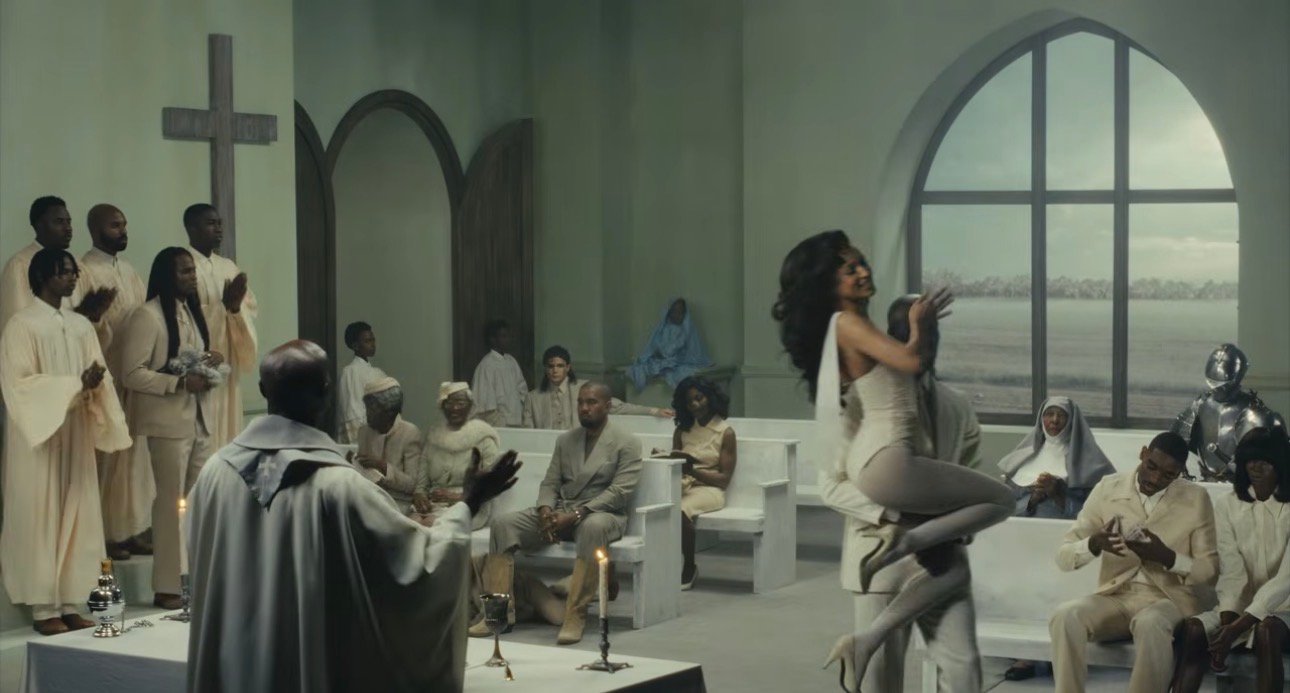
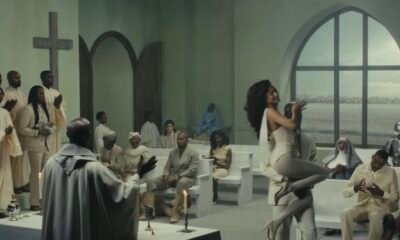
Kanye West’s “Father” video looks like a fever dream in a church, but underneath the spectacle it’s a quiet argument about who really runs the world. The altar isn’t just about God; it’s about every “father” structure that decides what’s true, who belongs, and who gets cast out.
The church as power, not comfort
The church in “Father” doesn’t behave like a safe, sacred space. It feels like a headquarters. The aisle becomes a catwalk for power: brides, a knight, a nun, a Michael Jackson double, astronauts, Travis Scott, all moving through the frame while Kanye mostly sits and watches. The room doesn’t change for them—they’re the ones being processed.
That’s the first big tell: this isn’t just about religion. It’s about systems. The church stands in for any institution that claims moral authority—governments, platforms, labels, churches, media—places where identity, status, and “truth” are negotiated behind the scenes. Faith is the language; control is the product.
Kanye as the unmanageable outsider
In this universe, Kanye isn’t the leader of the service. He’s a problem in the pews. The wildest scene makes that explicit: astronauts move in, pull off his mask, expose him as an “alien,” and carry him out. It’s funny, surreal—and brutal.
That moment plays like a metaphor for what happens when someone stops being useful to the system. If you’re too unpredictable, too loud, too off‑script, the institution finds a way to unmask you, label you, and remove you. But here’s the twist: once he’s gone, the spectacle continues. Travis still shines, the ceremony rolls on, the church keeps doing what the church does. The message is cold: no one is bigger than the machine.
Faith vs obedience
The title “Father” is doing triple duty: God, parent, and patriarchal authority. The video leans into a hard question—are we following something we believe in, or something we’re afraid to disappoint?
Inside this church, people don’t react when things get strange. A nun is handled like a criminal, cards burn, an alien is dragged away, and the room barely flinches. That’s not devotion, that’s conditioning. The deeper critique is that many of our modern “faiths”—political, religious, even fandom—have slid from relationship into obedience. You’re not invited to wrestle with meaning; you’re expected to sit down, sing along, and accept the script.
Who gets meaning, who gets sacrificed
The casting in “Father” feels like a visual ranking chart. The knight represents sanctioned force: power that’s old, armored, and legitimated by history. The cross and church setting evoke sacrifice: whose pain gets honored, whose story gets canonized, whose doesn’t. The Michael Jackson lookalike signals how even fallen icons remain useful as symbols long after their humanity is gone.
In that context, Kanye’s removal reads as a sacrifice that keeps the system intact. Take the problematic prophet out of the frame, keep the music, keep the ritual, keep the brand. The father‑system doesn’t collapse; it adjusts. Control isn’t loud in this world—it’s quiet, procedural, dressed like order.
A mirror held up to us
The most uncomfortable part of “Father” is that the congregation keeps sitting there. No one storms out. No one screams. The church absorbs aliens, icons, arrests, and weddings like it’s a normal Sunday. That’s where the video stops being about Kanye and starts being about us.
We’ve learned to scroll past absurdity and injustice with the same blank face as those extras in the pews. Faith becomes content. Outrage becomes engagement. Power becomes invisible. “Father” takes all of that and crushes it into one continuous shot, asking a bigger question than “Is Kanye back?”
It’s asking: in a world where power wears holy clothes, faith is filmed, and control looks like normal life, who is your father really—and are you sure you chose him?
The machine isn’t coming. It’s already in the room.
Picture this: you spend two years writing a script. You hustle funding, build a team, reach out to casting. Then somewhere inside a studio, a software platform analyzes your concept against fifteen years of box office data and decides—before a single human executive reads page one—that your film is too risky to greenlight.
This isn’t a Black Mirror episode. This is Hollywood in 2026.
The Numbers Don’t Lie
The generative AI market inside media and entertainment just crossed $2.24 billion and is projected to hit $21.2 billion by 2035—a 25% annual growth rate. Studios like Warner Bros. are running platforms like Cinelytic, a decision-intelligence tool that predicts box office performance with 94–96% accuracy before a single dollar of production money moves.
Netflix estimates its AI recommendation engine saves the company $1 billion per year just in subscriber retention. Meanwhile, over the past three years, more than 41,000 film and TV jobs have disappeared in Los Angeles County alone.
That’s not a trend. That’s a restructuring.

The Moment That Changed Everything
In February 2026, ByteDance’s AI generator Seedance 2.0 produced a hyper-realistic deepfake video featuring the likenesses of Tom Cruise, Brad Pitt, and Leonardo DiCaprio. It went viral instantly. SAG-AFTRA called it “blatant infringement.” The Human Artistry Campaign called it “an attack on every creator in the world.”
Then came Tilly Norwood—a fully AI-generated actress created by production company Particle 6—who was seriously considered for agency representation in Hollywood. The first synthetic human to knock on that door.
Matthew McConaughey didn’t mince words at a recent industry town hall. He looked at Timothée Chalamet and said:
“It’s already here. Own yourself. Voice, likeness, et cetera. Trademark it. Whatever you gotta do, so when it comes, no one can steal you.”
James Cameron told CBS the idea of generating actors with prompts is “horrifying.” Werner Herzog called AI films “fabrications with no soul.” Guillermo del Toro said he would “rather die” than use generative AI to make a film.
But here’s the thing—not everyone agrees.
The Indie Filmmaker’s Double-Edged Sword
At SXSW 2026, indie filmmakers made something clear in a packed panel: they don’t want AI to make their movies. They want AI to “do their dishes.”
That’s the real conversation happening at the ground level.
Independent filmmaker Brad Tangonan used Google’s AI suite to create Murmuray—a deeply personal short film he says he never could have made without the tools. Not because he lacked talent, but because he lacked budget. He wrote it. He directed it. The AI executed parts of his vision he couldn’t afford to shoot.
In Austin, an independent filmmaker built a 7-minute short in three weeks using AI-generated video—a project that would have taken 3–4 months and cost ten times more the traditional way. That’s the version of this story studios don’t want you focused on.
At CES 2026, Arcana Labs announced the first fully AI-generated short film to receive a SAG-approved contract—a milestone that proves AI-assisted production can operate inside union protections when done right.
The Fight Coming This Summer
The WGA contract expires May 1, 2026. SAG-AFTRA’s expires June 30. AI is the headline issue at the bargaining table—and the last time these two unions went to war with studios over it, Hollywood shut down for 118 days.
SAG is expected to push the “Tilly Tax”—a fee studios pay every time they use a synthetic actor—directly inspired by Tilly Norwood’s emergence. The WGA already prohibits studios from handing writers AI-generated scripts for a rewrite fee. Now they want bigger walls.
Meanwhile, the Television Academy’s 2026 Emmy rules now include explicit AI language: human creative contribution must remain the “core” of any submission. AI assistance is allowed—but the Academy reserves the right to investigate how it was used.
The Oscars and Emmys are essentially saying: the robot didn’t get nominated. The human did.
What This Means for You
If you’re an indie filmmaker between 25 and 45, you’re operating in the most disruptive creative environment since the camera went digital. AI can cut your post-production time by up to 40%. It can help you pre-visualize shots, generate temp scores, clean up audio, and pitch your project with a sizzle reel you couldn’t afford six months ago.
But the machine that helps you make your film is the same machine that could make studios decide they don’t need you to make theirs.
Producer and director Taylor Nixon-Smith said it best: “Entertainment, once a sacred space, now feels like it’s in a state of purgatory.”
The question isn’t whether AI belongs in your workflow. It’s whether you’re the one holding the wheel—or whether the wheel is slowly being handed to an algorithm that has never once felt what it means to have a story only you can tell.

Entertainment15 hours ago
Vertical Films Changed Everything. Are You Ready?

Advice2 days ago
What Actors Can Learn From Zendaya

News3 days ago
Why Your Indie Film Disappears Online


 Advice4 weeks ago
How to Find Your Voice as a Filmmaker
- News4 weeks ago
How Misinformation Overload Breaks Creative Focus
- News2 weeks ago
The Timothée Chalamet Guide to Ruining Your Image
- Entertainment4 weeks ago
This scene almost broke him. And changed his career.
- Entertainment4 weeks ago
7 Filmmaking Lessons From Michael B. Jordan’s Oscar Moment
- Entertainment2 weeks ago
The machine isn’t coming. It’s aleady the room.
- Advice3 weeks ago
Stop Waiting for Permission — The Film Industry Just Rewrote the Rules
- Entertainment1 week ago
What Kanye’s ‘Father’ Says About Power, Faith, and Control