News
Forget the Box Office: The New Blockbuster Lives in the “Swipe Up”
The silver screen is no longer the gold standard. For decades, the industry defined a “blockbuster” by the number of people sitting in a dark room for two hours. But in 2026, the real action has moved to the device in your palm. The “swipe up” has replaced the ticket stub as the ultimate indicator of success, turning vertical filmmaking from a social media niche into a multi-billion-dollar economic engine.


The Mobile Hostage: Why Vertical Wins
Traditional cinema asks for your time; vertical cinema demands your focus. Because vertical video fills 100% of a mobile screen—eliminating the “dead space” of black bars—it creates an immersive environment that is hard to escape.

- Completion Rates: Vertical videos see a 90% higher completion rate compared to horizontal formats on mobile.
- Viewer Preference: 71% of users now prefer vertical video for general consumption, and 90% of smartphone users report a better experience with 9:16 content.
- The Gen Z Shift: Approximately 78% of Gen Z’s video consumption is now in vertical orientation, with 43% of this demographic preferring TikTok and YouTube over traditional TV or paid streaming services.
The Investor’s Dream: Retention and Revenue
Investors are pivoting to vertical not just because of the “cool factor,” but because the math is undeniable. Vertical dramas achieve 40% higher completion rates than traditional formats, and the industry is finding ways to monetize every second of that attention.

The Vertical vs. Horizontal Economy (2025-2026)
| Metric | Vertical (Mobile-First) | Horizontal (Legacy) |
|---|---|---|
| Completion Rate | 90% | ~24% (avg) |
| Market Valuation | $4.16B (Micro-dramas) | Maturing/Slowing |
| Purchase Intent | 2x Higher | Baseline |
| Content Strategy | 1-3 min high-hook | 90+ min slow-burn |
The “Micro-Drama” Explosion
The rise of apps like ReelShort and DramaBox has proven that audiences are willing to pay for premium vertical stories. In 2025 alone, global video streaming app downloads increased by nearly 39%, fueled largely by the boom in micro-dramas. These platforms leverage viral hooks and in-app purchases, with some generating over $700 million in annual revenue by focusing on “snackable” vertical episodes.

A New Visual Language
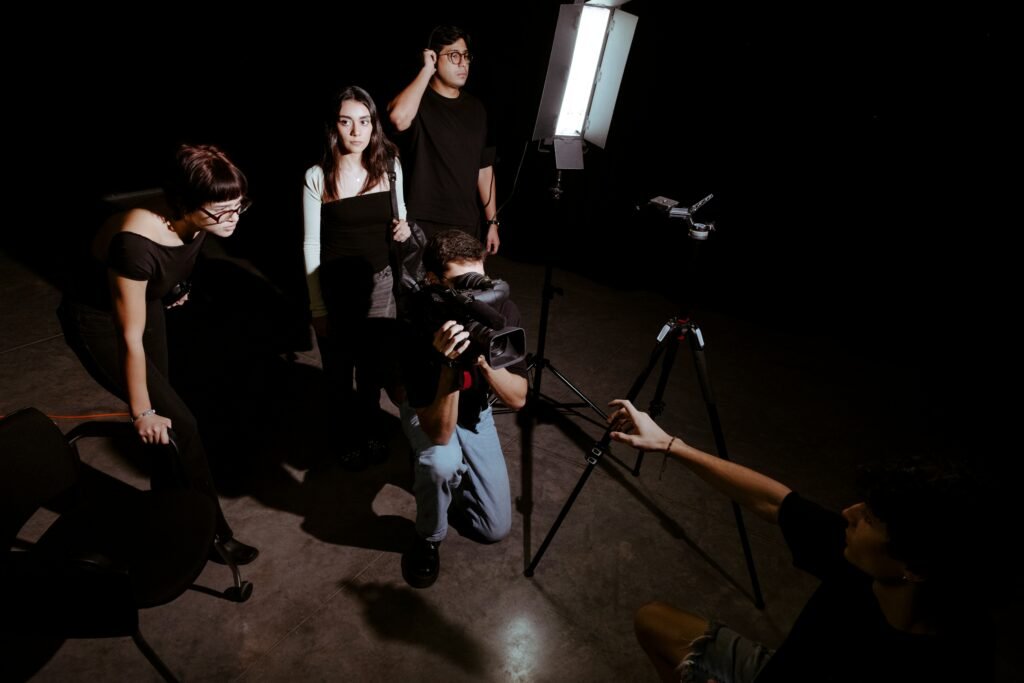
Filmmaking in 9:16 is not just “cropping the sides.” It is a new art form that prioritizes the close-up and the vertical stack. For creators, this means lower production overhead—AI tools can now reduce adaptation costs by 60%—and the ability to test concepts with a global audience instantly. In 2026, the smartest filmmakers aren’t waiting for a distribution deal; they are building their own box office, one swipe at a time.