News
Catherine O’Hara: The Comedy Genius Who Taught Us That Character Is Everything
When Catherine O’Hara died on Friday, January 30, after a brief illness at age 71, the tributes flooded social media with a single recurring theme: she made it look effortless. Whether playing a pretentious Manhattan artist in Beetlejuice, a frantic mother in Home Alone, or the gloriously unhinged Moira Rose in Schitt’s Creek, O’Hara possessed that rare ability to make absurdity feel grounded, eccentricity feel human, and comedy feel like truth.

But those who worked with her knew the secret. It wasn’t effortless at all. It was the result of five decades spent honing a singular craft: building characters so truthful from the inside out that audiences believed in them completely, no matter how ridiculous they became.
“Catherine’s so good, maybe too good,” Tim Burton once said. “She works on levels that people don’t even know. I think she scares people because she operates at such high levels.”
For filmmakers, O’Hara’s career offers a masterclass in what acting can be when intelligence, empathy, and fearlessness converge.
The Philosophy: Comedy Born from Truth
O’Hara’s approach to comedy was deceptively simple: find the emotional truth of a character, then let humor emerge organically from that foundation.
“I don’t think you can help but draw from yourself, especially if you’re doing improv,” she explained. “It’s all you have, that hard drive that’s in there that you can pull from. At the same time you can also play with, ‘Would I look like this? Would I say that?’”
This wasn’t comedy as joke-telling. It was comedy as character study, requiring the same rigor dramatic actors bring to their roles. She researched accents, studied physical mannerisms, and built entire backstories for characters who might only appear on screen for minutes. “Comedy emerges from truthful reaction rather than forced humor,” O’Hara explained throughout her career. This principle guided her from SCTV in the 1970s through her Emmy-winning performance as Moira Rose nearly 50 years later.


Moira Rose: The Role That Changed Everything
When Schitt’s Creek premiered in 2015, Catherine O’Hara was 61—an age when Hollywood typically writes women off as irrelevant. Instead, she created Moira Rose, a character so wildly original that she spawned thousands of memes and a devoted global following.
Central to Moira’s appeal was her “unrecognizable accent”—a bizarre amalgamation of Audrey Hepburn’s diction, Marilyn Monroe’s breathiness, Canadian upper-class dialect, and random British affectations. “It’s how people speak when they want to reinvent themselves over and over again!” O’Hara explained.
But the accent wasn’t just a quirk—it was characterization. Moira uses language as armor, maintaining superiority while hiding insecurity. O’Hara based her on women who “out of insecurity and pride, create new personas whole cloth.“
Dan Levy, who co-created Schitt’s Creek, understood what he’d captured:
“She has singlehandedly upholded the idea of what an older female character can be. So to be able to be a part of this with Catherine O’Hara at this point in her life, and show the world that there is nothing, nothing funnier than a woman over 50—that is the joy.”
O’Hara won the Emmy for Outstanding Lead Actress in a Comedy Series in 2020—her first acting Emmy after decades of nominations. She also won a Golden Globe and SAG Award, cementing Moira Rose as her defining role for a new generation.
The Christopher Guest Legacy
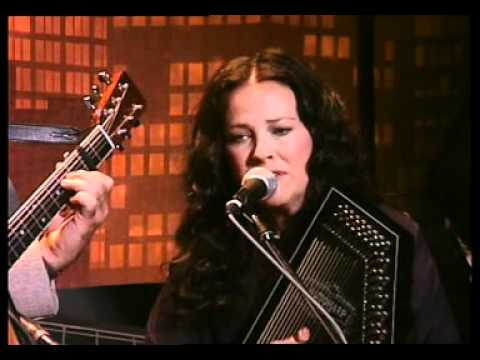
If you want to understand O’Hara’s genius, watch A Mighty Wind (2003), Christopher Guest’s mockumentary where O’Hara delivered her most emotionally complex film performance. As folk singer Mickey Crabbe reuniting with her former romantic partner, she balances dry humor with genuine pathos. The climactic performance of “A Kiss at the End of the Rainbow” is simultaneously ridiculous and deeply moving.
“It is ridiculous. It is funny. And it might just make you cry a little too,” the New York Times observed.
After her death, Guest issued a simple statement: “I am devastated. We have lost one of the comic giants of our age.”
Home Alone and the Emotional Anchor
While Home Alone (1990) is remembered for Macaulay Culkin’s physical comedy, O’Hara provided the film’s emotional spine. As Kate McCallister, the mother who accidentally leaves her son behind, she gave audiences permission to care about what could have been purely comedic.

Her performance operates on two levels: the frantic comedy of a mother realizing mid-flight that she’s forgotten her child, and the genuine desperation of a woman willing to hitchhike across the country to get home. She made the film believable and, at its heart, about maternal love.
Macaulay Culkin’s tribute after her death was brief but devastating: “Mama. I thought we had time.”
The Woman Behind the Characters
O’Hara met production designer Bo Welch on Beetlejuice in 1987. Tim Burton played matchmaker, telling Welch to ask her out. They married in 1992 and remained together for 33 years, welcoming two sons. “We’ve been through some dangerous times in our marriage, and thank God we both just really wanted to work on it and stay married,” she told People in 2024.
This February, they walked the red carpet together at the Beetlejuice Beetlejuice premiere—a full-circle moment for a relationship born on the original film’s set.
What She Leaves Behind
Catherine O’Hara’s career spanned five decades, from SCTV sketches quoted by comedy nerds to Tim Burton films defining a generation’s aesthetic, to mockumentaries studied by film students, to a Canadian sitcom that became a global phenomenon.
But more than any specific role, she leaves behind a philosophy: great comedy requires the same depth as great drama. Characters must be built from emotional logic. You can be absurd and truthful simultaneously.


Journey Gunderson, executive director of the National Comedy Center, captured it perfectly: “Catherine O’Hara was a unique talent who could fully inhabit a character, making them unforgettable. She redefined the possibilities of comedy acting, merging precision, humanity, and creativity in a way that seemed effortless, yet was anything but.”
For filmmakers who believed in character work, Catherine O’Hara was a north star. She made it look easy. It never was. And now that she’s gone, we understand more clearly than ever what we had: a once-in-a-generation artist who taught us that comedy, at its highest level, is simply truth performed with perfect timing and fearless commitment.