
Entertainment
Diddy Sued by Cassie Ventura for Rape and Sex Trafficking in Bombshell Lawsuit on November 16, 2023 at 11:44 pm The Hollywood Gossip


Sean “Diddy” Combs was accused in a lawsuit Thursday of subjecting ex-girlfriend Cassie Ventura to a years-long abusive relationship that included numerous beatings and sexual assault.
The singer filed this legal complaint in New York, alleging in the document that she was stuck in “cycle of abuse, violence and sex trafficking” that included a 2018 rape after she tried to leave the mogul.
She also claims Diddy committed acts of domestic violence against her.
Diddy and Cassie attend the Heavenly Bodies: Fashion The Catholic Imagination Costume Institute Gala at The Metropolitan Museum of Art on May 7, 2018 in New York City. (Getty)
“After years in silence and darkness, I am finally ready to tell my story, and to speak up on behalf of myself and for the benefit of other women who face violence and abuse in their relationships,” Cassie said in a statement.
“With the expiration of New York’s Adult Survivors Act fast approaching, it became clear that this was an opportunity to speak up about the trauma I have experienced and that I will be recovering from for the rest of my life.”
In the lawsuit, Cassie says Diddy brought her into his “ostentatious, fast-paced, and drug-fueled lifestyle” not long after she met him and was signed to his label when she was 19 years (and he was 37 years old) in 2005.
In 2007, Cassie explains in the complaint that she agreed to date Diddy out of fear of retaliation if she said otherwise.
Cassie Sean “Diddy” Combs attend the “Rei Kawakubo/Comme des Garcons: Art Of The In-Between” Costume Institute Gala at Metropolitan Museum of Art on May 1, 2017 in New York City. (Neilson Barnard/Getty Images)
“All aspects of Ms. Ventura’s life were controlled by either Mr. Combs or his management companies,” the lawsuit reads.
Combs reportedly exhibited “uncontrollable rage” often and “frequently beat Ms. Ventura savagely,” violence she claims was witnessed by many of the people he employed.
She says he would then hide her in a hotel until the bruises healed.
Ventura also claims that Diddy frequently forced her to take part in encounters with sex workers that he called “freak offs,” or “FOs,” and that the encounters “always” included ecstasy, cocaine, GHB, ketamine, marijuana and alcohol.
The artist alleges that she would sometimes vomit before the encounters due to anxiety.
Cassie Ventura and Sean Combs attend the “Can’t Stop, Won’t Stop: The Bad Boy Story” Premiere on April 27, 2017 in New York City. (Theo Wargo/Getty Images for Tribeca Film Festival)
Diddy and Cassie publicly split in 2018.
The year before, however, Ventura claims she tried to end the relationship — and this is when he raped her.
“Ms. Ventura has now fully escaped Mr. Combs, but the harm that the assaults and sexual abuse he caused her to experience for nearly a decade will forever haunt her,” the complaint says.
“She has required intensive medical and psychological care to recover from the trauma she lived through.”
Cassie and Sean Combs arrives at the 2015 Metropolitan Museum of Art’s Costume Institute Gala benefit in honor of the museums latest exhibit China: Through the Looking Glass May 4, 2015 in New York. (TIMOTHY A. CLARY/AFP via Getty Images)
In a statement, Diddy’s attorney Ben Brafman denied the allegations, which he called “offensive and outrageous,” adding:
“Mr. Combs vehemently denies these offensive and outrageous allegations. Ms. Ventura’s demand of $30 million, under the threat of writing a damaging book about their relationship, was unequivocally rejected as blatant blackmail.
“Despite withdrawing her initial threat, Ms. Ventura has now resorted to filing a lawsuit riddled with baseless and outrageous lies, aiming to tarnish Mr. Combs’ reputation, and seeking a pay day.”
Cassie and Sean Combs pose ringside at “Mayweather VS Pacquiao” presented by SHOWTIME PPV And HBO PPV at MGM Grand Garden Arena on May 2, 2015 in Las Vegas, Nevada. (Photo by Ethan Miller/Getty Images for SHOWTIME)
Diddy is known for his accomplished rap career, along with his music producing and clothing line, Sean John.
This year, he released his fifth studio album “The Love Album: Off the Grid,” which earned two Grammy nominations this month.
In response to Diddy’s statement, Ventura’s lawyer Douglas Wigdor said late Thursday:
“Mr. Comb’s offered Ms. Ventura eight figures to silence her and prevent the filing of this lawsuit.
“She rejected his efforts and decided to give a voice to all woman who suffer in silence. Ms. Ventura should be applauded for her bravery.”
Diddy Sued by Cassie Ventura for Rape and Sex Trafficking in Bombshell Lawsuit was originally published on The Hollywood Gossip.
Cassie Ventura has filed a horrific lawsuit against Diddy. She says her ex-boyfriend is guilty of sexual assault and violence.
Diddy Sued by Cassie Ventura for Rape and Sex Trafficking in Bombshell Lawsuit was originally published on The Hollywood Gossip.
The Hollywood Gossip Read More



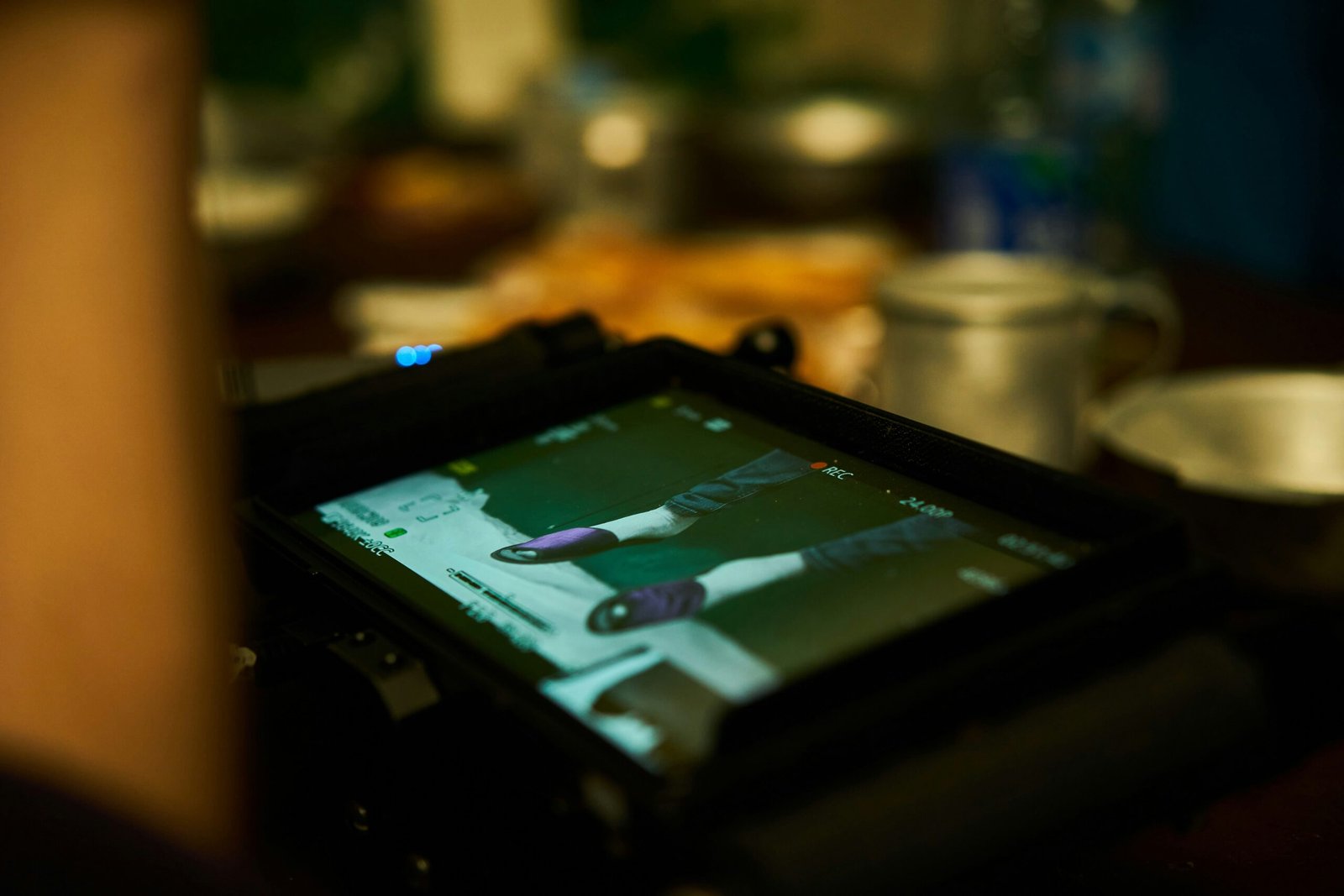
People don’t watch films the way they used to—and if you’re still cutting everything for the big screen first, you’re losing the audience that lives in your pocket.
Every swipe on TikTok is a tiny festival: new voices, wild visuals, heartbreak, comedy, and chaos, all judged in under three seconds. In that world, vertical films aren’t a gimmick. They’re the new front door to your work, your brand, and your career.
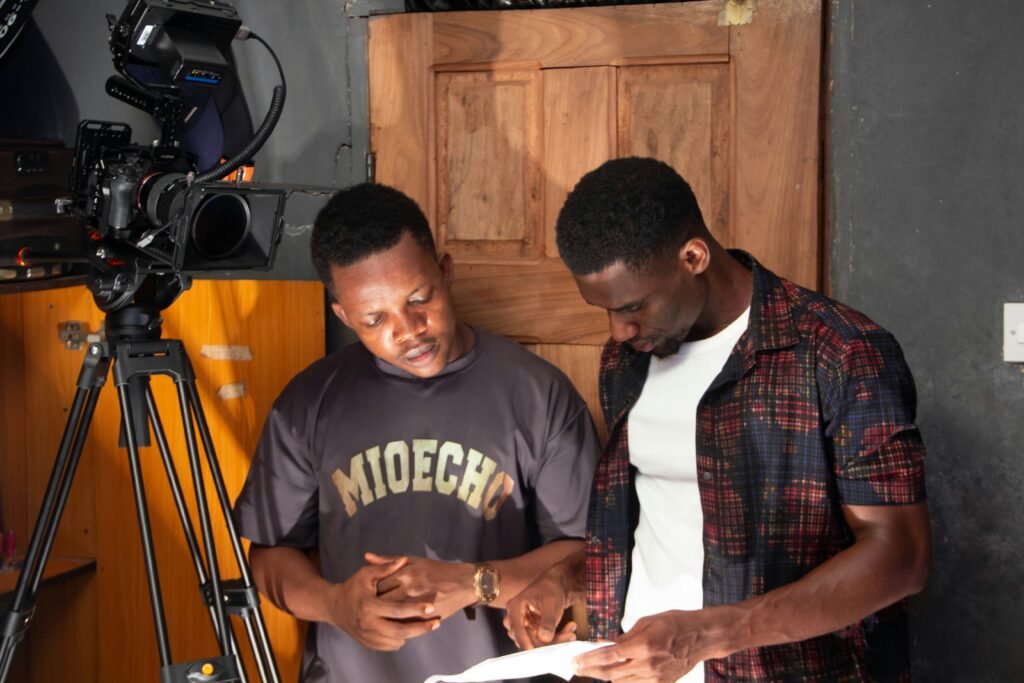
The movie theater is now in your hand
Think about where you’ve discovered your favorite clips lately: your phone, in bed, in an Uber, between texts. The “cinema” experience has shrunk into a glowing rectangle we hold inches from our face. That’s intimate. That’s personal. That’s power.
Vertical video fills that space completely. No black bars. No distractions. Just one story, one face, one moment staring back at you. It feels less like “I’m watching a movie” and more like “this is happening to me.” For storytellers, that’s gold.
The old rules still matter—but they bend
Film school taught you:
- Compose for the wide frame.
- Let the world breathe at the edges.
- Save the close-up for maximum impact.
Vertical filmmaking says: bring all of that craft… and then flip it. You still need composition, rhythm, framing, and sound. But now:
- The close-up is the default, not the climax.
- Depth replaces width—what’s in front and behind matters more than left and right.
- Micro-scenes—60 seconds or less—must feel like complete emotional beats.
It’s not “less cinematic.” It’s a different kind of cinematic—one that lives where people already are instead of asking them to come to you.
Your characters can live beyond the film
Here’s the secret no one tells you: audiences don’t just fall in love with stories; they fall in love with people. Vertical video lets your characters exist outside the runtime.
Imagine this:
- The day your trailer drops, your lead character is already a recurring presence on people’s For You Pages.
- There are 10 short vertical scenes—arguments, confessions, jokes—that never made the final cut but live as their own mini-episodes.
- Fans aren’t asking “What is this movie?” They’re asking, “When do I get more of her?”
When someone feels like they “know” a character from their feed, buying a ticket or renting your film stops feeling like a risk. It feels like catching up with a friend.

Behind the scenes is no longer optional
Vertical films thrive on honesty. Shaky behind-the-scenes clips. Laughing fits between takes. The director’s 2 a.m. rant about a shot that won’t work. The makeup artist fixing tears after a heavy scene. That’s the texture that makes people care about the final product.
You don’t have to be perfect. You have to be present.
Ideas you can start capturing tomorrow:
- “What we can’t afford, so we’re faking it.”
- “The shot we were scared to try.”
- “One thing we argued about for three days.”
When you show the process, you’re not just selling a film—you’re inviting people into a journey.
Think in episodes, not posts
Most people treat vertical video like a one-off blast: post, pray, forget. Instead, think like a showrunner.
Ask yourself:
- If my project were a vertical series, what’s Episode 1? What’s the hook?
- How can I end each clip with a question, a twist, or a feeling that makes people need the next part?
- Can I tell one complete emotional story across 10 vertical videos?
Suddenly, your feed isn’t random. It’s a season. People don’t just “like” a video—they “follow” to see what happens next.
The attention is real. The opportunity is bigger.
We’re in a rare moment where a micro-drama shot on your phone can sit in the same feed as a studio campaign and still win. A fearless 45-second monologue in a bathroom. A quiet scene of someone deleting a text. A single, wordless push-in on a face that tells the whole story.
Vertical films give you:
- Low cost, high experimentation.
- Immediate feedback from real viewers.
- Proof that your story, your voice, your world can hold attention.
You don’t have to wait for permission, a greenlight, or a perfect budget. You can start where you are, with what you have, and let the audience tell you what’s working.
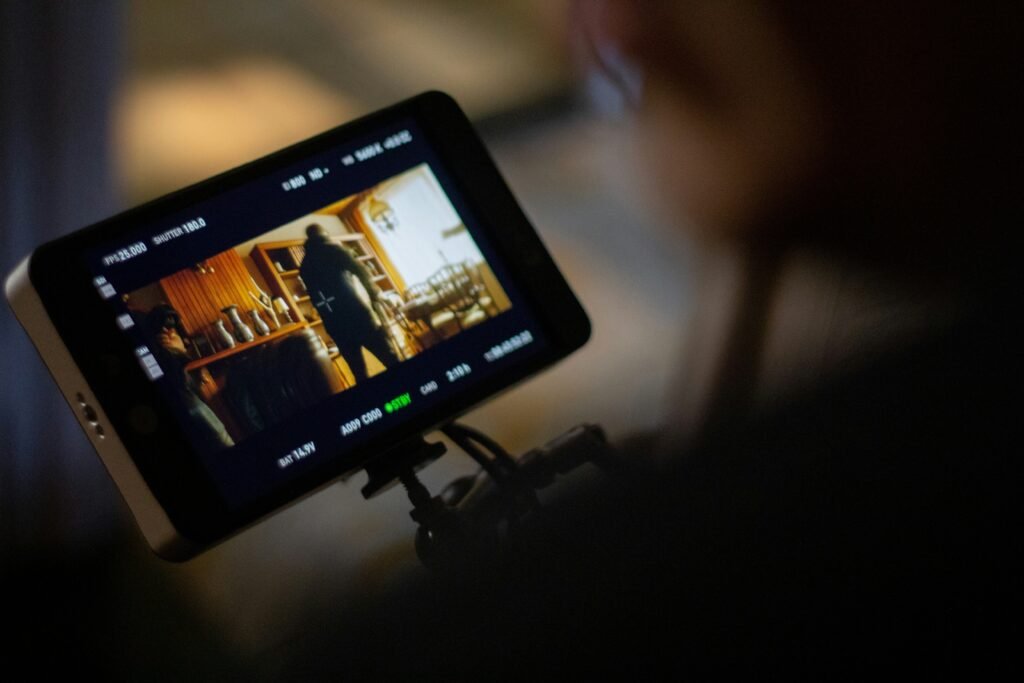
So, are you ready?
Some filmmakers will roll their eyes and call vertical a phase. They’ll keep making beautiful work that no one sees until a festival says it exists. Others will treat every swipe, every scroll, and every tiny screen as a chance to connect, teach, provoke, and move people.
Those are the filmmakers whose names we’ll be hearing in five years.
The question isn’t whether vertical films are “real cinema.” The question is: when the next person scrolls past your work, do they feel nothing—or do they stop, stare, and think, “I need more of this”?
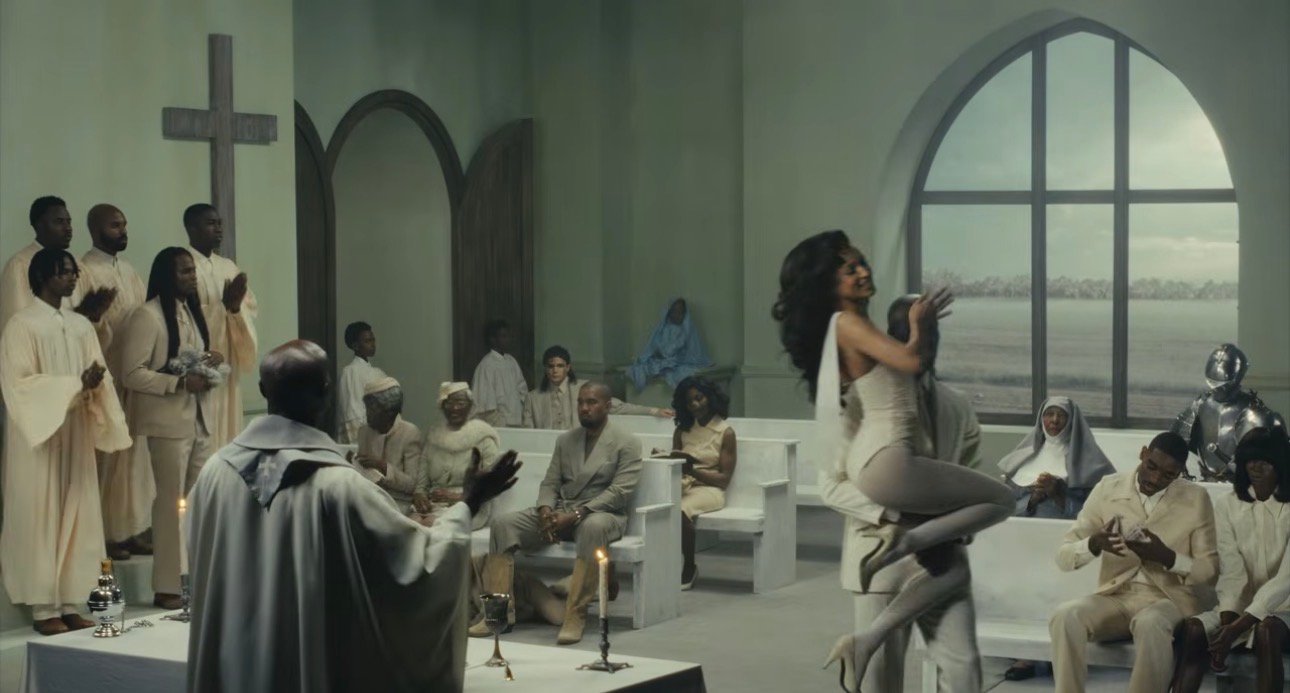
Kanye West’s “Father” video looks like a fever dream in a church, but underneath the spectacle it’s a quiet argument about who really runs the world. The altar isn’t just about God; it’s about every “father” structure that decides what’s true, who belongs, and who gets cast out.
The church as power, not comfort
The church in “Father” doesn’t behave like a safe, sacred space. It feels like a headquarters. The aisle becomes a catwalk for power: brides, a knight, a nun, a Michael Jackson double, astronauts, Travis Scott, all moving through the frame while Kanye mostly sits and watches. The room doesn’t change for them—they’re the ones being processed.
That’s the first big tell: this isn’t just about religion. It’s about systems. The church stands in for any institution that claims moral authority—governments, platforms, labels, churches, media—places where identity, status, and “truth” are negotiated behind the scenes. Faith is the language; control is the product.
Kanye as the unmanageable outsider
In this universe, Kanye isn’t the leader of the service. He’s a problem in the pews. The wildest scene makes that explicit: astronauts move in, pull off his mask, expose him as an “alien,” and carry him out. It’s funny, surreal—and brutal.
That moment plays like a metaphor for what happens when someone stops being useful to the system. If you’re too unpredictable, too loud, too off‑script, the institution finds a way to unmask you, label you, and remove you. But here’s the twist: once he’s gone, the spectacle continues. Travis still shines, the ceremony rolls on, the church keeps doing what the church does. The message is cold: no one is bigger than the machine.
Faith vs obedience
The title “Father” is doing triple duty: God, parent, and patriarchal authority. The video leans into a hard question—are we following something we believe in, or something we’re afraid to disappoint?
Inside this church, people don’t react when things get strange. A nun is handled like a criminal, cards burn, an alien is dragged away, and the room barely flinches. That’s not devotion, that’s conditioning. The deeper critique is that many of our modern “faiths”—political, religious, even fandom—have slid from relationship into obedience. You’re not invited to wrestle with meaning; you’re expected to sit down, sing along, and accept the script.
Who gets meaning, who gets sacrificed
The casting in “Father” feels like a visual ranking chart. The knight represents sanctioned force: power that’s old, armored, and legitimated by history. The cross and church setting evoke sacrifice: whose pain gets honored, whose story gets canonized, whose doesn’t. The Michael Jackson lookalike signals how even fallen icons remain useful as symbols long after their humanity is gone.
In that context, Kanye’s removal reads as a sacrifice that keeps the system intact. Take the problematic prophet out of the frame, keep the music, keep the ritual, keep the brand. The father‑system doesn’t collapse; it adjusts. Control isn’t loud in this world—it’s quiet, procedural, dressed like order.
A mirror held up to us
The most uncomfortable part of “Father” is that the congregation keeps sitting there. No one storms out. No one screams. The church absorbs aliens, icons, arrests, and weddings like it’s a normal Sunday. That’s where the video stops being about Kanye and starts being about us.
We’ve learned to scroll past absurdity and injustice with the same blank face as those extras in the pews. Faith becomes content. Outrage becomes engagement. Power becomes invisible. “Father” takes all of that and crushes it into one continuous shot, asking a bigger question than “Is Kanye back?”
It’s asking: in a world where power wears holy clothes, faith is filmed, and control looks like normal life, who is your father really—and are you sure you chose him?
The machine isn’t coming. It’s already in the room.
Picture this: you spend two years writing a script. You hustle funding, build a team, reach out to casting. Then somewhere inside a studio, a software platform analyzes your concept against fifteen years of box office data and decides—before a single human executive reads page one—that your film is too risky to greenlight.
This isn’t a Black Mirror episode. This is Hollywood in 2026.
The Numbers Don’t Lie
The generative AI market inside media and entertainment just crossed $2.24 billion and is projected to hit $21.2 billion by 2035—a 25% annual growth rate. Studios like Warner Bros. are running platforms like Cinelytic, a decision-intelligence tool that predicts box office performance with 94–96% accuracy before a single dollar of production money moves.
Netflix estimates its AI recommendation engine saves the company $1 billion per year just in subscriber retention. Meanwhile, over the past three years, more than 41,000 film and TV jobs have disappeared in Los Angeles County alone.
That’s not a trend. That’s a restructuring.

The Moment That Changed Everything
In February 2026, ByteDance’s AI generator Seedance 2.0 produced a hyper-realistic deepfake video featuring the likenesses of Tom Cruise, Brad Pitt, and Leonardo DiCaprio. It went viral instantly. SAG-AFTRA called it “blatant infringement.” The Human Artistry Campaign called it “an attack on every creator in the world.”
Then came Tilly Norwood—a fully AI-generated actress created by production company Particle 6—who was seriously considered for agency representation in Hollywood. The first synthetic human to knock on that door.
Matthew McConaughey didn’t mince words at a recent industry town hall. He looked at Timothée Chalamet and said:
“It’s already here. Own yourself. Voice, likeness, et cetera. Trademark it. Whatever you gotta do, so when it comes, no one can steal you.”
James Cameron told CBS the idea of generating actors with prompts is “horrifying.” Werner Herzog called AI films “fabrications with no soul.” Guillermo del Toro said he would “rather die” than use generative AI to make a film.
But here’s the thing—not everyone agrees.
The Indie Filmmaker’s Double-Edged Sword
At SXSW 2026, indie filmmakers made something clear in a packed panel: they don’t want AI to make their movies. They want AI to “do their dishes.”
That’s the real conversation happening at the ground level.
Independent filmmaker Brad Tangonan used Google’s AI suite to create Murmuray—a deeply personal short film he says he never could have made without the tools. Not because he lacked talent, but because he lacked budget. He wrote it. He directed it. The AI executed parts of his vision he couldn’t afford to shoot.
In Austin, an independent filmmaker built a 7-minute short in three weeks using AI-generated video—a project that would have taken 3–4 months and cost ten times more the traditional way. That’s the version of this story studios don’t want you focused on.
At CES 2026, Arcana Labs announced the first fully AI-generated short film to receive a SAG-approved contract—a milestone that proves AI-assisted production can operate inside union protections when done right.
The Fight Coming This Summer
The WGA contract expires May 1, 2026. SAG-AFTRA’s expires June 30. AI is the headline issue at the bargaining table—and the last time these two unions went to war with studios over it, Hollywood shut down for 118 days.
SAG is expected to push the “Tilly Tax”—a fee studios pay every time they use a synthetic actor—directly inspired by Tilly Norwood’s emergence. The WGA already prohibits studios from handing writers AI-generated scripts for a rewrite fee. Now they want bigger walls.
Meanwhile, the Television Academy’s 2026 Emmy rules now include explicit AI language: human creative contribution must remain the “core” of any submission. AI assistance is allowed—but the Academy reserves the right to investigate how it was used.
The Oscars and Emmys are essentially saying: the robot didn’t get nominated. The human did.
What This Means for You
If you’re an indie filmmaker between 25 and 45, you’re operating in the most disruptive creative environment since the camera went digital. AI can cut your post-production time by up to 40%. It can help you pre-visualize shots, generate temp scores, clean up audio, and pitch your project with a sizzle reel you couldn’t afford six months ago.
But the machine that helps you make your film is the same machine that could make studios decide they don’t need you to make theirs.
Producer and director Taylor Nixon-Smith said it best: “Entertainment, once a sacred space, now feels like it’s in a state of purgatory.”
The question isn’t whether AI belongs in your workflow. It’s whether you’re the one holding the wheel—or whether the wheel is slowly being handed to an algorithm that has never once felt what it means to have a story only you can tell.

Vertical Films Changed Everything. Are You Ready?

What Actors Can Learn From Zendaya

Why Your Indie Film Disappears Online


 News3 weeks ago
The Timothée Chalamet Guide to Ruining Your Image
- Entertainment4 weeks ago
This scene almost broke him. And changed his career.
- Entertainment2 weeks ago
The machine isn’t coming. It’s aleady the room.
- Entertainment4 weeks ago
7 Filmmaking Lessons From Michael B. Jordan’s Oscar Moment
- Advice4 weeks ago
Stop Waiting for Permission — The Film Industry Just Rewrote the Rules
- Entertainment2 weeks ago
What Kanye’s ‘Father’ Says About Power, Faith, and Control
- News4 weeks ago
How ‘Sinners’ Won The Oscars: Filmmaker Notes
- News3 weeks ago
How She Earns $40M+ In 2026














dobry sklep
March 11, 2024 at 12:26 am
Wow, awesome blog structure! How lengthy have you ever been running a blog for?
you made running a blog look easy. The full glance of your
website is magnificent, let alone the content material! You can see
similar here dobry sklep
najlepszy sklep
March 12, 2024 at 10:29 pm
Appreciate the recommendation. Will try it out. I saw similar here:
Sklep internetowy
najlepszy sklep
March 14, 2024 at 12:56 pm
Hey I know this is off topic but I was wondering
if you knew of any widgets I could add to my blog that automatically tweet my newest twitter updates.
I’ve been looking for a plug-in like this for quite some time and
was hoping maybe you would have some experience with something like this.
Please let me know if you run into anything. I truly enjoy reading your
blog and I look forward to your new updates.
I saw similar here: Sklep internetowy