Business
Biden’s latest moves on student loan forgiveness leave borrowers unimpressed on October 4, 2023 at 9:00 am Business News | The Hill


President Biden is in murky water with student loan borrowers and advocates after revealing his next avenues for relief may not be available for everyone the way he originally promised.
Just before student loan payments turned back on after a more than three-year pandemic pause, the administration announced its initial policy considerations for its next debt forgiveness plan. The announcement showed the Department of Education is looking to forgive debt for certain groups of borrowers, but for now apparently backing away from universal relief.
While there is time for plans to change — or for additional ones to emerge — the proposal rattled advocates and supporters who now question if Biden will ever be able to help all 45 million borrowers after the Supreme Court struck down his previous proposal.
“This is the way the student loan swamp in Washington, D.C., operates. They want to put forth a face like they’re really wanting to cancel loans, but the fact of the matter is, the Department of Education has no real desire or intentions of actually canceling any loans, if they can possibly get away with not doing that,” said Alan Collinge, founder of Student Loan Justice.
The new proposal by the administration is set to target “student loan borrowers in need,” including those who entered repayment decades ago, borrowers whose balances are greater than what they originally owed, borrowers who are eligible for relief under specific programs but didn’t apply, those under financial hardship and those who went through programs that didn’t give financial value.
Biden is set to give remarks on student debt and his administration’s efforts to tackle it at 1 p.m. on Wednesday, and advocates will be watching closely.
Natalia Abrams, president and founder of the Student Debt Crisis Center, said, “We hope that these questions will not narrow the approach the committee — and ultimately the administration — takes when issuing regulations to provide needed relief to borrowers.
“We must and should cancel student loan debt,” she added.
The administration stresses that it is still very early in the negotiated rulemaking process and it is a long way off from knowing what the final plan will look like.
“We have said we want to reach as many borrowers as possible. The questions outline key concepts we are seeking feedback on. We look forward to the negotiated rulemaking process to help develop a robust final product,” an Education Department spokesperson told The Hill on Monday. “The Administration continues to fight to make the cost of higher education affordable for all, but it is too early to estimate the size of those that will be affected by the negotiated rulemaking — it will depend significantly on the details and that is where we are considering feedback.”
The Biden administration has already forgiven $127 billion in student loans, including a latest announcement on Wednesday morning that gives $9 billion in relief to 125,000 borrowers who have been on an income-driven repayment program (IDR), Public Service Loan Forgiveness program or have been determined total or permanent disabled.
The new efforts, however, fall short of the at least $10,000 in forgiveness the president had pledged on the campaign trail.
“Additionally, we should forgive a minimum of $10,000/person of federal student loans, as proposed by Senator Warren and colleagues. Young people and other student debt holders bore the brunt of the last crisis. It shouldn’t happen again,” Biden had said in 2020.
The policy considerations will be discussed at the first Student Loan Relief Committee meeting on Oct. 10 and Oct. 11.
“Now, we are diligently moving through the regulatory process to advance debt relief for even more borrowers. Today, after considering more than 26,000 public comments on how to tailor this relief, we are releasing this additional information about this effort. We’re committed to standing up for borrowers and making sure that student debt does not stop anyone from climbing the economic ladder and pursuing the American dream,” said Secretary of Education Miguel Cardona.
If there aren’t any changes, the Biden administration could see greater pushback from other Democrats who have called for transformative action on the issue. Leading liberals such as Sen. Elizabeth Warren (D-Mass.) previously called for Biden to use an executive order to give universal student loan relief of up to $50,000.
“It was pretty clear that Biden was never very sincere about wanting to counsel loans administratively by executive order in the first place. And I think that’s true of many establishment Democrats,” said Collinge.
But others are hopeful that student loan advocates will recognize the tight situation the president is in and won’t hold the change in relief plans against him.
“It’s the extreme Republican majority who do not want to lend a hand to help the least of these marginalized communities, working class folks. Those are the people who split power, unfortunately, so [Biden’s] very limited to what you can do as president,” said Antjuan Seawright, a Democratic political strategist and founder and CEO of Blueprint Strategy LLC.
Republicans have been adamant in their opposition to student debt relief, arguing it is unfair to those who either paid off their debts or never went to college.
Biden’s mass debt relief that was struck down by the Supreme Court was challenged by Republican attorneys general who argued the financial repercussions that could exist from student loan forgiveness.
And while some might be upset Biden isn’t fulfilling his whole promise, it is certainly more relief than what would be given by a Republican president, making the moves possibly inconsequential in the next election cycle.
“The Biden administration has to recalibrate and determine what is the best proposal that it can put forward. So, I would say, my hope is that there’s not distrust in the Biden administration or in efforts to provide some level of student debt relief, but a recognition as well […] that there’s an effort to recalibrate and bring something to the table that will help, hopefully, some young people and maybe not as many as initially intended,” said DeNora Getachew, executive director of DoSomething, a youth-centered activism organization.
Education, Business, News, Technology, student debt relief President Biden is in murky water with student loan borrowers and advocates after revealing his next avenues for relief may not be available for everyone the way he originally promised. Just before student loan payments turned back on after a more than three-year pandemic pause, the administration announced its initial policy considerations for its next…


Business
Google Accused Of Favoring White, Asian Staff As It Reaches $28 Million Deal That Excludes Black Workers

Google has tentatively agreed to a $28 million settlement in a California class‑action lawsuit alleging that white and Asian employees were routinely paid more and placed on faster career tracks than colleagues from other racial and ethnic backgrounds.
- A Santa Clara County Superior Court judge has granted preliminary approval, calling the deal “fair” and noting that it could cover more than 6,600 current and former Google workers employed in the state between 2018 and 2024.
How The Discrimination Claims Emerged
The lawsuit was brought by former Google employee Ana Cantu, who identifies as Mexican and racially Indigenous and worked in people operations and cloud departments for about seven years. Cantu alleges that despite strong performance, she remained stuck at the same level while white and Asian colleagues doing similar work received higher pay, higher “levels,” and more frequent promotions.
Cantu’s complaint claims that Latino, Indigenous, Native American, Native Hawaiian, Pacific Islander, and Alaska Native employees were systematically underpaid compared with white and Asian coworkers performing substantially similar roles. The suit also says employees who raised concerns about pay and leveling saw raises and promotions withheld, reinforcing what plaintiffs describe as a two‑tiered system inside the company.
Why Black Employees Were Left Out
Cantu’s legal team ultimately agreed to narrow the class to employees whose race and ethnicity were “most closely aligned” with hers, a condition that cleared the path to the current settlement.
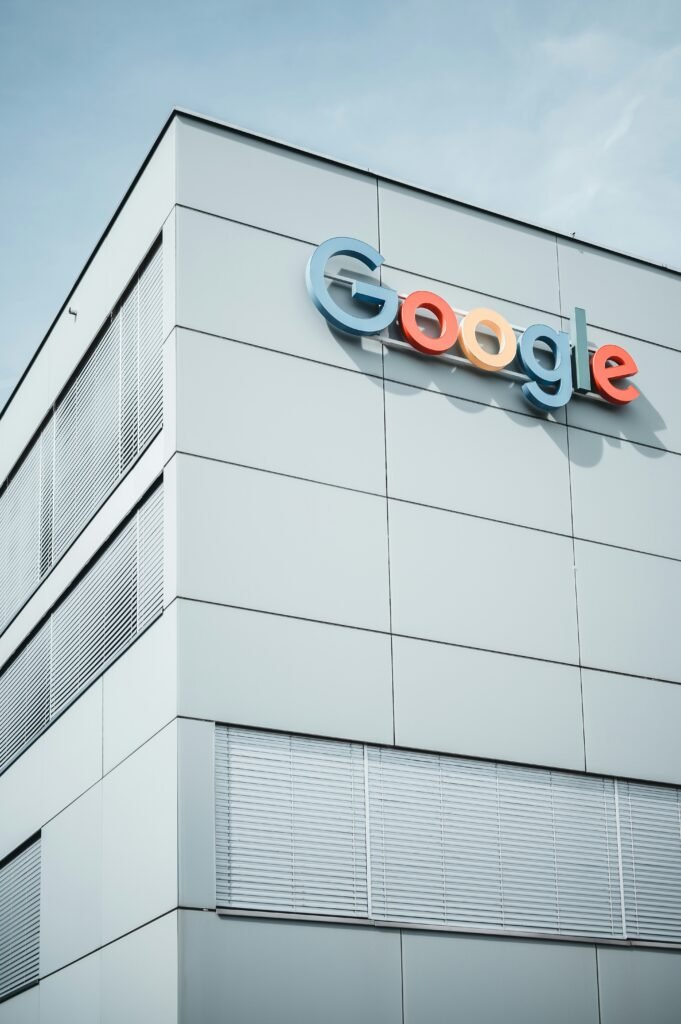
The judge noted that Black employees were explicitly excluded from the settlement class after negotiations, meaning they will not share in the $28 million payout even though they were named in earlier versions of the case. Separate litigation on behalf of Black Google employees alleging racial bias in pay and promotions remains pending, leaving their claims to be resolved in a different forum.
What The Settlement Provides
Of the $28 million total, about $20.4 million is expected to be distributed to eligible class members after legal fees and penalties are deducted. Eligible workers include those in California who self‑identified as Hispanic, Latinx, Indigenous, Native American, American Indian, Native Hawaiian, Pacific Islander, and/or Alaska Native during the covered period.

Beyond cash payments, Google has also agreed to take steps aimed at addressing the alleged disparities, including reviewing pay and leveling practices for racial and ethnic gaps. The settlement still needs final court approval at a hearing scheduled for later this year, and affected employees will have a chance to opt out or object before any money is distributed.
H2: Google’s Response And The Broader Stakes
A Google spokesperson has said the company disputes the allegations but chose to settle in order to move forward, while reiterating its public commitment to fair pay, hiring, and advancement for all employees. The company has emphasized ongoing internal audits and equity initiatives, though plaintiffs argue those efforts did not prevent or correct the disparities outlined in the lawsuit.
For many observers, the exclusion of Black workers from the settlement highlights the legal and strategic complexities of class‑action discrimination cases, especially in large, diverse workplaces. The outcome of the remaining lawsuit brought on behalf of Black employees, alongside this $28 million deal, will help define how one of the world’s most powerful tech companies is held accountable for alleged racial inequities in pay and promotion.

At just 29, Luana Lopes Lara has taken a title that usually belongs to pop stars and consumer‑app founders.
Multiple business outlets now recognize her as the world’s youngest self‑made woman billionaire, after her company Kalshi hit an 11 billion dollar valuation in a new funding round.
That round, a 1 billion dollar Series E led by Paradigm with Sequoia Capital, Andreessen Horowitz, CapitalG and others participating, instantly pushed both co‑founders into the three‑comma club. Estimates place Luana’s personal stake at roughly 12 percent of Kalshi, valuing her net worth at about 1.3 billion dollars—wealth tied directly to equity she helped create rather than inheritance.

Kalshi itself is a big part of why her ascent matters.
Founded in 2019, the New York–based company runs a federally regulated prediction‑market exchange where users trade yes‑or‑no contracts on real‑world events, from inflation reports to elections and sports outcomes.
As of late 2025, the platform has reached around 50 billion dollars in annualized trading volume, a thousand‑fold jump from roughly 300 million the year before, according to figures cited in TechCrunch and other financial press. That hyper‑growth convinced investors that event contracts are more than a niche curiosity, and it is this conviction—expressed in billions of dollars of new capital—that turned Luana’s share of Kalshi into a billion‑dollar fortune almost overnight.
Her path to that point is unusually demanding even by founder standards. Luana grew up in Brazil and trained at the Bolshoi Theater School’s Brazilian campus, where reports say she spent up to 13 hours a day in class and rehearsal, competing for places in a program that accepts fewer than 3 percent of applicants. After a stint dancing professionally in Austria, she pivoted into academics, enrolling at the Massachusetts Institute of Technology to study computer science and mathematics and later completing a master’s in engineering.
During summers she interned at major firms including Bridgewater Associates and Citadel, gaining a front‑row view of how global macro traders constantly bet on future events—but without a simple, regulated way for ordinary people to do the same.

That realization shaped Kalshi’s founding thesis and ultimately her billionaire status. Together with co‑founder Tarek Mansour, whom she met at MIT, Luana spent years persuading lawyers and U.S. regulators that a fully legal event‑trading exchange could exist under commodities law. Reports say more than 60 law firms turned them down before one agreed to help, and the company then spent roughly three years in licensing discussions with the Commodity Futures Trading Commission before gaining approval. The payoff is visible in 2025’s numbers: an 11‑billion‑dollar valuation, a 1‑billion‑dollar fresh capital injection, and a founder’s stake that makes Luana Lopes Lara not just a compelling story but a data point in how fast wealth can now be created at the intersection of finance, regulation, and software.

America’s job market is facing an unprecedented crisis—and nowhere is this more painfully obvious than at Harvard, the world’s gold standard for elite education. A stunning 25% of Harvard’s MBA class of 2025 remains unemployed months after graduation, the highest rate recorded in university history. The Ivy League dream has become a harsh wakeup call, and it’s sending shockwaves across the professional landscape.

Jobless at the Top: Why Graduates Can’t Find Work
For decades, a Harvard diploma was considered a golden ticket. Now, graduates send out hundreds of résumés, often from their parents’ homes, only to get ghosted or auto-rejected by machines. Only 30% of all 2025 graduates nationally have found full-time work in their field, and nearly half feel unprepared for the workforce. “Go to college, get a good job“—that promise is slipping away, even for the smartest and most driven.
Tech’s Iron Grip: ATS and AI Gatekeepers
Applicant tracking systems (ATS) and AI algorithms have become ruthless gatekeepers. If a résumé doesn’t perfectly match the keywords or formatting demanded by the bots, it never reaches human eyes. The age of human connection is gone—now, you’re just a data point to be sorted and discarded.
AI screening has gone beyond basic qualifications. New tools “read” for inferred personality and tone, rejecting candidates for reasons they never see. Worse, up to half of online job listings may be fake—created simply to collect résumés, pad company metrics, or fulfill compliance without ever intending to fill the role.

The Experience Trap: Entry-Level Jobs Require Years
It’s not just Harvard grads who are hurting. Entry-level roles demand years of experience, unpaid internships, and portfolios that resemble a seasoned professional, not a fresh graduate. A bachelor’s degree, once the key to entry, is now just the price of admission. Overqualified candidates compete for underpaid jobs, often just to survive.
One Harvard MBA described applying to 1,000 jobs with no results. Companies, inundated by applications, are now so selective that only those who precisely “game the system” have a shot. This has fundamentally flipped the hiring pyramid: enormous demand for experience, shrinking chances for new entrants, and a brutal gauntlet for anyone not perfectly groomed by internships and coaching.
Burnout Before Day One
The cost is more than financial—mental health and optimism are collapsing among the newest generation of workers. Many come out of elite programs and immediately end up in jobs that don’t require degrees, or take positions far below their qualifications just to pay the bills. There’s a sense of burnout before careers even begin, trapping talent in a cycle of exhaustion, frustration, and disillusionment.
Cultural Collapse: From Relationships to Algorithms
What’s really broken? The culture of hiring itself. Companies have traded trust, mentorship, and relationships for metrics, optimizations, and cost-cutting. Managers no longer hire on potential—they rely on machines, rankings, and personality tests that filter out individuality and reward those who play the algorithmic game best.

AI has automated the very entry-level work that used to build careers—research, drafting, and analysis—and erased the first rung of the professional ladder for thousands of new graduates. The result is a workforce filled with people who know how to pass tests, not necessarily solve problems or drive innovation.
The Ghost Job Phenomenon
Up to half of all listings for entry-level jobs may be “ghost jobs”—positions posted online for optics, compliance, or future needs, but never intended for real hiring. This means millions of job seekers spend hours on applications destined for digital purgatory, further fueling exhaustion and cynicism.
Not Lazy—Just Locked Out
Despite the headlines, the new class of unemployed graduates is not lazy or entitled—they are overqualified, underleveraged, and battered by a broken process. Harvard’s brand means less to AI and ATS systems than the right keyword or résumé format. Human judgment has been sidelined; individuality is filtered out.

What’s Next? Back to Human Connection
Unless companies rediscover the value of human potential, mentorship, and relationships, the job search will remain a brutal numbers game—one that even the “best and brightest” struggle to win. The current system doesn’t just hurt workers—it holds companies back from hiring bold, creative talent who don’t fit perfect digital boxes.
Key Facts:
- 25% of Harvard MBAs unemployed, highest on record
- Only 30% of 2025 grads nationwide have jobs in their field
- Nearly half of grads feel unprepared for real work
- Up to 50% of entry-level listings are “ghost jobs”
- AI and ATS have replaced human judgment at most companies
If you’ve felt this struggle—or see it happening around you—share your story in the comments. And make sure to subscribe for more deep dives on the reality of today’s economy and job market.
This is not just a Harvard problem. It’s a sign that America’s job engine is running on empty, and it’s time to reboot—before another generation is locked out.

Disney Brings Beloved Characters to ChatGPT After $1 Billion OpenAI Deal

Google Accused Of Favoring White, Asian Staff As It Reaches $28 Million Deal That Excludes Black Workers

What We Can Learn Inside 50 Cent’s Explosive Diddy Documentary: 5 Reasons You Should Watch


 Entertainment4 weeks ago
Colombia’s ‘Doll’ Arrest: Police Say a 23-Year-Old Orchestrated Hits, Including Her Ex’s Murder
- Entertainment4 weeks ago
Miley Cyrus Is Engaged to Maxx Morando
- Film Industry3 weeks ago
Disney Brings Beloved Characters to ChatGPT After $1 Billion OpenAI Deal
- Business4 weeks ago
Luana Lopes Lara: How a 29‑Year‑Old Became the Youngest Self‑Made Woman Billionaire
- Film Industry3 weeks ago
Netflix Got Outbid: Paramount Drops a $108 Billion Cash Bomb on Warner Bros.
- Entertainment4 weeks ago
Anne Hathaway Just Turned Her Instagram Bio Into a 2026 Release Calendar
 Entertainment3 weeks ago
What We Can Learn Inside 50 Cent’s Explosive Diddy Documentary: 5 Reasons You Should Watch
- Entertainment4 weeks ago
Netflix’s $82.7 Billion Warner Bros Deal Signals the Rise of a New Hollywood Power