News
How One Black Swimmer Can Inspire a Community


Kalvin Spells
Kalvin Spells, a former collegiate swimmer at Davis and Elkins College, has emerged as a powerful advocate for swimming education and water safety in the African American community. His dedication to saving young lives by promoting swimming skills has gained national attention, culminating in a recent appearance on The Roselyn Omaka Show to speak with Roselyn Omaka alongside Olympic gold medalist Cullen Jones.
Spells’ journey in swimming began at Hightower High School in Missouri City, Texas, where he honed his skills and developed a passion for the sport. His talent and determination led him to compete at the collegiate level, where he made significant contributions to his team’s success. During his junior year, Spells showcased his versatility by excelling in various events, including the 50-meter breaststroke and 50-meter butterfly.
After completing his Bachelor’s degree in Corporate and Community Health in 2020, Spells recognized the critical need for swimming education in underserved communities. Drawing from his own experiences and understanding the historical barriers that have limited access to swimming facilities for many African Americans, he embarked on a mission to make a difference.
Spells’ appearance on The Roselyn Omaka Show alongside Cullen Jones, a four-time Olympic medalist, provided a powerful platform to address the importance of swimming skills and water safety. Together, they highlighted the alarming statistics surrounding drowning rates among African American youth and emphasized the life-saving potential of swimming education.

During the show, Spells shared his personal journey and the challenges he faced in accessing swimming resources. He stressed the importance of breaking down barriers and misconceptions surrounding swimming in the African American community. By partnering with Jones, who has long been an advocate for diversity in swimming, Spells amplified the message that swimming is not just a sport but a crucial life skill.
The duo discussed various initiatives aimed at increasing access to swimming lessons and water safety education in underserved areas. They emphasized the need for community-based programs, partnerships with local schools, and increased funding for public pools in predominantly African American neighborhoods.
Spells’ determination to save young African American lives goes beyond raising awareness. He is actively working to implement programs that provide free or low-cost swimming lessons, collaborating with local organizations to secure pool time, and recruiting volunteer instructors from diverse backgrounds to serve as role models.
By sharing his story and partnering with high-profile athletes like Cullen Jones, Kalvin Spells is inspiring a new generation of African American swimmers. His efforts are not only saving lives but also opening doors to opportunities in competitive swimming, water sports, and even careers in aquatics.
As Spells continues his mission, he serves as a powerful example of how one individual’s passion and determination can create a ripple effect of positive change within a community. His work is helping to rewrite the narrative around African Americans and swimming, proving that with access and education, anyone can become a confident and skilled swimmer.










FIPRM is expanding its footprint into the sports industry through a new partnership with Bolanle Media, marking a strategic move into athlete-focused media and content development.
The Houston-based public relations firm announced the launch of its sports division alongside plans to co-develop a new sports media platform in collaboration with Bolanle Media.
The initiative reflects a growing demand for athlete-driven storytelling, as players increasingly seek control over their narratives both during and after their careers.
Through this expansion, FIPRM will offer specialized services including crisis management, media training, and business consulting tailored specifically for athletes. The goal is to support clients not only in navigating public visibility but also in building long-term business ventures beyond sports.
The partnership with Bolanle Media adds a strong content and distribution component to the strategy. Known for its work in digital storytelling and media production, Bolanle Media will play a key role in developing original programming and amplifying athlete voices across platforms.
One of the first projects under the collaboration is The Basketball Exchange, a biweekly podcast focused on news, analysis, and cultural conversations surrounding the WNBA, BIG3, Unrivaled, and women’s college basketball. The show will be executive produced by Bolanle Media founder Roselyn Omaka, who also serves as a network partner on the project.
Hosted by publicist Kretonia Morgan, the podcast will feature contributions from former NBA player Orien Green, BIG3 player Adam Drexler, and former WNBA champion Janell Burse. The format is designed to combine insider perspective with broader conversations around the evolving business and culture of basketball.
The move comes as both companies position themselves at the intersection of sports, media, and branding. For FIPRM, the sports division represents a natural extension of its public relations expertise into a high-growth sector. For Bolanle Media, the partnership strengthens its expansion into sports content and athlete-led programming.
As the sports media landscape continues to shift toward direct-to-audience platforms, collaborations like this highlight a larger trend: athletes are no longer just subjects of coverage—they are becoming media brands in their own right.
Follow Basketball Exchange -Kretonia’s Substack
Bolanle Tech Newsroom Report
Instagram Is Quietly Changing What “Private” Means in Your DMs
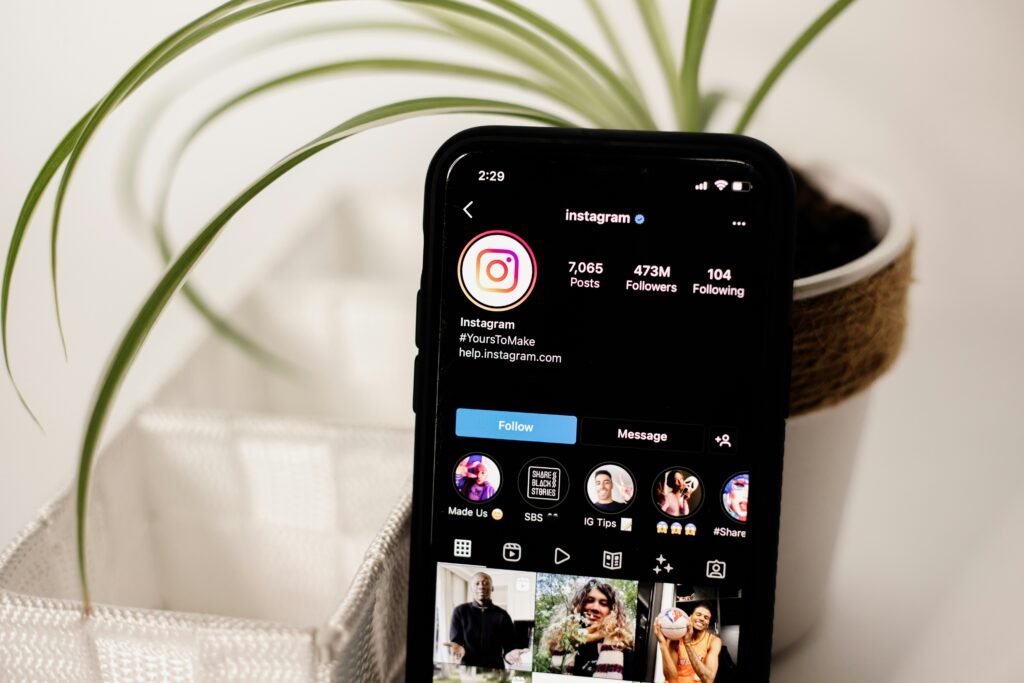
From the Bolanle Tech Newsroom: Instagram has officially confirmed it will stop supporting end‑to‑end encrypted DMs on that date, and this is a documented policy change, not a rumor. That optional encrypted mode was the one feature that kept certain chats locked so tightly that not even Meta could read them, and once it’s gone, your “private” conversations lose their highest level of protection. In simple terms, the lock on those messages is being removed, and Meta will once again be in a position to see more of what you say in DMs if it chooses to, or if it is compelled to by law.

End‑to‑end encryption is what made some Instagram chats feel like a sealed envelope: the message left your phone scrambled and only arrived readable on the other person’s device. Without that, your DMs sit on Meta’s servers in a form that can be scanned by safety systems, reviewed for policy violations, and potentially used to inform AI and ad targeting. Meta is presenting this as a clean‑up of a “low‑usage” feature and is directing privacy‑focused users toward WhatsApp instead. But if you’ve been sending addresses, money talk, contracts, intimate photos, or receipts over Instagram, this marks a serious shift in what “private” really means on the platform.
“THESE CHATS WON’T BE PUBLIC, BUT THEY WON’T BE FULLY LOCKED DOWN EITHER.”
Practically, this does not mean your DMs become public or searchable by other users—strangers still can’t just open your messages, and your audience settings, blocking, and reporting tools remain in place.
What changes is who else can see inside: Meta’s internal systems, safety tools, and, when required, law enforcement will have a clearer path to the content of your conversations than they did under full end‑to‑end encryption. That is why privacy advocates are sounding the alarm—and why, from the Bolanle Tech Newsroom, our guidance is to treat Instagram DMs as semi‑public space: useful for networking, coordination, and light conversation, but not the place to keep your most sensitive secrets.

The question Sydney Sweeney’s career forces every serious artist to ask themselves.
Most people say they want to be an actor. But wanting the life and being willing to do what the life requires are two entirely different things. Sydney Sweeney’s performance as Cassie Howard in Euphoria is one of the clearest examples in recent television of what it actually looks like when an artist refuses to protect themselves from the story they are telling.
The Performance That Started a Conversation
Cassie Howard is not a comfortable character to watch. She is messy, desperate, and heartbreakingly human in ways that most scripts would have softened or simplified. Sydney Sweeney did not soften her. She played every scene at full exposure — the breakdowns, the humiliation, the moments where Cassie is both completely wrong and completely understandable at the same time.
What made the performance remarkable was not the difficulty of the scenes. It was the consistency of her commitment to them. Night after night on set, take after take, she showed up and gave the camera something real. That is not a small thing. That is the kind of discipline that separates working actors from generational ones.
What the Industry Does Not Tell You
The entertainment industry sells you a version of success built around talent, timing, and luck. And while all three matter, none of them are the real differentiator in a room full of equally talented people. The real differentiator is willingness — the willingness to be honest, to be vulnerable, and to let the work require something personal from you.
Most actors hit a wall at some point in their career where a role demands more than they have publicly shown before. The ones who say yes to that moment, who trust the material and the director enough to go somewhere uncomfortable, are the ones audiences remember long after the credits roll.
Sydney Sweeney said yes repeatedly. And the industry took notice.

The Question Worth Asking Yourself
Before you answer, really think about it. There is a moment in every serious audition room where someone might ask you to go further than you are comfortable with — to access something real, to stop performing and start revealing. In that moment, you have to decide what your dream is actually worth to you and, more importantly, what parts of yourself you are not willing to trade for it.
That is the question Euphoria quietly raises for anyone watching with ambition in their chest. Not “could I do that,” but “should I ever feel pressured to.” There is a difference between an artist who chooses vulnerability as a creative tool and one who is pressured into exposure they never agreed to. Knowing that difference is not a weakness. It is the most important thing a young actor can understand before they walk into a room that will test it.
Because the only role that truly costs too much is the one that asks you to abandon who you are to play it.
What You Can Take From This
Whether you are an actor, a filmmaker, a content creator, or someone simply building something from scratch, the principle is the same. The work that connects with people is almost always the work that cost the creator something real. Audiences can feel the difference between performance and truth. They always could.
Sydney Sweeney did not become one of the most talked-about actresses of her generation because she got lucky. She got there because she was willing to be completely, uncomfortably human in front of a camera — and because she knew exactly who she was before she let the role take over.
That combination — full commitment and a clear sense of self — is rarer than talent. And it is the thing worth chasing.
Written for Bolanle Media | Entertainment. Culture. Conversation.

FIPRM Expands Into Sports, Partners With Bolanle Media to Launch New Media Platform

What the Michael Biopic Means for Every Indie Filmmaker

Mother’s Day AfroFun Praise Party: Gospel Dance, Fitness & Feel‑Good Stats in 60 Minutes


 News3 weeks ago
Why Your Indie Film Disappears Online
- News4 weeks ago
The Franchise Is Over. Here’s Who’s Winning Now.
- News4 weeks ago
A Civilization Will Die Tonight — And We’re All Just Watching
- Advice3 weeks ago
What Actors Can Learn From Zendaya
- News4 weeks ago
Why Most Indie Films Fail (And How to Avoid It)
- Entertainment3 weeks ago
Vertical Films Changed Everything. Are You Ready?
- Entertainment3 weeks ago
Bieber’s Coachella Set Has Everyone Arguing Again
- News2 weeks ago
She Was Supposed to Come Home: The Life, Death, and Dehumanization of Ashlee Jenae