Advice
Why Your Child Is Not Broken — They Just Need to Feel Safe First
By Bolanle Media | The Roselyn Omaka Show

You have probably said it before. “Pay attention.” “Just try harder.” “Why don’t you remember anything I taught you?”
And your child — or maybe the child you once were — looked back at you with that blank stare. Not defiant. Not lazy. Just… gone.
What if that was never a focus problem? What if it was never about ability at all?
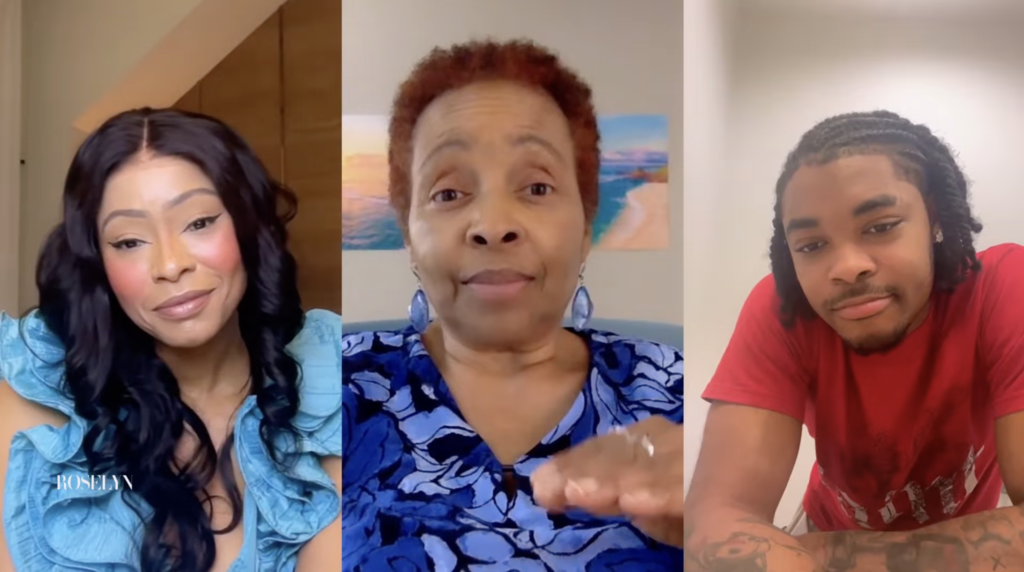
Educator and emotional intelligence strategist Selina Joy Jackson has spent her career answering that exact question. In a candid, wide-ranging conversation on The Roselyn Omaka Show, Jackson sat down with host and Bolanle Media CEO Roselyn Omaka and co-host Chris Gone Crazy — the Houston-based content creator with over 5 million followers across TikTok, Instagram, and YouTube — to break down what is really happening inside the minds of kids who struggle, and what parents, teachers, and communities can actually do about it. What she shared changes everything about the way we think about learning, behavior, and the kids we keep calling problems.

Memory Is Mood Related — And Nobody Told You That
Here is the science that should be taught in every teacher training program but isn’t.
Your brain stores memories attached to the emotional state you were in when you learned them. That means if a child sits in a classroom feeling anxious, overwhelmed, or emotionally unsafe — they can learn the material in that moment, but to recall it later, their brain has to return to that same emotional state.
Who wants to go back there?
This is why your child remembers nothing from the class they dreaded. This is why you can recall every detail of a vacation but blank on what you studied the night before a test you were terrified of. It is not intelligence. It is neuroscience.
The fix, according to Jackson, is simple and radical at the same time: feel good first. Not after the lesson. Not as a reward for good behavior. First. Before anything else is introduced.


The Hidden Block Nobody Is Talking About
Jackson calls it the “hidden block” — and once you see it, you cannot unsee it.
When a child is stressed, scared, or emotionally dysregulated, their brain shifts into survival mode. The prefrontal cortex — the part responsible for focus, reasoning, and learning — essentially goes offline. The brain is too busy managing perceived threat to take in new information.
From the outside, this looks like:
- Refusing to try
- Zoning out in class
- Acting out or shutting down
- “Not caring” about school
But none of that is attitude. It is biology.
Jackson developed a four-step framework to address it directly:
Recognize — identify that a hidden block is present
Regulate — help the child (or adult) return to a calm state
Repattern — build new emotional habits and responses
Return to Learning — now the brain is actually ready
This framework is the backbone of her book Break the Hidden Block and her EMOMASTERS® program, which gives kids and parents practical tools to move through each step.
The Need to Control Is a Survival Response — Not a Personality Trait
One of the most powerful moments in Jackson’s conversation on The Roselyn Omaka Show came when she broke down what the psychological need for control actually is.
Micromanagement. Overthinking. Anxiety when outcomes are uncertain. Needing to know every detail before you can relax.
Most people think that is just who they are. Jackson says it is what their nervous system learned.
When the subconscious mind treats control as a need — something without which it cannot survive — it triggers the same stress response as a physical threat. The anxiety is not about the situation. It is about a deeply held belief that says: without control, I am not safe.
The shift is not about letting go of your ability to direct outcomes. It is about releasing the desperation. Drop the need. Keep the power. Those are two very different operating modes.
What the School System Is Still Getting Wrong
Jackson does not mince words on this one.
Schools are designed to deliver information. They are not designed — at least not yet — to first ensure that the people receiving that information are in a state where they can actually absorb it. A child who walks into a classroom carrying last night’s argument, this morning’s hunger, or a month of feeling invisible is not a learning-ready brain. They are a survival-mode brain in a chair.
Telling that child to focus is like telling someone with a broken leg to run.
The research backs this up. Studies consistently show that emotional dysregulation is one of the strongest predictors of academic struggle — stronger, in many cases, than cognitive ability. Kids who cannot regulate their emotions cannot access their own intelligence.
Jackson’s tools are designed to bridge that gap — for classrooms, for homes, and for the kids who have been written off as problems when they were really just overwhelmed. You can explore her full programs and workshops here.
Tools You Can Use Right Now
Jackson has built an entire resource library around this work. Here is where to start:
Break the Hidden Block — her foundational book on the science of emotional blocks and how to dismantle them. Start here.
EMOMASTERS® Unstoppable Me Program — a practical toolkit for parents and educators to use with kids, helping them recognize and regulate their emotions before those emotions take over.
Brain-Ready Classroom Library — built specifically for educators who want to create learning environments where kids can actually receive what is being taught.
Math Magic Library — Jackson’s work connecting emotional readiness to academic subjects, including math, which is one of the highest-anxiety subjects for struggling students.
Feel Good First Course — the starting point for anyone new to her work. Brain-based, practical, and accessible for parents, teachers, and students alike.
Connect With Selina Joy Jackson
Follow her work and stay connected across her platforms:
- Website: selinajoyjackson.com
- Instagram: @selina_joy_jackson
- YouTube: Selina Joy Jackson
- LinkedIn: Selina Joy Jackson, MA
- Book a call or speaking inquiry: Contact Selina
The Line That Stays With You
Toward the end of her conversation on The Roselyn Omaka Show, Jackson said something that quieted the room.
“You’re not alone and you’re not broken.”
It comes from her own story. From the foster care homes. From the classrooms where she sat feeling invisible. From a kid who the system had plenty of explanations for but no real solutions.
She became the solution.
And now she is handing those tools to every parent, teacher, and child who needs them — which, if we are being honest, is most of us.
Watch the full episode of The Roselyn Omaka Show with Selina Joy Jackson on the Bolanle Media YouTube channel. Link in bio.
Follow Bolanle Media for conversations that make you see the world differently.