News
She Was Supposed to Come Home: The Life, Death, and Dehumanization of Ashlee Jenae
A thought piece on grief, social media cruelty, and what we owe each other in mourning.

She Had Everything to Live For
On April 5, 2026 — her 31st birthday — Ashlee Jenae Robinson was on top of the world. She was standing somewhere between a safari in Tanzania and the rest of her life, and the man she loved was on one knee. She said yes. She posted the photos. She smiled for the camera. The woman who had spent years building a brand out of joy, travel, and living beautifully was finally living her dream.
Seven days later, she was dead.

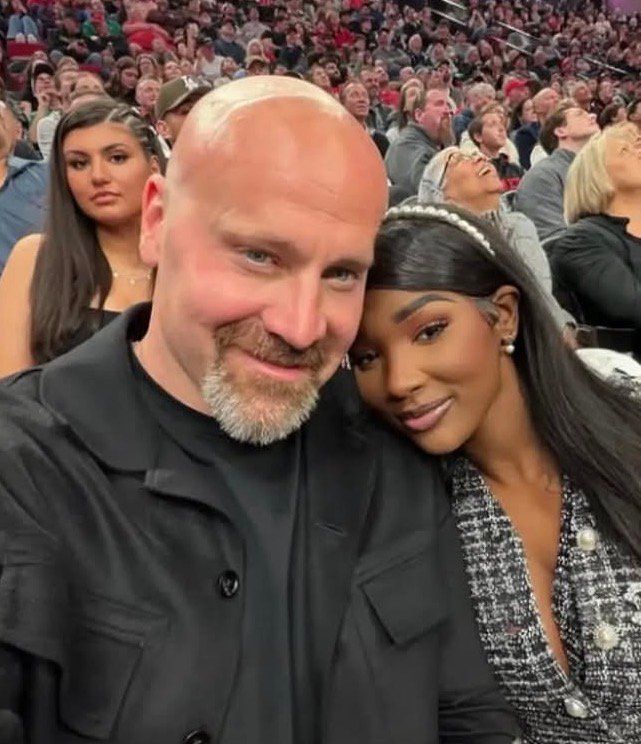
Ashlee Jenae — known to her 130,000+ Instagram followers as a Miami-based lifestyle influencer and “soft life divestor” — was found unconscious in her villa at the Serval Wildlife Resort in Zanzibar, Tanzania. She was rushed to a local hospital and pronounced dead hours later. The circumstances of her death remain under active investigation. No autopsy or toxicology results have been publicly confirmed. Her fiancé, Joe McCann, 45 — a Miami-based crypto hedge fund manager and founder of Asymmetric Financial — told authorities she had “hanged herself on the door.” Her family, her friends, and thousands of people across the internet are not buying it.
But here is the disturbing twist that says everything about where we are as a society: before the investigation even had time to breathe, a significant portion of the internet turned its attention away from the man authorities are now questioning — and toward her. Her tweets. Her opinions. Her dating choices.
The conversation did not start with, “What happened to Ashlee?” It started with, “What did she say about Black men?”
The Investigation: What We Know
The facts, as reported and verified, are these: Ashlee and McCann had been dating roughly a year and a half before the trip. On April 8, an argument between them became serious enough that hotel management separated the couple into different rooms. On April 9, McCann called Ashlee’s mother, Yolanda Endres, and told her “Ashly did something to herself and was being taken to the hospital” — and that she was “stable.” He did not contact her family until 11 hours after the incident allegedly occurred.
She was not stable. She was dead.
Ashlee’s mother told CBS News that her daughter had called on April 8 to let her family know she was in an argument with McCann. Her parents have publicly stated they do not believe their daughter took her own life. Her close friend Savannah Britt, a PR executive, immediately took to X (Twitter): “We need justice for my friend Ashlee Jenae who was found dead in her hotel in Tanzania and her fiancé Joe McCann claims she hung herself. Anyone who knows Ash knows she would NEVER commit suicide.”
As of April 15, 2026, Zanzibar authorities have withheld McCann’s passport and are continuing to question him — though he has not been arrested, and he is being interviewed as a witness. The Tanzanian police have listed Ashlee’s “immediate cause of death” as cerebral hypoxia by strangulation and suffocation — language that has sent shockwaves through the internet and fueled calls for accountability. McCann has not issued any public statement mourning Ashlee. He continued posting on X about cryptocurrency.
Her father has set up a GoFundMe with a $50,000 goal to cover funeral costs and the mounting expenses of navigating an international investigation — even though his daughter’s fiancé was described as a millionaire.
None of this is disputed. All of it is devastating.

The Social Media Wildfire: When Grief Became a Gender War
What should have been a story about a family searching for answers became something uglier, faster than it should have.
Within hours of the news breaking, a segment of social media — disproportionately men, though not exclusively — began unearthing Ashlee’s old tweets and Instagram posts. In 2024, Ashlee had posted: “Every day, Black men wake up and find new ways to embarrass us.” She had shared think pieces critical of dating dynamics within the Black community. She had built part of her brand around the concept of “divesting” — a term used in certain online spaces to describe Black women who choose to pursue relationships with non-Black men.
For some, those tweets were justification for silence. For others, they became justification for something far worse.
YouTube videos with titles like “Black Men Are Celebrating the Death of This Influencer” and “Why Black Men Aren’t Concerned With Ashlee Jenae’s Tragic End” began accumulating tens of thousands of views. Comment sections exploded. People who had never heard of Ashlee Jenae before her death were debating whether she “deserved” sympathy — or whether her death was a form of karmic justice for words she had typed years earlier on the internet.
Let that sit for a moment. A 31-year-old woman is dead. Her cause of death lists strangulation. Her family is grieving thousands of miles from home, fighting to bring her body back. And the internet’s first instinct was to dig up her tweets.
Did She “Deserve” to Die? The Answer Is No — And That Should Not Be Controversial
Let’s be unambiguous: No human being deserves to die for their opinions, their relationship choices, or their social media posts. Period.

The “she dissed Black men” argument that circulated online is not a counter-argument. It is a deflection. It is a way of making Ashlee responsible for her own alleged murder — which is precisely the same logic that has been used to silence Black women in domestic violence cases for generations. It is the same logic that says a woman’s past is more important than the circumstances of her death.
Yes, Ashlee made pointed comments about Black men. She was not alone — and those comments existed within a long, painful, and complicated history of gender dynamics in the Black community that neither began nor ended with her tweets. She was also a woman who was human, flawed, funny, vibrant, loved by her family, and — by all accounts from those who knew her — full of life.
The men who celebrated her death because of tweets did not actually believe those tweets were wrong. If they truly believed that dehumanizing commentary was harmful, they would have recognized the exact same energy in their own responses. You do not fight dehumanization with more dehumanization.
And for the record — the man actually in the room when Ashlee died was not a Black man. The man whose passport was confiscated by Tanzanian authorities is not a Black man. The man who waited 11 hours to call her family is not a Black man. Whatever complicated feelings exist about Ashlee’s online commentary, none of it is relevant to who is currently being questioned in connection with her death.

The “Soft Life” Conversation and What It Reveals
Ashlee Jenae was part of a growing movement of Black women online who spoke candidly about wanting to be cherished, protected, and provided for — and who found that pursuit within interracial relationships. The “soft life divesting” community, while controversial, is also a direct response to real experiences: Black women consistently report some of the highest rates of intimate partner violence and homicide victimization in the U.S. Many were drawn to “divesting” rhetoric precisely because they were fleeing danger, not inviting it.
The cruel irony of Ashlee’s death — allegedly at the hands of the white man she loved — has not been lost on observers across the political and cultural spectrum. But rather than sitting with that irony and allowing it to open a real, honest conversation about how allwomen deserve to vet their partners carefully — regardless of race — some chose to weaponize it. They used her death as a “told you so” instead of a call for justice.
The soft life influencer was flawed. She had opinions that stung. She made enemies online. She also had a mother, a father, a best friend who loved her, and a future she was just beginning to imagine. Those two things can coexist — and the second list is the only one that matters when we are talking about a grieving family and an active homicide investigation.


What We Owe Each Other in Grief
There is something deeply broken in a culture that produces YouTube videos debating whether a dead woman deserved empathy before her body has even been repatriated.
It is worth asking: what does it say about us — as a community, as content consumers, as human beings — that the first impulse when a young Black woman dies under suspicious circumstances is not to demand justice, but to audit her tweet history?
Black women in America are among the most likely to be victims of intimate partner homicide. They are also among the least likely to receive sustained media coverage or public outpouring when they are killed. The Ashlee Jenae case broke through — briefly — but even that attention was immediately hijacked into a gender war that ultimately served no one, least of all Ashlee.
Empathy is not an endorsement. Grieving someone does not mean you agreed with them. It means you recognize their humanity. And if we cannot extend that to a 31-year-old woman found dead in a foreign country under deeply suspicious circumstances, we should ask ourselves hard questions about what we have become.
The Best YouTube Videos Covering This Story
For those seeking to understand the full scope of this conversation — the facts, the grief, and the cultural debate — the following videos represent the range of perspectives that have emerged:
Video Title Channel / Creator Angle “Social Media Influencer Ashlee Jenae’s Death Under Investigation” CBS News Straight-news coverage; family interviews; official investigation update “Black Men Are Celebrating the Death of This Influencer” Flakko News Commentary on the online backlash; breaks down the gender war dynamic “Why Black Men Aren’t Concerned With Ashlee Jenae’s Tragic End” Independent commentary Explores the cultural reasons for apathy; attempts nuanced framing “‘Soft Life Divestor’ 31 YO Woman Reportedly Ends Life in Tanzania” Jaye De Black Pro-justice perspective; challenges suicide narrative; supports family’s claims “Ashlee Jenae’s Soft Life Takes a Dark Turn” Independent commentary Broader cultural critique of “soft life” ideology and relationship vetting “Ashlee Jenae in Tanzania — They’re Pushing the Wrong Narrative” Independent commentary Critical of those using Ashlee’s death to attack Black men; calls for accountability on all sides
A Final Word
Ashlee Jenae went to Tanzania to celebrate her birthday and say yes to love. She posted about it. She was glowing. She was 31 and alive and dreaming.


She deserved to come home.
Whatever complicated feelings exist about her words, her brand, or her choices — she deserved to come home. Her parents deserved to receive their daughter back safely, not have to crowdfund a $50,000 investigation from a continent away. Her best friend deserved not to have to post a viral plea for justice from her phone.
The investigation is not over. No arrests have been made. The truth may still come. What will not come back is Ashlee Jenae Robinson, who was once a vibrant, complicated, opinionated, alive young woman who laughed and traveled and loved and posted about it.
Mourn her anyway. She earned it.
If you or someone you know is in crisis, contact the 988 Suicide & Crisis Lifeline by calling or texting 988.
If you have information about this case, Ashlee’s family has asked that all verified information be directed through official channels.