Entertainment
Ozempic Era: Beauty, Lizard Venom, Big Pharma
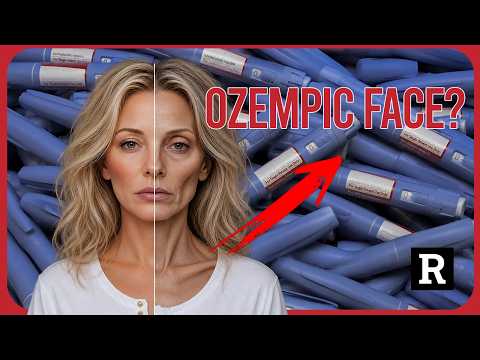
The film industry is entering a new body era, and this time, the co-star is a syringe.
GLP-1 drugs like Ozempic, Wegovy, and Mounjaro have moved from diabetes clinics into casting conversations, red carpets, and agency strategy. In the United States, roughly 1 in 8 adults report having used a GLP-1 drug, with about 6 to 12 percent actively using one today. Globally, usage has surged from approximately 4 million people in 2020 to around 30 million by 2026.
This is no longer a niche health trend. It is a structural shift—one that is reshaping how bodies are constructed, perceived, and rewarded on screen.


At a clinical level, the appeal is clear. In major obesity trials, semaglutide has produced average weight loss of 15 to 17 percent of total body weight over 68 to 104 weeks, with some regimens approaching 19 to 21 percent for sustained users. In an industry built on transformation, those numbers carry real influence.
But rapid transformation leaves a visible trace. The phenomenon often called “Ozempic face”—hollowed cheeks, looser skin, a subtly aged appearance—reflects how quickly fat loss can outpace the skin’s ability to adjust.
For filmmakers, this is not just aesthetic—it is cinematic. Performance lives in the face. Micro-expressions, softness, and facial volume shape how emotion reads on camera. A performer may reach an “ideal” body while losing something less measurable but equally important on screen.
Beneath this cultural shift lies an origin story that feels almost written for film.
In the 1990s, researchers studying the Gila monster isolated a peptide in its venom called exendin-4, which mimicked a human hormone involved in blood sugar regulation but lasted significantly longer in the body. That discovery led to early GLP-1 drugs such as exenatide, used by millions of patients worldwide, and eventually to semaglutide.
By mid-2025, semaglutide-based drugs (including Ozempic and Wegovy) generated approximately $16 to $17 billion in just six months, making it one of the highest-grossing drug classes globally. Analysts project the broader incretin market could reach $200 billion annually by 2030.


Inside those numbers is a more complex human story.
The benefits are well documented: improved blood sugar control, significant weight loss, and reduced cardiovascular risk. But as use expands, so does scrutiny. Researchers and regulators are tracking side effects ranging from severe gastrointestinal issues and gastroparesis to gallbladder disease and pancreatitis, as well as rarer concerns such as vision complications and potential neurological signals.
At the same time, adoption continues to accelerate. J.P. Morgan projects roughly 10 million Americans on GLP-1 drugs by 2025, rising toward 25 to 30 million by 2030. At that scale, usage becomes ambient—part of everyday life across industries, including film and television.
And yet the marketing tells a different story. Pharmaceutical campaigns rely on cinematic language—aspirational visuals, controlled lighting, emotional transformation arcs—while legally required risk disclosures recede into fine print.
For independent filmmakers, this moment opens several narrative lanes.
There is the body: performers navigating an industry where a once-niche diabetes drug has become a quiet career tool.
There is the machine: a pharmaceutical ecosystem where a single drug category generates tens of billions annually, rivaling major entertainment sectors.
And there is the myth: a culture increasingly turning to a hormone-based intervention—derived from venom biology—rather than addressing systemic issues like food access, stress, and inequality.
Technology intensifies all of it. Ultra-high-resolution cameras and HDR workflows capture every detail—skin texture, volume shifts, micro-expressions. As more on-screen talent uses the same class of drugs, a new visual baseline begins to form, often without audiences realizing why.
There is also a clear economic divide. GLP-1 drugs can cost $800 to $1,000 or more per month without insurance in the United States, and coverage remains inconsistent. Rising demand has led to shortages and a parallel market of compounded or unregulated alternatives.

The gap between who can access consistent, medically supervised treatment and who cannot is becoming part of the story itself.
For cinema, the imagery is already there: the Sonoran desert, a Gila monster, laboratory research, pharmaceutical earnings calls, red carpets, and transformation narratives.
A compound derived from venom becomes a global product that reshapes not only bodies, but expectations.
Perhaps the most uncomfortable layer is the industry’s own role. Casting preferences, transformation culture, and unspoken aesthetic standards reinforce a pharmacological look without ever naming it.
No one explicitly instructs performers to take these drugs. The system simply rewards the results.
This is not a distant trend. It is a present-tense shift.
The numbers are rising. The images are changing. The influence is expanding.
The question is whether independent cinema will define this moment while it is still unfolding—or whether the story will once again be shaped by the industries profiting most from it.