News
From Togo to Texas: Elomé Akpagnonite on African Royalty, Pageant Secrets, and Building a Legacy Through Film
By Bolanle Media | The Roselyn Omaka Show

There are contestants. And then there are women who walk into a room carrying an entire kingdom behind them.
Elomé Akpagnonite is the latter.
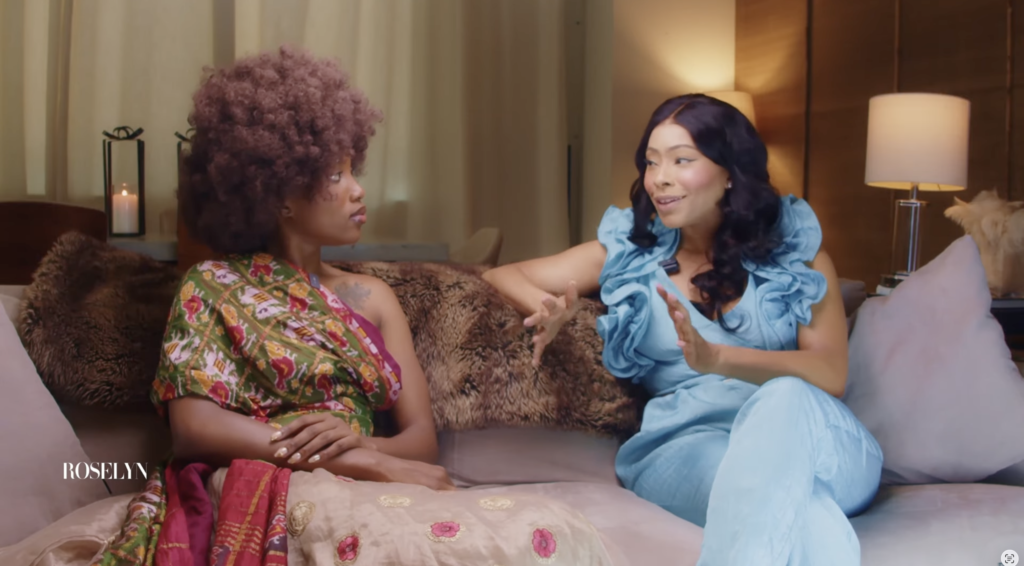
The Togo-born, North America-raised model, actress, and Miss Grand Texas 2026 contestant sat down with Bolanle Media CEO and host Roselyn Omaka on The Roselyn Omaka Show for one of the most compelling conversations to come out of Houston’s creative community this year. What started as a pageant interview turned into something much bigger — a story about royal lineage, cultural identity, the hidden cost of belonging to two worlds, and one woman’s decision to use art and film to make sure her people are never again invisible.

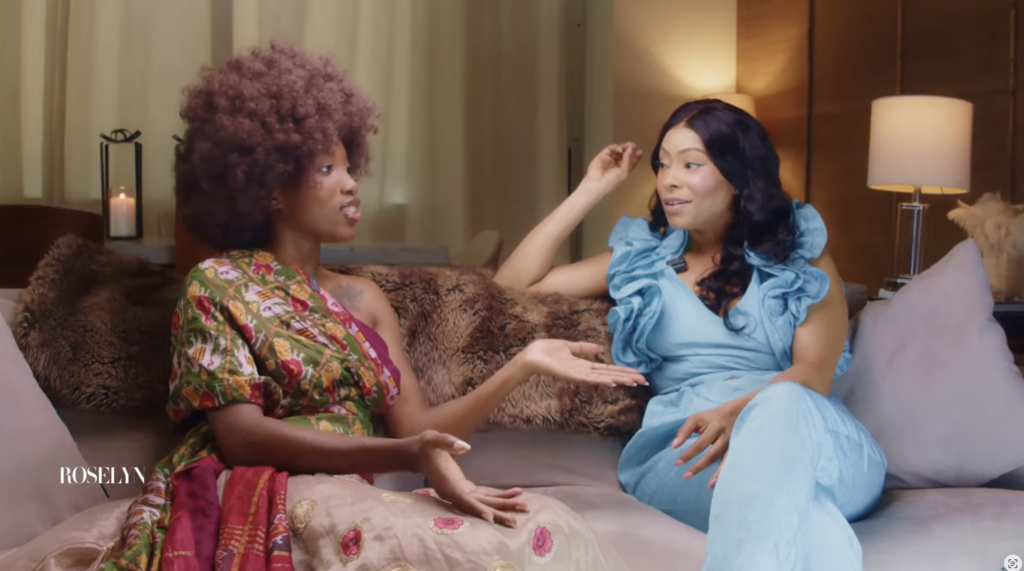
Who Is Elomé Akpagnonite? The Togolese-American Model Making Houston Take Notice
Elomé Akpagnonite was born in Togo, West Africa. At six years old, her parents made the decision that millions of African families have made — they left. They wanted more for their children. They moved to North America and built a life there.
For the next eighteen years, Elomé grew up fully immersed in North American life. She went to school there. She graduated university there. She built her confidence, her career, and her identity there.
And then she went home.
That first visit back to Togo — after nearly two decades away — changed everything.
“I saw everything,” she told Roselyn. “The beautiful and the sad. It woke something inside of me.”
What she saw was the gap. The same gap that millions of first-generation immigrants carry quietly inside them — the distance between the world that gave them opportunity and the world that gave them their name. She saw children who wanted to learn but could not access education. She saw communities full of potential that lacked resources. She saw her own reflection in a country she barely knew but could never stop belonging to.
That tension — of being too African for America and too American for Africa — is not unique to Elomé. It is the defining experience of the African diaspora. But what makes Elomé different is what she decided to do with it.
She decided to build a bridge.
A Lineage of Kings: Her Connection to the Last King of Benin
Before the pageant. Before Houston. Before North America. There is a name.
Elomé’s name carries the weight of centuries. Her bloodline, she explains, traces back to the last king of Benin — a lineage of emperors and empresses that shaped the history of West Africa.
One of the king’s sons was given a specific role. He was the protector — the one who would go to war and return with food and resources for the people. His name, given to honor that role, roughly translates to the guardian of the house. The best fruit on the tree of dates. The one worth waiting for.
One day he went out and did not come back. His brothers could have taken the crown. They had every right to. But they refused. They knew his worth. They went out and found him. They brought him home. And they crowned him.
That is the lineage Elomé carries into every room she enters.
“I come from a lineage of kings and queens, of emperors and empresses,” she said on The Roselyn Omaka Show. “And I am a bridge.”
At a time when the world is finally beginning to reckon with the depth and sophistication of African royal history — when museums are returning looted Benin Bronzes to Nigeria, when films are finally telling the stories of African warrior kingdoms — Elomé’s lineage is not a footnote. It is a headline.

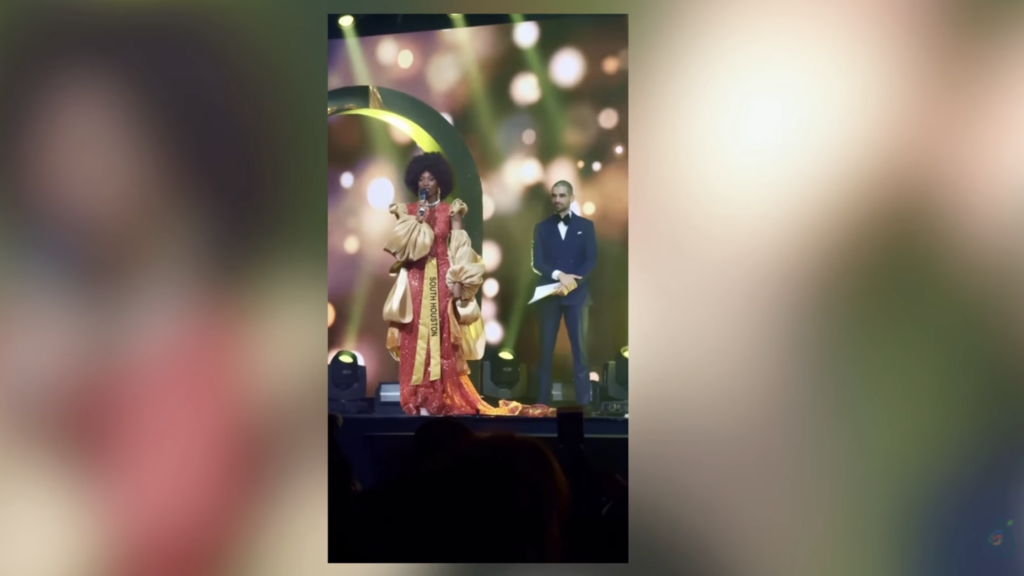
What Really Happens Behind the Scenes at a Beauty Pageant
If you have ever wondered what a beauty pageant actually looks like behind the curtain, Elomé did not hold back.
She arrived at Miss Grand Texas 2026 with three days to prepare. From the moment contestants checked into the hotel, there was no downtime. A choreographer walked in and told the women exactly what was at stake — and that anyone not ready would show it on stage. Practice sessions ran until midnight. Call times were at six in the morning. The schedule was so tight that contestants often went hours without eating, rushing between photo shoots, sponsor visits, media appearances, and rehearsals with barely enough time to change outfits.
“We couldn’t even leave the hotel,” Elomé recalled. “We just had to be focused.”
And then there was the midnight room raid.
The night before the pageant, after rehearsals ended around midnight, contestants were told to go to their rooms — but not to sleep. They waited. Thirty-five minutes later, there was a knock on the door. The camera crew walked in unannounced and filmed everything. The state of the room. The organization. The reactions of the women inside. Judges were rating it all.
“We did not have time to organize during the day because it was too much going on,” Elomé said. “But they were looking at everything.”
Points were awarded for punctuality, attitude, social media activity, poise, and presentation — not just what happened on stage. The former Miss Grand Texas herself reminded contestants throughout the weekend: the judges are always watching.
For anyone considering the pageant world, Elomé offers advice she wishes someone had given her:
Know what you are entering. Pageantry is not about how beautiful you think you are. It is about fitting the standard the pageant has set. If you are someone who needs to do things your own way, modeling may be a better path. But if you are punctual, coachable, and mentally tough — pageantry will sharpen you in ways nothing else can.
Pack tape for your feet. Pack numbing spray. And cut back on food before the competition, because there will not be time to eat.
Most importantly — have the mindset of a winner. Not the outcome. The mindset.
Being Too African for America and Too American for Africa: The First-Generation Experience
There is a specific kind of loneliness that first-generation immigrants carry. It does not have a clean name in English, but every person who has lived it recognizes it instantly.
You grow up in a country that is not the one your parents came from. You absorb its culture, its language, its rhythms, its expectations. You become fluent in a world your parents navigated as outsiders. And then one day you go back to the country that made your name — and you do not fully belong there either.
Elomé describes this experience with a clarity that only comes from having lived it deeply.
“My whole life I had been so protected and sheltered. I had so many opportunities. But it was the complete opposite for most of the people I met back home.”
That contrast — between her North American life and the reality she witnessed in Togo — did not produce guilt in her. It produced purpose.
She began asking herself what she could actually do. Not what she should do in theory. What she, specifically, with the resources and the platform she had built, could do right now.
The answer she arrived at was the same answer she brought to the Miss Grand Texas stage, the same answer she is building toward through every film and modeling project she takes on.
Export the resources. Export the education. Tell the stories that have been hidden. Use art to show the world what it has been missing.
Why She Chose Film to Represent African Excellence
Elomé is a model and an actress. But she is building toward something larger than a career.
Her vision is to use film — short films, visual storytelling, collaborations with videographers and production teams — to represent what is actually happening in African countries. Not the single, flattened narrative that Western media has historically offered. The full picture. The beautiful and the complicated. The royal and the struggling. The ancient and the ambitious.
“I want to represent it through my art and raise awareness,” she told Roselyn. “Show what is going on and show it to the world so people can understand better the things that have been hidden.”
She pointed to something she had seen on Instagram — a content creator who filmed a young boy peering through a school fence, wanting to learn but unable to afford it. The post circulated widely, donations were verified and sent directly to the school, and the boy got in. That, she said, is the kind of impact she is reaching toward. Stories that do not just entertain. Stories that move people toward action.
She is already thinking about collaborations. About nonprofit partnerships. About the kind of creative infrastructure that would let her tell these stories at scale.
Roselyn, whose entire career at Bolanle Media has been built around exactly this kind of amplification — using media to platform voices that the mainstream has overlooked — saw it immediately. The vision aligned. The work is already beginning.
The Dress, the Designer, and the Moment the Crowd Went Silent
For the pageant’s evening gown competition, Elomé wore a dress designed by Houston’s own Danny Win.
She had seen his work up close at Houston Fashion Week. She had walked in one of his shows. She had watched the way he approached a project — the focus, the attention to detail, the way every element of a photo shoot became a full cinematic moment in his hands.
When she walked out onto the Miss Grand Texas stage in Danny Win’s design, Roselyn — who was in the audience — watched what happened to the room.
“It was just like — African goddess,” Roselyn told her. “The crowd was just stunned.”
For Elomé, the moment felt like a movie. She was told by the judges to keep it graceful, to hold back. She did — just barely. But the dress carried the rest.
It was more than a fashion choice. It was a statement. A Togo-born woman, carrying a Benin royal lineage, wearing the work of a Houston-based African designer, walking a Texas pageant stage. Every element of that image is a story about African excellence showing up and being impossible to ignore.


Advice for Any Woman Who Wants to Enter a Pageant
Elomé’s guidance for women considering the pageant world is practical, honest, and hard-won.
Know what pageantry actually is before you enter. Research the specific competition — its culture, its criteria, its expectations. Understand that judges are evaluating far more than appearance. Attitude, punctuality, social media presence, and how you treat the other contestants all count.
Prepare your body for the physical demands. You will be in heels for the entire competition. Tape your feet. Bring numbing spray. Do not underestimate how important it is to eat something before events, because there will be stretches when food is not available.
Build your mental toughness before you walk in. The competition will test your ability to adapt, stay positive under pressure, get through exhaustion without complaint, and support the women around you — even when you are competing against them.
And perhaps most importantly — show up confident. Not the performance of confidence. The real thing. The kind that comes from knowing your story, knowing your worth, and being willing to be seen.
How the Sisterhood Surprised Her Most
Of all the things Elomé expected from the Miss Grand Texas competition, the depth of the bonds she formed with the other contestants was not one of them.
The narrative around pageants often centers on rivalry. On competition for a crown. On women who see each other as obstacles.
What Elomé experienced was the opposite.
“We never left anybody out,” she said. “We were always talking to each other, checking in, helping each other with our dresses, with our content.”
The women — who came from across Texas, some as far as Austin — are still in a group chat. Still sending each other invitations. Still showing up for each other.
That surprised her. And it moved her.
In a world that tends to pit women against each other, especially women competing for the same title, what she found was something closer to a team. And that, she said, was one of the best parts.

What Is Next for Elomé Akpagnonite
Elomé is not done with pageantry — but she is clear about what she wants next.
She wants to compete in a pageant that more fully represents her community. One where African and African-diaspora women are not the exception but the center. If that pageant does not yet exist in the form she envisions, she will build it.
She is continuing to develop her modeling and acting career with a specific focus on projects that represent African excellence — stories told with honesty, with beauty, and with the full complexity that her people deserve.
She is open to directing. To nonprofit partnerships. To any creative collaboration that moves the bridge-building forward.
For filmmakers, producers, photographers, and brands who want to work with Elomé, the best way to reach her is through her Instagram, where her website and email are linked in the bio.
Watch the Full Episode on Bolanle Media YouTube
The full conversation between Elomé Akpagnonite, Roselyn Omaka, and Chris Gone Crazy is available now on the Bolanle Media YouTube channel.
This is the kind of episode you watch once and think about for days. A woman who carries a kingdom in her name, who went home after eighteen years and let what she saw change her, who walked a Texas pageant stage in a Houston designer’s gown and stopped the room — and who is only just getting started.
Watch it. Share it. And follow Bolanle Media so you never miss a conversation like this one.
Explore more episodes from The Roselyn Omaka Show on Bolanle Media.
Are you a filmmaker, creative, or brand interested in working with Bolanle Media? Connect with us here.